

What Is Logistics Management and How Does It Work in Business Operations?
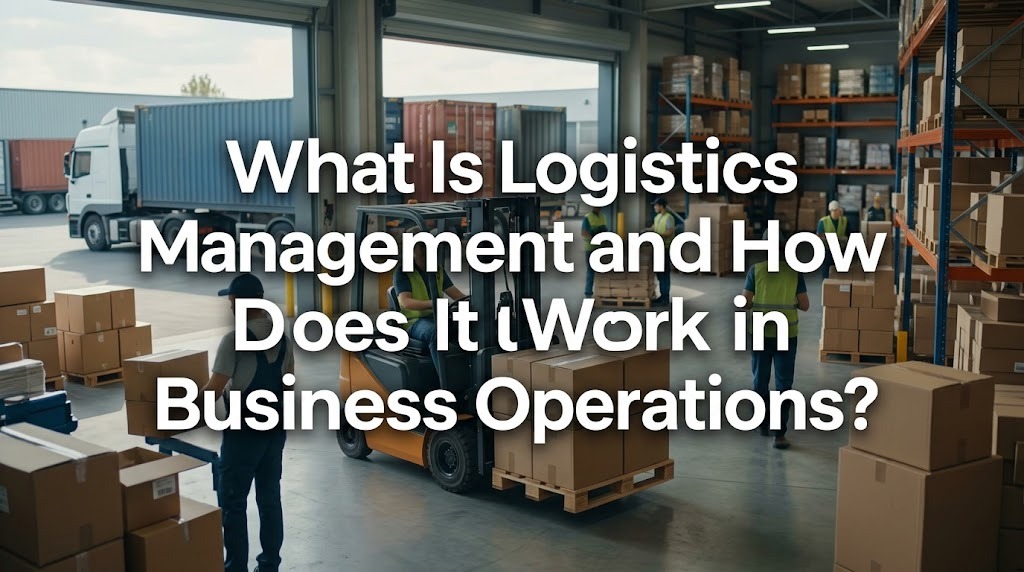
Logistics management is an important part of business operations because it helps companies move products from suppliers to customers efficiently. It involves planning, organizing, and controlling the storage, transportation, and distribution of goods. Effective logistics management ensures that products arrive at the right place, at the right time, and in the right condition. Without a proper logistics system, businesses may experience delivery delays, increased operational costs, and customer dissatisfaction. Therefore, understanding logistics management is essential for companies that want to improve efficiency and remain competitive in the modern business environment.
UNDERSTANDING LOGISTICS MANAGEMENT
Logistics management is the process of managing the movement and storage of goods, services, and related information from their origin to their final destination. It includes several activities, such as transportation planning, inventory control, warehouse management, packaging, and order fulfillment. These activities must work together to ensure that products can move smoothly throughout the distribution process.
For example, an online store needs logistics management to receive products from suppliers, store them safely, prepare customer orders, and arrange deliveries. Each stage requires accurate information and careful coordination. Good logistics management helps businesses reduce unnecessary costs, prevent operational problems, and deliver products according to customer expectations.
HOW LOGISTICS MANAGEMENT WORKS IN BUSINESS OPERATIONS
Logistics management begins with planning product requirements and transportation needs. Businesses determine how many products they need, where the products should be stored, and which delivery methods are most suitable. After planning, products are received from suppliers and placed in warehouses or other storage facilities. Employees then manage inventory records to ensure that product quantities remain accurate and available when needed.
When customers place orders, the logistics team prepares the products, checks their condition, packages them, and arranges transportation. During delivery, businesses may use tracking systems to monitor shipments and identify potential delays. Once the products reach their destinations, companies can evaluate delivery performance and customer feedback. This coordinated process helps ensure that goods move efficiently from suppliers to customers.
THE MAIN ACTIVITIES IN LOGISTICS MANAGEMENT
Logistics management consists of several important activities that support business performance. The first is transportation management, which involves selecting suitable vehicles, delivery routes, and shipping services. The second is inventory management, which ensures that businesses maintain sufficient stock without keeping excessive quantities that increase storage costs. These activities help companies balance product availability and operational expenses.
Another important activity is warehouse management, which focuses on receiving, storing, organizing, and preparing products for distribution. Order fulfillment is also essential because it ensures that customer orders are processed accurately and delivered on time. In addition, logistics teams manage packaging and information flow to protect products and maintain reliable records. When these activities are properly coordinated, businesses can improve productivity and reduce avoidable errors.
THE BENEFITS OF EFFECTIVE LOGISTICS MANAGEMENT
Effective logistics management provides several benefits for businesses of different sizes. One major advantage is cost reduction, because companies can choose efficient delivery routes, optimize warehouse space, and avoid unnecessary transportation expenses. Better inventory control also reduces the risk of overstocking, product shortages, and losses caused by damaged or expired goods. These improvements help businesses use their resources more effectively.
Another benefit is improved customer satisfaction. Customers are more likely to trust a business when their orders arrive on time, match the requested specifications, and remain in good condition. Efficient logistics can also help companies respond quickly to changes in demand and maintain a consistent supply of products. In competitive markets, reliable delivery and accurate order fulfillment can strengthen customer loyalty and support long-term business growth.
THE ROLE OF TECHNOLOGY IN MODERN LOGISTICS MANAGEMENT
Technology has transformed logistics management by making business processes faster, more accurate, and easier to monitor. Inventory management software helps companies track stock levels, record incoming and outgoing products, and identify items that need to be reordered. Meanwhile, GPS tracking systems allow businesses and customers to monitor shipment locations and receive delivery updates. These tools improve transparency and help logistics teams respond to problems more quickly.
Businesses can also use data analytics and artificial intelligence to forecast demand, evaluate transportation routes, and identify patterns in delivery performance. Automated warehouse systems can speed up product handling and reduce certain manual errors. However, companies must select technology that matches their operational needs and provide appropriate employee training. Combining digital tools with effective planning and skilled workers can help businesses build a more reliable and efficient logistics system.
CONCLUSION
Logistics management plays a vital role in business operations by coordinating the movement, storage, and distribution of products. It helps companies control costs, manage inventory, improve delivery performance, and meet customer expectations. Effective logistics requires careful planning, reliable transportation, organized warehouses, and accurate information. Modern technology can further improve these processes through tracking systems, inventory software, and data analysis. By continuously evaluating their logistics activities, businesses can increase operational efficiency, strengthen customer satisfaction, and achieve sustainable growth.
Recent Posts

Bagaimana Sistem SKS pada Program Kuliah... 22.11.2026/60 View

How Does Technology Make Daily Evaluation... 21.11.2026/87 View

Apa Strategi Menghadapi Kesenjangan antara Kompetensi... 21.11.2026/85 View

Mengapa Inventaris Aset Penting bagi Kelancaran... 21.11.2026/83 View

When Should Musicians Join a Record... 21.11.2026/87 View
