

What Is Musical Intelligence and Why Is It Important for Students?
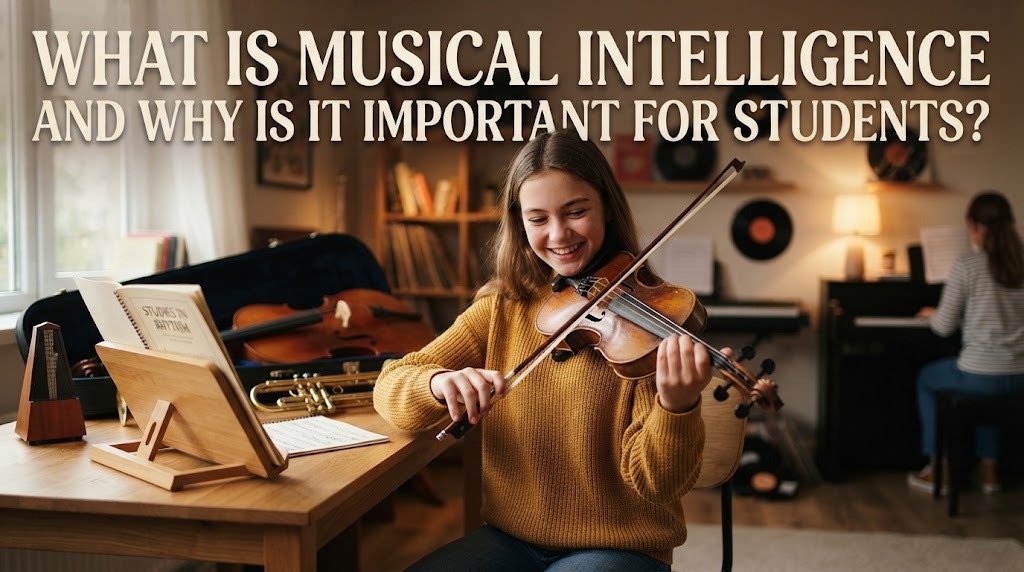
Musical intelligence is one of the abilities that helps people recognize, understand, and create music. It involves sensitivity to sounds, rhythms, melodies, and patterns. Some students can easily remember song lyrics, identify different musical instruments, or follow a rhythm without much difficulty. These abilities are examples of musical intelligence, which can develop through learning and regular practice.
In education, musical intelligence can provide students with different ways to explore information, express emotions, and develop creative skills. It is not limited to students who want to become singers, musicians, or composers. Understanding musical intelligence can help students discover their strengths, enjoy learning, and develop abilities that may support their academic and personal growth.
WHAT IS MUSICAL INTELLIGENCE?
Musical intelligence is the ability to recognize, understand, remember, and create musical patterns. It includes sensitivity to rhythm, pitch, melody, tone, and the different sounds that people hear in their daily lives. Students with strong musical abilities may quickly recognize a familiar tune, notice changes in rhythm, or remember information presented through songs. They may also enjoy singing, playing musical instruments, composing melodies, or listening carefully to different types of music.
However, musical intelligence does not mean that someone must have a naturally beautiful singing voice or professional musical skills. A student can demonstrate musical intelligence by recognizing sound patterns, keeping a steady beat, or understanding how different musical elements work together. Like other abilities, musical intelligence can be developed through practice, exposure to music, and appropriate learning opportunities.
WHY IS MUSICAL INTELLIGENCE IMPORTANT FOR STUDENTS?
Musical intelligence is important because it gives students another way to explore ideas and express themselves. Music can make learning activities more engaging, especially when teachers use songs, rhythm, or sound patterns to introduce educational material. For example, students may remember vocabulary, multiplication tables, or language patterns more easily when information is presented through a well-designed song. However, the effectiveness of music depends on the subject, the student's preferences, and how the learning activity is organized.
Musical activities can also encourage students to pay attention to details and recognize patterns. When students learn a song or practice an instrument, they need to listen carefully, remember sequences, and coordinate their actions. These experiences can support skills that are useful in other activities, although musical training does not automatically improve every academic ability. By exploring musical intelligence, students can discover additional ways to participate in learning and build confidence in their abilities.
HOW DOES MUSICAL INTELLIGENCE SUPPORT THE LEARNING PROCESS?
Musical intelligence can support learning when music is used appropriately as part of an educational activity. Songs can help students remember repeated information, while rhythm can make certain sequences easier to follow. For example, language learners may use songs to practice pronunciation, recognize word stress, and become familiar with natural speech patterns. Students studying history may also use songs to explore historical events, cultural traditions, or the experiences of different communities.
Music can also create opportunities for active learning rather than relying entirely on reading and listening to explanations. Students can create short songs, develop rhythmic patterns, or work in groups to perform a musical activity related to a lesson. These activities encourage participation and allow students to demonstrate their understanding in different ways. Nevertheless, music should support the learning objective rather than distract students from it, particularly when they need to concentrate on complex reading, writing, or problem-solving tasks.
WHAT ARE THE CHARACTERISTICS OF STUDENTS WITH MUSICAL INTELLIGENCE?
Students with musical intelligence may show several characteristics in their daily activities. They might remember melodies easily, recognize familiar songs after hearing only a few notes, or notice differences in pitch and rhythm. Some students enjoy singing, playing instruments, creating beats, or experimenting with sounds. Others may prefer listening carefully to music and identifying patterns rather than performing in front of an audience.
These characteristics can appear in different combinations, and not every student with musical potential will show all of them. A student who is quiet in music class may still have a good sense of rhythm or an ability to recognize melodies. Similarly, enjoying music does not necessarily mean that a student has advanced musical skills. Teachers and parents should provide opportunities for exploration without forcing students into a particular activity or using a single test to determine their abilities.
HOW CAN STUDENTS DEVELOP THEIR MUSICAL INTELLIGENCE?
Students can develop musical intelligence through consistent practice and enjoyable musical experiences. They can begin by listening to different genres of music and paying attention to rhythm, melody, instruments, and changes in sound. Singing familiar songs, clapping along to a beat, or repeating simple rhythmic patterns can help them become more aware of musical elements. Students who want to develop specific skills can also learn an instrument, join a choir, or participate in school music activities.
Regular practice is more useful when students set realistic goals and gradually increase the difficulty of their activities. For example, a beginner can start by learning a simple melody before moving on to more challenging songs. Recording practice sessions and receiving constructive feedback can help students notice their progress and identify areas for improvement. Most importantly, students should be encouraged to enjoy the learning process, because musical development takes time and does not require everyone to reach the same level of skill.
WHAT ARE THE BENEFITS OF MUSICAL INTELLIGENCE FOR PERSONAL AND SOCIAL DEVELOPMENT?
Musical intelligence can contribute to personal development by giving students a creative way to communicate their thoughts and emotions. Listening to or performing music may help some students relax, reflect on their experiences, and express feelings that are difficult to describe in words. Learning an instrument can also provide opportunities to practice patience, discipline, and persistence. When students work toward a musical goal, they can learn to manage practice time and respond constructively to mistakes.
Music can also create opportunities for social interaction and cooperation. Students who sing in a choir, play in an ensemble, or participate in a group performance need to listen to one another and coordinate their contributions. These activities can encourage teamwork, respect, and shared responsibility. Musical experiences may also introduce students to different cultures and traditions, helping them appreciate a wider range of artistic expressions. Although these benefits depend on the activity and the individual, music can become a valuable part of a student's overall educational experience.
CONCLUSION
Musical intelligence is the ability to recognize, understand, remember, and create musical patterns. It is important for students because it can provide additional ways to learn, express emotions, explore creativity, and participate in social activities. Although musical intelligence is often associated with singing and playing instruments, it also includes listening carefully, recognizing rhythms, and understanding patterns in sound.
Students can develop musical intelligence through regular practice, exposure to different kinds of music, and participation in enjoyable learning activities. Parents and teachers can support this development by providing encouragement and opportunities without comparing students or expecting everyone to become a professional musician. By understanding and nurturing musical intelligence, students can explore their individual strengths and enrich their learning experiences.
Recent Posts

Bagaimana Sistem SKS pada Program Kuliah... 22.11.2026/25 View

How Does Technology Make Daily Evaluation... 21.11.2026/64 View

Apa Strategi Menghadapi Kesenjangan antara Kompetensi... 21.11.2026/65 View

Mengapa Inventaris Aset Penting bagi Kelancaran... 21.11.2026/62 View

When Should Musicians Join a Record... 21.11.2026/61 View
