

What Is Political Bribery and How Does It Occur Within Government Institutions?
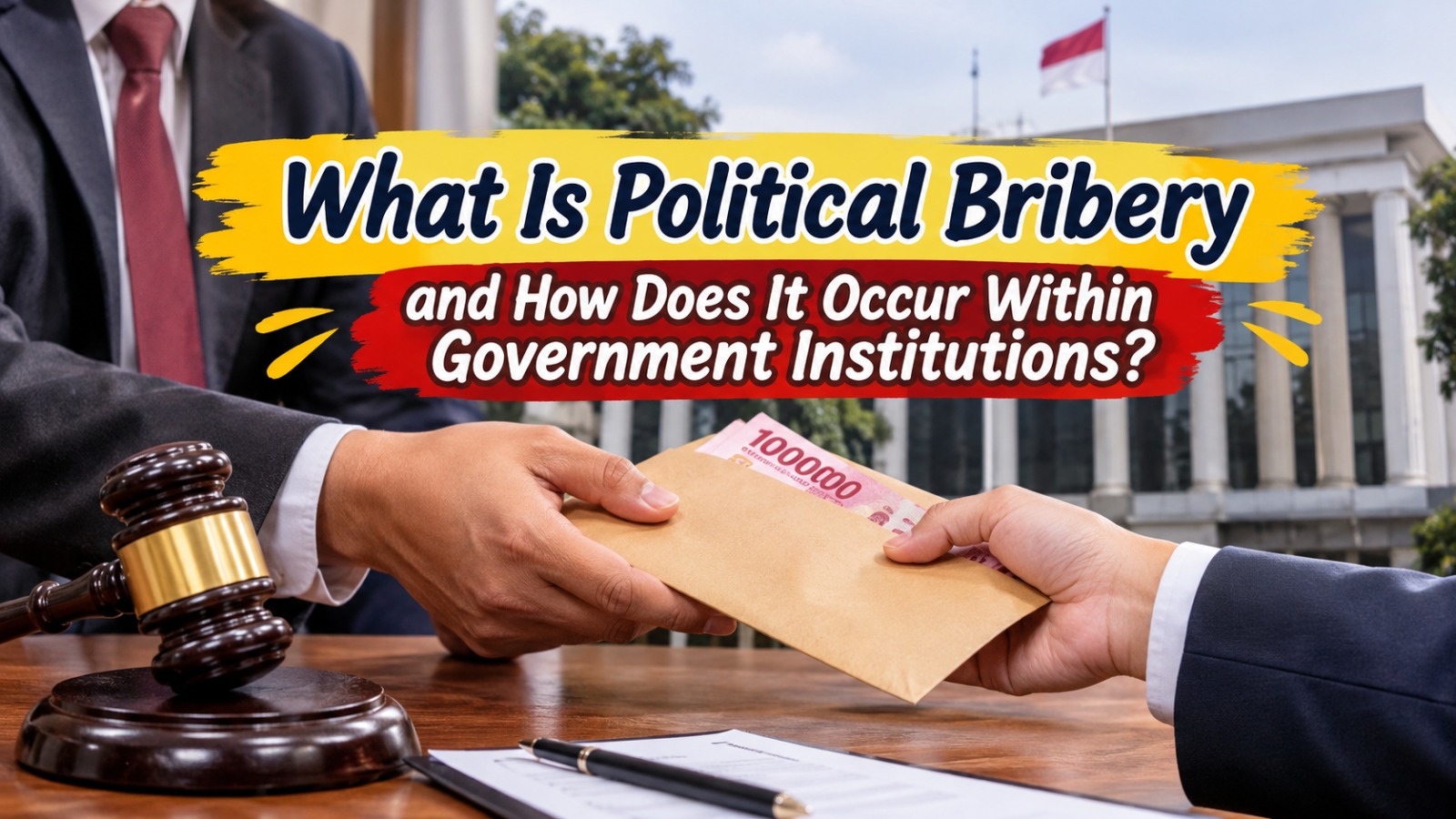
Political bribery is one of the major problems that can weaken government institutions and damage democratic systems. This practice occurs when individuals or groups offer money, gifts, services, or other benefits to influence political decisions for personal or organizational interests. It can involve government officials, political parties, business owners, and other individuals who want to gain certain advantages through illegal agreements. Political bribery does not only violate the law but also threatens fairness, transparency, and accountability in government administration. Understanding its meaning, forms, causes, and consequences is important so that society can recognize and prevent corrupt political practices.
UNDERSTANDING POLITICAL BRIBERY
Political bribery is an illegal practice in which someone provides or promises financial or non-financial benefits to a public official or political decision-maker in exchange for special treatment or favorable decisions. These benefits may include money, expensive gifts, business opportunities, or other personal advantages. The main purpose is to influence someone who has authority or responsibility within a political or government institution. This practice can happen at different levels of government, from local administrations to national institutions.
Political bribery often involves agreements that are intentionally hidden from public attention. For example, a business owner may offer money to a government official to obtain a public project without following a fair selection process. Another example is when an individual provides personal benefits to influence the approval of certain government policies. Such actions create conflicts of interest because public officials no longer prioritize their responsibilities to society. Instead, they use their positions to provide advantages to particular individuals or groups.
HOW POLITICAL BRIBERY OCCURS WITHIN GOVERNMENT INSTITUTIONS
Political bribery can occur through several processes involving individuals who have access to government authority. One common method is offering money or valuable gifts to officials in exchange for favorable decisions. This may happen when companies want to obtain government contracts, secure business permits, or receive special treatment in public administration. In some situations, political actors may also use personal relationships to establish secret agreements with decision-makers. These arrangements are usually designed to benefit certain parties while avoiding public supervision.
Another form of political bribery occurs during the process of creating or implementing government policies. Individuals or organizations may provide financial support or other benefits to influence decisions that affect their interests. For example, a company may attempt to influence regulations so that its business activities receive special advantages. Bribery can also occur in political recruitment, public procurement, and government appointments. Weak internal supervision and limited transparency can make these practices more difficult to detect. Therefore, strong institutional oversight is necessary to prevent government authority from being misused.
FACTORS THAT ENCOURAGE POLITICAL BRIBERY
Several factors can encourage political bribery within government institutions. One important factor is weak law enforcement, which allows individuals to believe that they can engage in corrupt activities without facing serious consequences. When investigations are ineffective or legal penalties are not applied consistently, bribery becomes more difficult to control. Another factor is the lack of transparency in government decision-making, particularly when financial transactions and political agreements are not properly monitored. These conditions create opportunities for individuals to misuse their authority.
In addition, personal greed and political interests can encourage officials to participate in bribery. Some individuals use their positions to obtain wealth, protect business interests, or maintain political influence. Political competition can also create pressure on candidates and organizations to obtain financial support through improper methods. Furthermore, limited public awareness may allow suspicious political activities to continue without strong criticism. Improving ethical standards, strengthening public supervision, and ensuring fair legal processes are important steps toward reducing these problems.
IMPACTS OF POLITICAL BRIBERY ON GOVERNMENT AND SOCIETY
Political bribery creates serious consequences for government institutions and the wider community. One of its most significant effects is the loss of public trust because citizens may begin to believe that government decisions are controlled by money rather than public interests. When officials accept bribes, the principles of fairness and accountability become weaker. As a result, people may lose confidence in democratic institutions and become less interested in participating in political activities.
Political bribery also damages economic development because public resources may be distributed to individuals or businesses that provide illegal benefits instead of those that offer the best services. For example, government projects may be awarded to unqualified companies, resulting in poor construction quality and wasted public funds. This practice can reduce investment confidence and create unfair competition among businesses. Moreover, essential public services such as education, healthcare, and infrastructure may receive less attention because decisions are influenced by private interests. Therefore, preventing political bribery is important for protecting public welfare, economic stability, and democratic integrity.
STRATEGIES TO PREVENT POLITICAL BRIBERY
Preventing political bribery requires cooperation between government institutions, law enforcement agencies, political organizations, and citizens. Governments must establish clear regulations and apply legal penalties fairly to individuals involved in bribery. Independent anti-corruption institutions also need sufficient authority to investigate suspicious transactions and monitor public officials. In addition, government financial activities should be transparent so that citizens can understand how public money is collected and distributed. These measures can reduce opportunities for corruption and strengthen institutional accountability.
Citizens also have an important role in preventing political bribery by refusing illegal offers, reporting suspicious activities, and choosing political leaders based on their integrity and qualifications. Political education can help people understand their rights and recognize practices that threaten democratic fairness. Political parties should also establish strict ethical standards for their members and maintain transparent campaign financing. Furthermore, digital public services and open government information can make administrative processes easier to monitor. Through consistent enforcement, public participation, and institutional reform, governments can build a political system that prioritizes honesty and the interests of society.
CONCLUSION
Political bribery is an illegal practice that occurs when money, gifts, or other benefits are used to influence government decisions for private interests. It can take place in public procurement, policy-making, political appointments, and other government activities. Weak law enforcement, limited transparency, and personal greed are among the factors that encourage this practice. Its consequences include damaged public trust, unfair economic competition, wasted public resources, and weakened democracy.
Addressing political bribery requires more than strict regulations. Government institutions must strengthen transparency, accountability, and ethical standards in every decision-making process. Citizens must also participate actively by rejecting bribery and supporting responsible political leadership. With cooperation between public institutions and society, political bribery can be reduced and democratic governance can become fairer and more trustworthy.
Recent Posts

How Does Technology Make Daily Evaluation... 21.11.2026/58 View

Apa Strategi Menghadapi Kesenjangan antara Kompetensi... 21.11.2026/60 View

Mengapa Inventaris Aset Penting bagi Kelancaran... 21.11.2026/56 View

When Should Musicians Join a Record... 21.11.2026/55 View

Daily Evaluation or Daily Planning Which... 21.11.2026/63 View
