

What Is Population Density and How Is It Calculated?
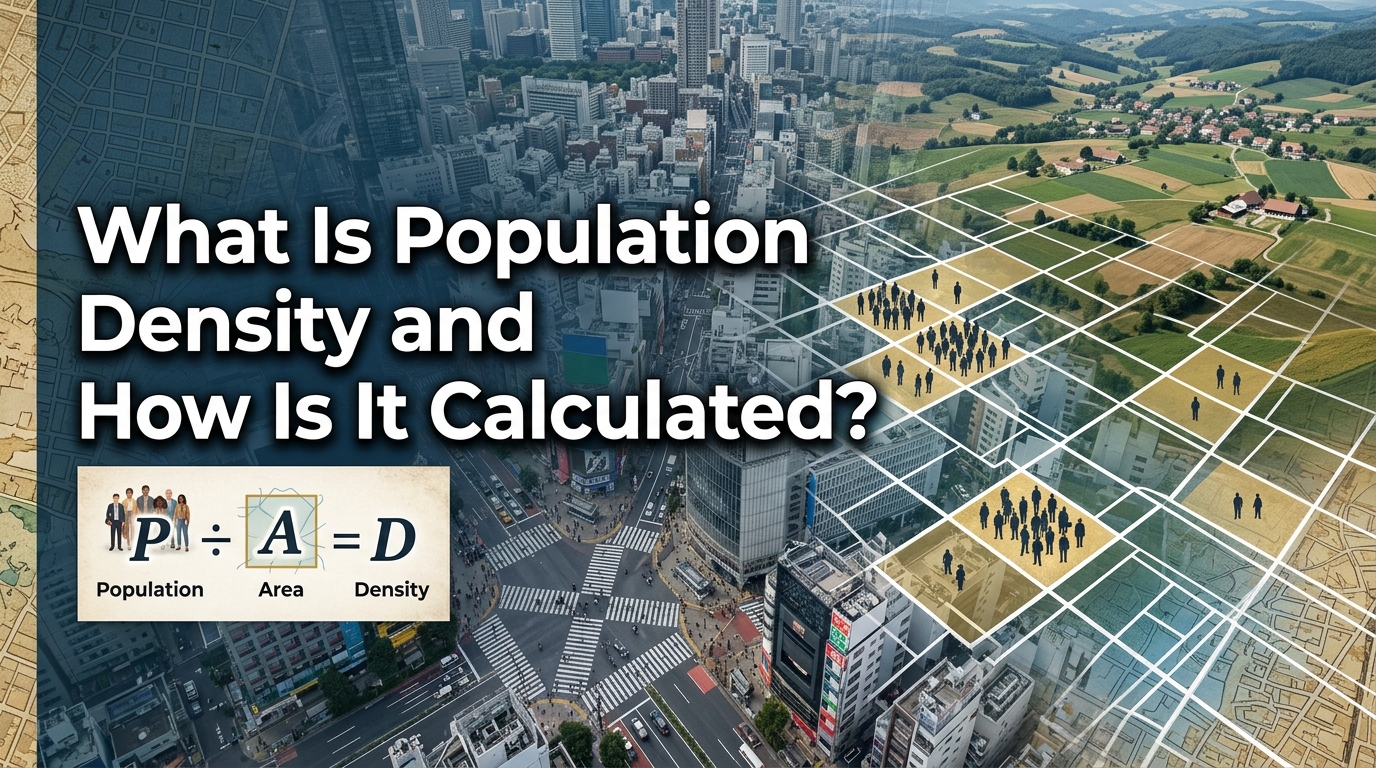
Population density is an important concept in geography and population studies. It describes how many people live in a particular area and helps us understand how populations are distributed across different regions. Some areas have a high population density because many people live close together, while others have a low population density due to fewer residents and larger areas of land. Understanding population density is useful for governments, researchers, and communities when planning public facilities, housing, transportation, and other essential services. But what exactly is population density, and how can it be calculated?
WHAT IS POPULATION DENSITY?
Population density refers to the number of people living within a specific unit of land area. It is commonly measured in people per square kilometer (people/km²) or people per square mile. This measurement helps describe whether an area is densely or sparsely populated. For example, a city with many residents living in a relatively small area generally has a higher population density than a rural region with fewer residents spread across a larger area.
Population density is not only about the total number of people living in a place but also about how they are distributed across its territory. Two regions may have the same population but different population densities because their land areas are not equal. Therefore, this concept is essential for understanding population distribution, urban development, and regional planning.
HOW IS POPULATION DENSITY CALCULATED?
Calculating population density is relatively simple because it requires only two main pieces of information: the total population and the total land area. The total population represents the number of people living in a particular region, while the land area refers to the size of that region. After collecting these figures, the population is divided by the land area to determine the population density.
The general formula is:
Population Density = Total Population ÷ Total Land Area
For example, suppose a city has a population of 500,000 people and covers an area of 250 square kilometers. The calculation would be:
500,000 ÷ 250 = 2,000 people per square kilometer.
This means that the city has an average population density of 2,000 people per km². However, this figure represents an average and does not mean that people are distributed equally throughout the entire city.
EXAMPLES OF POPULATION DENSITY IN DAILY LIFE
Population density can be observed in many places, especially when comparing urban and rural environments. Large cities usually have higher population densities because they offer more employment opportunities, educational institutions, healthcare facilities, and transportation options. As a result, many people choose to live in these areas, creating greater demand for housing and public infrastructure.
In contrast, rural areas often have lower population densities because settlements are more spread out and larger areas are used for agriculture, plantations, forests, or other activities. For example, a village with 5,000 residents across 50 square kilometers has a population density of 100 people per km². This comparison shows how population density can differ significantly depending on the number of residents and the size of the territory.
FACTORS THAT AFFECT POPULATION DENSITY
Several factors influence why some regions have higher population densities than others. One important factor is economic opportunity, as people often move to areas with more jobs, businesses, and better income prospects. Access to education, healthcare, transportation, and other public facilities also encourages people to settle in particular locations. Regions with developed infrastructure generally attract more residents than areas with limited services.
Natural conditions also play an important role in determining population distribution. Areas with suitable climates, fertile soil, accessible water resources, and relatively flat land are often more attractive for settlements. Meanwhile, mountainous regions, deserts, and areas frequently affected by natural disasters may have lower population densities. These factors demonstrate that population density is influenced by both human activities and environmental conditions.
WHY IS POPULATION DENSITY IMPORTANT?
Population density provides valuable information for urban planning and regional development. Governments can use population data to determine where schools, hospitals, roads, public transportation, and other facilities are most needed. Areas with high population density may require more housing, improved transportation systems, and better waste management to support their residents. Without proper planning, population growth can increase pressure on public services and infrastructure.
Population density is also useful for managing natural resources and protecting the environment. Regions with high population concentrations may experience greater demand for clean water, energy, food, and land. By understanding population density, policymakers can develop more effective strategies for managing resources, reducing environmental problems, and improving people's quality of life. It also helps researchers identify population trends and evaluate regional development needs.
DIFFERENCE BETWEEN HIGH AND LOW POPULATION DENSITY
High population density describes an area where many people live within a relatively small amount of land. This condition is commonly found in major cities and urban centers. High-density areas can provide easier access to public transportation, workplaces, schools, and commercial facilities. However, they may also experience traffic congestion, housing shortages, pollution, and increased competition for public resources if development is not properly managed.
On the other hand, low population density refers to areas where relatively few people live across a larger territory. These areas often have more open spaces, less crowded settlements, and greater opportunities for certain agricultural or natural activities. However, residents may face longer travel distances to reach schools, hospitals, markets, and other essential services. Both conditions have advantages and challenges, depending on how communities are developed and managed.
CHALLENGES IN MEASURING POPULATION DENSITY
Although the population density formula is simple, collecting accurate data can be challenging. Population figures need to be updated regularly because migration, births, deaths, and urban development continuously change the number of residents in an area. Outdated population data may produce inaccurate results and affect government planning decisions.
Another challenge is that population density does not show how people are distributed within a region. A large district may contain a crowded city center and several sparsely populated rural areas. When these locations are combined into one calculation, the average may hide significant differences between communities. Therefore, population density should be considered alongside other demographic information, such as settlement patterns, age groups, and population growth.
CONCLUSION
Population density is a measurement that explains how many people live within a specific unit of land area. It is calculated by dividing the total population by the total land area, usually expressed in people per square kilometer. This concept helps us understand differences in population distribution between urban and rural regions. It also provides important information for urban planning, infrastructure development, environmental management, and public service allocation.
By understanding population density, governments and communities can make better decisions about housing, transportation, education, healthcare, and natural resource management. Although population density does not describe every aspect of population distribution, it remains an essential tool for understanding how people occupy and use different areas of land.
Recent Posts

Bagaimana Sistem SKS pada Program Kuliah... 22.11.2026/33 View

How Does Technology Make Daily Evaluation... 21.11.2026/67 View

Apa Strategi Menghadapi Kesenjangan antara Kompetensi... 21.11.2026/67 View

Mengapa Inventaris Aset Penting bagi Kelancaran... 21.11.2026/65 View

When Should Musicians Join a Record... 21.11.2026/66 View
