

What Is State Budget Preparation and Why Is It Important for a Country?
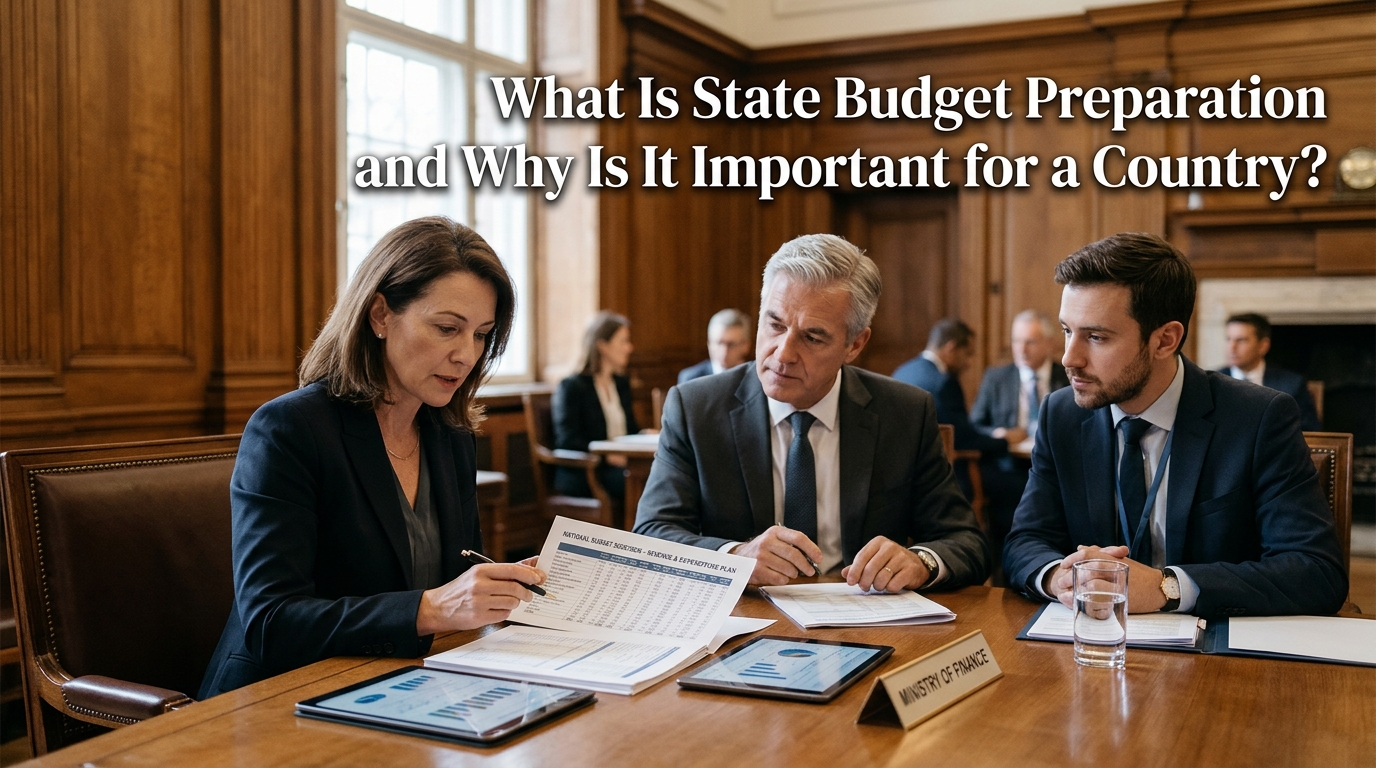
State budget preparation is an essential process in managing a country's finances. It determines how the government plans to collect revenue and allocate public funds to support national development and meet the needs of its citizens. A well-prepared budget helps the government establish priorities, maintain economic stability, and improve public services. Understanding state budget preparation is important because government spending decisions can directly affect education, healthcare, infrastructure, employment, and public welfare. Therefore, an effective budget must be planned carefully, transparently, and responsibly to ensure that public money delivers meaningful benefits.
WHAT IS STATE BUDGET PREPARATION?
State budget preparation is the process of planning government revenue and expenditure for a specific fiscal year. It involves estimating how much money the government will receive from taxes, fees, natural resources, and other legal sources. The government then determines how these funds will be distributed among different sectors according to national priorities. These sectors may include education, healthcare, transportation, public security, and social assistance. Through this process, the government creates a financial plan that guides public spending and supports the country's development goals.
The budget preparation process generally involves government institutions, financial authorities, ministries, and legislative bodies, depending on the country's legal system. Each institution helps identify funding needs and propose spending priorities. The proposed budget is then reviewed to ensure that planned expenditure is reasonable and supported by available revenue and financing. After the required approval process, the budget becomes the basis for government financial activities during the fiscal year. This makes budget preparation an important foundation for responsible public financial management.
WHY IS STATE BUDGET PREPARATION IMPORTANT?
State budget preparation is important because it helps the government use limited financial resources to address the country's most urgent needs. Without careful planning, public funds may be spent inefficiently or directed toward less important programs. A well-designed budget allows the government to prioritize essential services and allocate money according to clear objectives. It also helps maintain a balance between government revenue, expenditure, and financing requirements. As a result, effective budget planning can support economic stability and improve the quality of life for citizens.
Another important benefit is that the budget provides a framework for measuring government performance. Public institutions can compare planned spending with actual expenditure and evaluate whether programs achieve their intended results. This process helps identify weaknesses, improve future policies, and reduce unnecessary costs. Transparent budgeting also allows citizens and oversight institutions to examine how public money is managed. Therefore, state budget preparation contributes to accountability, public trust, and sustainable national development.
WHAT ARE THE MAIN SOURCES OF STATE REVENUE?
Government revenue comes from several sources, with tax revenue usually playing a major role in financing public services. Taxes may include personal income tax, corporate income tax, value-added tax, and property-related taxes, depending on national regulations. Governments may also receive non-tax revenue from administrative fees, natural resources, dividends from state-owned enterprises, and other lawful sources. In some countries, grants and international assistance also contribute to public financing. Estimating these sources accurately is essential because revenue projections determine how much the government can reasonably spend.
When preparing the budget, the government must consider economic growth, inflation, commodity prices, and changes in tax collection. Overestimating revenue can create a funding gap when actual collections fall below expectations. Underestimating revenue may also limit the government's ability to finance important development programs. For this reason, reliable revenue forecasting is necessary to create a realistic financial plan. Careful estimates help governments manage financial risks and make better spending decisions.
HOW DOES THE GOVERNMENT ALLOCATE THE STATE BUDGET?
The government allocates the state budget by identifying priorities and distributing available funds among public programs. Essential services such as education, healthcare, infrastructure, and social protection often receive significant attention because they directly affect citizens' welfare. Funding decisions also depend on national development plans, regional needs, economic conditions, and existing government obligations. Each proposed program should have clear objectives and an estimated cost. This approach helps ensure that public expenditure supports measurable outcomes rather than unnecessary spending.
Budget allocation also requires balancing short-term needs with long-term development goals. For example, emergency assistance may be needed immediately, while investments in schools, roads, and digital infrastructure can generate benefits over many years. Governments must also consider debt payments, public employee salaries, and the maintenance of existing facilities. In countries with regional governments, budget transfers may be used to support local public services and reduce development inequalities. Through strategic budget allocation, the government can distribute resources more effectively and promote inclusive economic growth.
WHAT ARE THE MAIN STAGES OF STATE BUDGET PREPARATION?
The state budget preparation process generally consists of several connected stages. First, the government establishes economic assumptions and fiscal targets, including revenue estimates and spending limits. Second, ministries and public institutions submit proposals based on their programs and funding requirements. Third, the finance authority reviews these proposals, adjusts priorities, and prepares a consolidated budget plan. The proposed budget is then submitted to the appropriate legislative body for discussion, revision, and approval according to national law.
After approval, the government implements the budget and monitors spending throughout the fiscal year. Financial reports help determine whether public institutions are using their allocations appropriately and achieving their targets. At the end of the period, an evaluation and audit process examines financial performance, compliance, and the effectiveness of government programs. The findings can guide improvements in the next budget cycle. These stages help establish budget accountability, strengthen financial control, and ensure that public resources are managed according to established rules.
WHAT HAPPENS IF STATE BUDGET PREPARATION IS INEFFECTIVE?
Ineffective state budget preparation can create serious financial and economic problems. If revenue is overestimated, the government may face funding shortages that delay projects or reduce planned public services. Poor spending priorities can also direct money away from essential needs and reduce the benefits citizens receive from government programs. In addition, weak financial planning may contribute to inefficient borrowing and increased pressure on public finances. These problems can undermine economic stability and slow national development.
Poor budget management can also weaken public confidence in government institutions. When spending decisions lack transparency or programs fail to deliver expected results, citizens may question how public money is being used. Weak oversight can increase the risk of waste, irregular expenditure, and corruption. To prevent these problems, governments need realistic financial projections, clear spending priorities, regular monitoring, and independent audits. Transparent budget management helps reduce financial risks and encourages responsible decision-making.
HOW CAN STATE BUDGET PREPARATION BE IMPROVED?
State budget preparation can be improved through accurate data, realistic planning, and stronger coordination between government institutions. Revenue forecasts should reflect current economic conditions and consider possible risks, such as slower growth or declining commodity prices. Spending proposals should be evaluated based on public needs, expected benefits, and measurable performance indicators. Governments can also use digital financial systems to improve budget monitoring and make information easier to access. These measures support efficient public spending and help ensure that limited resources are used wisely.
Public participation and independent oversight are also important for improving budget quality. Citizens, researchers, civil society organizations, and other stakeholders can provide useful perspectives on spending priorities. Publishing budget information in clear and accessible language allows the public to understand government decisions and monitor their implementation. Regular evaluations can reveal which programs work well and which require changes. By combining transparency, accountability, and evidence-based planning, governments can create more effective budgets and strengthen long-term public welfare.
CONCLUSION
State budget preparation is a fundamental part of responsible government because it determines how public revenue is collected, distributed, and used. A well-prepared budget supports essential services, economic stability, infrastructure development, and social welfare. It also provides a framework for monitoring public expenditure and evaluating government performance. However, these benefits depend on realistic revenue estimates, appropriate spending priorities, and strong financial oversight. Ultimately, effective and transparent budget preparation helps a country manage its resources responsibly and build a stronger foundation for sustainable development.
Recent Posts

Bagaimana Sistem SKS pada Program Kuliah... 22.11.2026/47 View

How Does Technology Make Daily Evaluation... 21.11.2026/75 View

Apa Strategi Menghadapi Kesenjangan antara Kompetensi... 21.11.2026/76 View

Mengapa Inventaris Aset Penting bagi Kelancaran... 21.11.2026/73 View

When Should Musicians Join a Record... 21.11.2026/77 View
