

What Is the Connection Between Eye Contact and Trust?
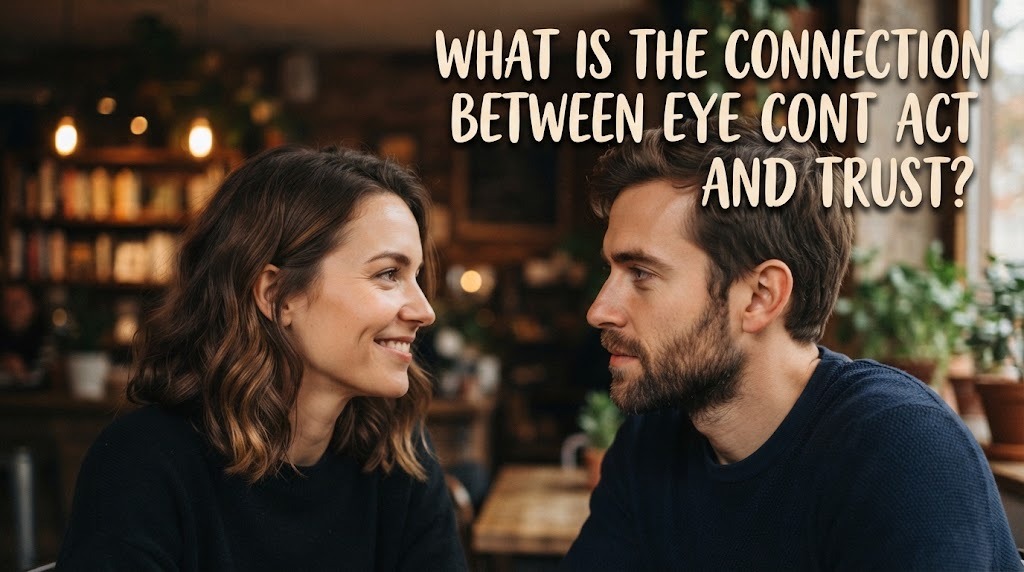
Eye contact is an important part of nonverbal communication that can influence how people perceive each other during conversations. Looking at someone while they are speaking can show attention, interest, and respect. Because of this, appropriate eye contact can contribute to the development of trust between people. However, its meaning can change depending on the situation, culture, and relationship between individuals.
Trust usually develops through repeated positive interactions rather than one single behavior. Eye contact can support this process by making communication feel more direct and personal. When used naturally, it can help people feel that they are being heard and taken seriously.
SHOWS ATTENTION AND INTEREST
Appropriate eye contact can show that a person is paying attention to the conversation. When someone looks at the speaker while listening, it can communicate that the conversation matters to them. This simple behavior can make the speaker feel valued and respected.
Eye contact can also encourage people to stay engaged in a conversation. For example, during a discussion between friends, maintaining natural eye contact can show that both people are interested in what the other person is saying. This can create a stronger sense of connection and support trust.
CREATES A SENSE OF OPENNESS
Eye contact can make communication feel more open and direct. When people comfortably look at each other, they may feel more connected during the interaction. This can help reduce the feeling of distance and make conversations more personal.
However, eye contact should not be confused with staring. Excessive or intense eye contact can make someone feel uncomfortable or pressured. Natural and appropriate eye contact is generally more effective for creating a comfortable communication environment.
SUPPORTS CONFIDENT COMMUNICATION
Eye contact can also influence how confidence is perceived. A person who maintains appropriate eye contact while speaking may appear more confident and prepared. This can be especially useful during presentations, interviews, meetings, or important discussions where people want to communicate their ideas clearly.
Confidence can contribute to trust because people may feel more comfortable interacting with someone who communicates calmly. Nevertheless, eye contact alone does not prove that a person is confident or trustworthy. It should be considered together with speech, facial expressions, posture, and other communication behaviors.
HELPS BUILD PERSONAL CONNECTIONS
Eye contact can strengthen personal connections by creating a feeling of direct interaction. When people look at each other while talking, they can more easily notice facial expressions and emotional reactions. This can help them understand each other's feelings and responses.
In close relationships, appropriate eye contact can make conversations feel more meaningful. It can communicate warmth and emotional presence without requiring additional words. Over time, these positive interactions can contribute to stronger relationships and greater trust.
CULTURE AND CONTEXT MATTER
The connection between eye contact and trust is not the same in every culture or situation. Some cultures may consider direct eye contact a sign of confidence and respect, while others may prefer less direct eye contact in certain social situations. Personal habits, age, social roles, and the level of familiarity between people can also influence how eye contact is interpreted.
For this reason, people should avoid judging someone's character based only on their eye contact. Someone who avoids direct eye contact may simply feel nervous, shy, uncomfortable, or influenced by cultural expectations. Understanding the context and individual differences can prevent misunderstandings.
HOW TO USE EYE CONTACT EFFECTIVELY
Effective eye contact should feel natural rather than forced. During conversations, people can look at the speaker regularly while occasionally looking away to remain relaxed. When speaking, they can also make brief eye contact with different people instead of focusing continuously on one person.
It is important to balance eye contact with other forms of nonverbal communication. A relaxed facial expression, appropriate posture, and attentive listening can strengthen the message. By using these signals naturally, people can create communication that feels respectful, confident, and trustworthy.
CONCLUSION
Eye contact is connected to trust because it can show attention, create openness, support confidence, and strengthen personal connections. Appropriate eye contact can make communication feel more direct and genuine. However, it should always be interpreted together with context, culture, and other nonverbal signals.
Recent Posts

Bagaimana Sistem SKS pada Program Kuliah... 22.11.2026/40 View

How Does Technology Make Daily Evaluation... 21.11.2026/71 View

Apa Strategi Menghadapi Kesenjangan antara Kompetensi... 21.11.2026/73 View

Mengapa Inventaris Aset Penting bagi Kelancaran... 21.11.2026/69 View

When Should Musicians Join a Record... 21.11.2026/73 View
