

What Is the Connection Between Fossil Fuels and Global Warming?
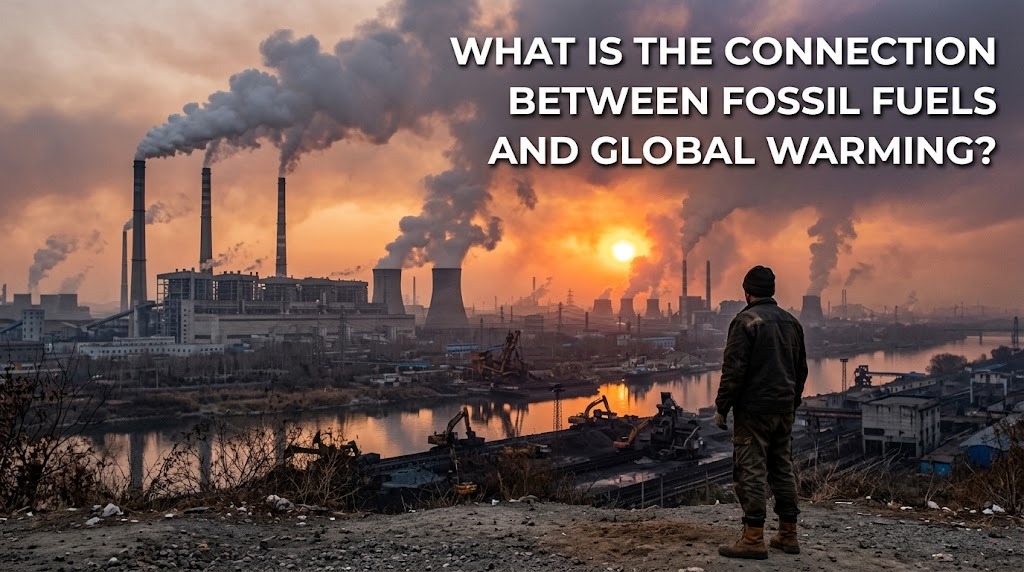
Fossil fuels are among the main sources of energy used around the world. Coal, petroleum, and natural gas power electricity generation, transportation, industrial production, and many everyday activities. However, burning these fuels releases greenhouse gases that contribute to global warming, making fossil fuel use a major factor in modern climate change.
The connection between fossil fuels and global warming comes from the release of carbon dioxide and other heat-trapping gases into the atmosphere. These emissions strengthen the greenhouse effect and increase the Earth's average temperature over time. Understanding this relationship can help explain why reducing fossil fuel consumption and developing cleaner energy sources are important parts of climate action.
BURNING FOSSIL FUELS RELEASES GREENHOUSE GASES
One of the main reasons fossil fuels contribute to global warming is that burning them releases carbon dioxide. Coal, petroleum, and natural gas contain carbon that has been stored underground for millions of years. When these fuels are burned for energy, the carbon combines with oxygen and enters the atmosphere as carbon dioxide.
Other greenhouse gases can also be released during fossil fuel production and distribution. For example, methane may escape from natural gas wells, pipelines, and other parts of the supply chain. Methane traps more heat per unit of mass than carbon dioxide over a given period, although it remains in the atmosphere for a shorter time. These emissions increase the concentration of greenhouse gases and contribute to the warming of the planet.
GREENHOUSE GASES TRAP HEAT IN THE ATMOSPHERE
The Earth's climate depends partly on the balance between incoming energy from the Sun and heat released back into space. Greenhouse gases, including carbon dioxide and methane, absorb and re-emit some of the heat that the Earth radiates. This natural greenhouse effect keeps the planet warm enough to support life.
The problem occurs when human activities increase greenhouse gas concentrations beyond natural levels. Additional gases cause more heat to be retained in the climate system, raising average global temperatures. This process is known as the enhanced greenhouse effect and is a major driver of human-caused global warming. The warming then influences rainfall patterns, ice loss, sea levels, and other parts of the climate system.
ELECTRICITY, TRANSPORTATION, AND INDUSTRY DEPEND ON FOSSIL FUELS
Fossil fuels are widely used across several sectors, which explains why they contribute significantly to global emissions. Coal and natural gas are used to generate electricity, while petroleum products such as petrol and diesel power many cars, trucks, ships, and aircraft. Industries also use fossil fuels to provide heat, operate machinery, and manufacture materials such as steel and cement.
This widespread dependence means that emissions cannot be reduced through a single change alone. Cleaner electricity, more efficient buildings, low-emission transportation, and improved industrial processes can all help reduce fossil fuel use. For example, electric vehicles can lower transportation emissions when powered by relatively low-carbon electricity. Similarly, replacing fossil fuel electricity generation with renewable sources can reduce emissions from the power sector.
FOSSIL FUEL EMISSIONS CAUSE LONG-TERM CLIMATE IMPACTS
The effects of fossil fuel emissions extend beyond rising temperatures. As the planet warms, glaciers and land-based ice sheets lose mass, contributing to rising sea levels. Heatwaves are becoming more intense in many regions, while rainfall patterns and the risk of certain extreme weather events are changing.
Carbon dioxide also dissolves into seawater, causing ocean acidification, which can affect organisms that build shells or skeletons from calcium carbonate. Ecosystems may experience shifts in species distribution, food availability, and habitat conditions. These impacts can affect agriculture, public health, coastal communities, and economic activities. Because carbon dioxide can remain in the climate system for a long time, emissions released today can influence global temperatures for decades or longer.
CLEANER ENERGY CAN HELP REDUCE GLOBAL WARMING
Reducing fossil fuel consumption is an important part of limiting future global warming. Renewable energy technologies, including solar and wind power, can generate electricity without directly releasing greenhouse gases during operation. Energy efficiency improvements can also reduce the amount of energy needed for lighting, cooling, transportation, and industrial production.
Other measures include expanding public transportation, improving building design, reducing methane leaks, and electrifying equipment where practical. The transition requires investment, suitable infrastructure, and planning to maintain reliable energy supplies. It is also important to consider the emissions associated with manufacturing and installing new technologies. Nevertheless, replacing high-emission energy sources with lower-carbon alternatives can substantially reduce greenhouse gas emissions when implemented effectively.
CONCLUSION
The connection between fossil fuels and global warming lies in the greenhouse gas emissions produced when coal, petroleum, and natural gas are extracted, processed, transported, and burned. Carbon dioxide and methane increase the amount of heat retained in the climate system, contributing to rising temperatures and changes in the Earth's environment. These changes can affect weather patterns, ecosystems, oceans, and human communities.
Reducing global warming requires a gradual shift toward cleaner energy, improved energy efficiency, and lower-emission transportation and industrial systems. Governments, businesses, and individuals can support this transition through responsible energy choices and investments in sustainable technologies. By reducing fossil fuel emissions, societies can help limit future warming and lessen the risks associated with climate change.
Recent Posts

Bagaimana Sistem SKS pada Program Kuliah... 22.11.2026/49 View

How Does Technology Make Daily Evaluation... 21.11.2026/76 View

Apa Strategi Menghadapi Kesenjangan antara Kompetensi... 21.11.2026/78 View

Mengapa Inventaris Aset Penting bagi Kelancaran... 21.11.2026/74 View

When Should Musicians Join a Record... 21.11.2026/78 View
