

What Is the Connection Between Musical Intelligence and Creativity?
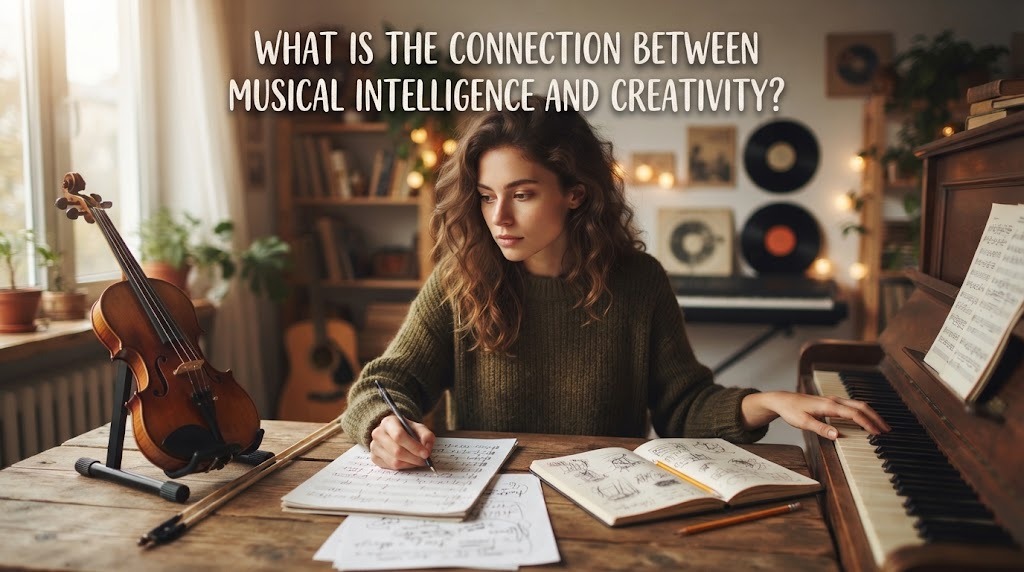
Musical intelligence and creativity are closely connected because both involve recognizing patterns, exploring ideas, and expressing thoughts or emotions in different ways. Musical intelligence refers to the ability to understand and work with musical elements such as rhythm, melody, pitch, and sound. Creativity is the ability to develop new ideas, find different solutions, or produce original work. When these abilities work together, people can use music to express themselves, experiment with sounds, and create something unique. Understanding this connection can help students, musicians, and anyone interested in music develop their creative potential.
UNDERSTANDING MUSICAL INTELLIGENCE AND CREATIVITY
Musical intelligence is the ability to recognize, understand, remember, and create musical patterns. People with musical intelligence may be good at identifying melodies, following rhythms, playing instruments, or noticing differences in sound. These abilities can help them understand how musical elements work together. Musical intelligence can also develop through listening, practice, and learning.
Creativity involves producing ideas or work that is both original and meaningful within a particular context. In music, creativity can appear through composing songs, writing lyrics, changing arrangements, or experimenting with different instruments. Musical intelligence can provide the skills needed to explore these possibilities, while creativity helps people use those skills in new ways. However, musical intelligence and creativity are not exactly the same, and a person can demonstrate them at different levels.
HOW MUSICAL INTELLIGENCE SUPPORTS CREATIVE THINKING
Musical intelligence can support creative thinking by helping people recognize patterns and understand relationships between sounds. When someone understands rhythm, melody, and harmony, they have more musical elements to experiment with. They can combine familiar patterns, change the tempo, or create variations to produce different musical effects. This process encourages them to explore several possibilities instead of relying on only one approach.
For example, a student learning the guitar may create a new melody by changing the order of notes in a familiar musical pattern. A songwriter may experiment with different rhythms to make a song feel more energetic or emotional. These activities demonstrate how musical knowledge can provide a foundation for creative exploration. The more people understand musical elements, the more options they may have when developing their ideas.
MUSIC AS A WAY TO EXPRESS EMOTIONS AND IDEAS
Music provides a powerful way to communicate emotions and ideas without relying entirely on words. People can use melody, rhythm, tempo, and dynamics to express feelings such as happiness, sadness, excitement, or calmness. Those with developed musical abilities may learn to use these elements intentionally when performing or composing music. Creative expression allows them to transform personal experiences and observations into musical forms.
For instance, a composer may use a slow tempo and gentle sounds to create a peaceful atmosphere. Another musician may use strong beats and changing melodies to express excitement or tension. These choices show how musical understanding can support creative communication. However, emotional expression in music is personal, and listeners may interpret the same composition in different ways.
THE ROLE OF EXPERIMENTATION IN MUSICAL CREATIVITY
Experimentation is an important part of developing creativity through music. People can explore different instruments, combine musical styles, change familiar melodies, or create rhythms using everyday objects. These activities encourage curiosity and help learners discover new ways to produce sounds. Experimentation also allows people to learn from mistakes and understand which musical ideas work well together.
Technology has made musical experimentation more accessible. Digital audio workstations, music applications, and recording tools allow beginners to arrange sounds, edit recordings, and test musical ideas without needing a professional studio. By trying different approaches, learners can gradually develop their own musical style. Creative growth often comes from repeated exploration rather than producing a perfect result on the first attempt.
HOW MUSICAL ACTIVITIES CAN DEVELOP CREATIVE SKILLS
Regular musical activities can provide opportunities to practice creativity. Learning an instrument helps people explore notes and rhythms, while songwriting encourages them to organize thoughts into lyrics and melodies. Improvisation allows musicians to create music spontaneously instead of following a completely fixed arrangement. Group performances also encourage collaboration because participants must listen to one another and adjust their ideas.
These activities can help learners become more comfortable with experimentation and self-expression. For example, a group of students can create a short song together by combining different melodies and rhythmic patterns. Each person contributes an idea, and the group develops those ideas into a shared composition. Such experiences can encourage flexible thinking, cooperation, and confidence in creative work.
DOES HIGH MUSICAL INTELLIGENCE ALWAYS MEAN HIGH CREATIVITY?
High musical intelligence does not automatically mean that someone is highly creative. A person may have excellent technical skills and a strong ability to recognize notes but prefer to perform existing compositions rather than create new ones. Another person may have limited formal musical training but produce original songs through imagination and experimentation. These examples show that musical knowledge and creative expression are related but distinct abilities.
Creativity also depends on other factors, including motivation, experience, curiosity, and opportunities to explore ideas. Musical training can provide useful tools, but people still need opportunities to experiment and make independent decisions. Similarly, creativity can improve through practice, feedback, and exposure to different musical styles. Both abilities can support each other without necessarily developing at the same rate.
WAYS TO STRENGTHEN MUSICAL INTELLIGENCE AND CREATIVITY
People can develop musical intelligence and creativity by listening carefully to different types of music and identifying their rhythms, melodies, and instruments. Learning an instrument or practicing singing can build musical understanding and provide new ways to express ideas. Writing simple lyrics, creating short melodies, and experimenting with sound combinations can also encourage creative thinking. Beginners should focus on regular practice rather than expecting immediate results.
Another useful approach is to collaborate with other musicians or participate in music-related activities at school or in the community. Working with others introduces different perspectives and encourages people to consider ideas they might not discover alone. Recording musical experiments can also help learners review their work and identify areas for improvement. With consistent practice and an open mind, people can gradually strengthen their musical abilities and explore their creative potential.
CONCLUSION
Musical intelligence and creativity are connected because musical understanding gives people tools to explore, develop, and express original ideas. Recognizing rhythms, melodies, and sound patterns can help musicians experiment with different musical possibilities. At the same time, creativity allows them to use these skills in personal and meaningful ways. However, musical intelligence does not automatically guarantee high creativity, because motivation, experience, and opportunities also influence creative development. Through listening, practice, experimentation, and collaboration, people can develop both their musical abilities and their creative potential.
Recent Posts

Bagaimana Sistem SKS pada Program Kuliah... 22.11.2026/25 View

How Does Technology Make Daily Evaluation... 21.11.2026/64 View

Apa Strategi Menghadapi Kesenjangan antara Kompetensi... 21.11.2026/65 View

Mengapa Inventaris Aset Penting bagi Kelancaran... 21.11.2026/62 View

When Should Musicians Join a Record... 21.11.2026/61 View
