

What Is The Connection Between Speaking And Communication Skills?
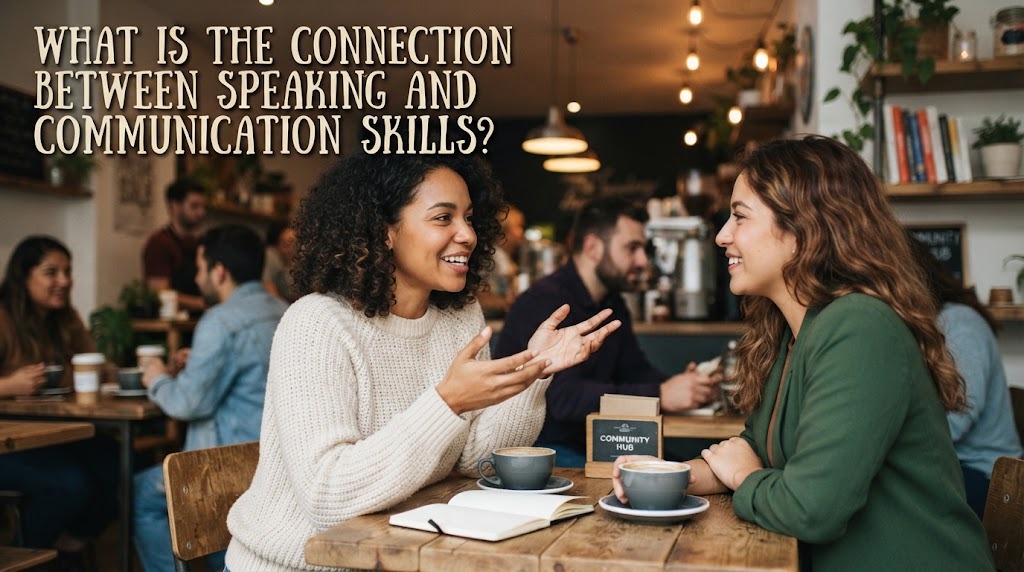
Speaking and communication skills are closely connected because speaking is one of the main ways people share information, ideas, and feelings. Good speaking skills can help a person deliver a message clearly and make it easier for others to understand. However, effective communication involves more than simply talking. It also includes listening, understanding, body language, and responding appropriately. Understanding the connection between these skills can help people communicate more effectively in everyday life, education, and the workplace.
WHAT ARE SPEAKING SKILLS?
Speaking skills are the abilities people use to express their thoughts and information through spoken language. These skills include pronunciation, vocabulary, grammar, voice control, and the ability to organize ideas. A good speaker can explain information in a way that is clear and appropriate for the situation. Speaking skills are useful in conversations, presentations, interviews, meetings, and many other situations. They can also help people express their opinions with greater confidence.
Good speaking is not only about using correct words. A speaker also needs to consider tone, speed, volume, and intonation. These elements can affect how the listener understands the message. For example, speaking too quickly may make an explanation difficult to follow. Therefore, developing speaking skills can improve the quality of verbal communication.
WHAT ARE COMMUNICATION SKILLS?
Communication skills refer to the abilities people use to exchange information and understand one another. These skills include speaking, listening, reading, writing, nonverbal communication, and responding. Effective communication happens when a message is delivered clearly and understood correctly by the other person. It also requires people to pay attention to the needs and reactions of others. This makes communication a two-way process rather than simply speaking.
For example, a person may speak clearly but still communicate poorly if they do not listen to the other person. Active listening allows people to understand questions, opinions, and concerns before responding. Facial expressions, gestures, and eye contact can also provide additional information. Therefore, communication skills involve several abilities that work together.
HOW DOES SPEAKING SUPPORT COMMUNICATION?
Speaking provides a direct way for people to communicate their ideas and information. When people can organize their thoughts and explain them clearly, their messages are easier to understand. Clear speaking can reduce confusion and prevent unnecessary misunderstandings. It also allows people to express their needs, opinions, and emotions more effectively. This is why speaking is an important part of successful communication.
However, effective speaking should be adapted to the situation and audience. The words used with friends may be different from those used with teachers, customers, or coworkers. A speaker who understands the audience can choose an appropriate tone and level of formality. Effective communication depends on how well the speaker delivers information and how well the listener receives it. Both sides have an important role in the communication process.
THE ROLE OF LISTENING IN COMMUNICATION
Listening is an important partner to speaking because communication cannot work effectively if only one person talks. Active listening means paying attention to what another person says, understanding the message, and responding appropriately. Good listeners do not simply wait for their turn to speak. They focus on the speaker's words, tone, and meaning. This helps create more accurate and meaningful conversations.
Strong listening skills can also improve speaking. When people listen to others, they can learn new vocabulary, communication styles, and ways to explain ideas. They can also understand what types of explanations are easier for others to follow. Listening and speaking therefore support each other. Improving both skills can make everyday communication more successful.
THE IMPORTANCE OF NONVERBAL COMMUNICATION
Communication is not limited to spoken words. Nonverbal communication includes facial expressions, gestures, posture, eye contact, and other physical signals. These signals can support or sometimes change the meaning of spoken words. For example, a friendly facial expression can make a simple greeting sound more welcoming. On the other hand, avoiding eye contact or using a closed posture may make a speaker appear uncomfortable or uninterested.
Speakers should make sure that their body language is consistent with their words. A confident message may become less convincing if the speaker uses nervous or distracting movements. Body language can also help audiences understand emotions and intentions. Using appropriate nonverbal signals makes communication more complete. This shows that effective communication involves both verbal and nonverbal elements.
SPEAKING AND COMMUNICATION IN DAILY LIFE
Speaking and communication skills are used in many everyday situations. People use them when talking with family members, making new friends, asking questions, discussing problems, or sharing opinions. Good communication can make relationships stronger because people can express themselves and understand others more easily. Clear speaking can also reduce confusion during simple daily interactions. These skills are useful regardless of age or profession.
In school and work, these abilities become even more important. Students may need to give presentations, participate in discussions, or answer questions in class. Employees may need to communicate with coworkers, customers, managers, or business partners. Strong communication skills can help people work together and solve problems more effectively. For this reason, developing speaking skills can provide benefits in many areas of life.
HOW CAN YOU IMPROVE BOTH SKILLS?
You can improve speaking and communication skills through regular practice. Start by practicing how to explain simple ideas clearly without using unnecessary words. You can also read aloud, participate in discussions, practice presentations, or record yourself speaking. At the same time, practice listening carefully without interrupting other people. These simple activities can gradually improve both speaking and communication.
It is also useful to ask for feedback from people you trust. They may notice problems with your pronunciation, speaking speed, body language, or ability to explain ideas. Try to use their feedback to make small improvements instead of expecting immediate perfection. Continuous practice can make communication feel more natural and comfortable. Over time, these improvements can increase your confidence in different speaking situations.
CONCLUSION
Speaking and communication skills are strongly connected because speaking is one of the main ways people express and exchange information. Clear speaking helps deliver messages, while listening and nonverbal communication help ensure that those messages are properly understood. Both skills are important for building relationships, participating in education, and succeeding in the workplace. By practicing speaking, listening, body language, and feedback, people can gradually become better communicators. Improving these skills can lead to clearer conversations, stronger confidence, and more effective communication in everyday life.
Recent Posts

Bagaimana Sistem SKS pada Program Kuliah... 22.11.2026/37 View

How Does Technology Make Daily Evaluation... 21.11.2026/70 View

Apa Strategi Menghadapi Kesenjangan antara Kompetensi... 21.11.2026/73 View

Mengapa Inventaris Aset Penting bagi Kelancaran... 21.11.2026/68 View

When Should Musicians Join a Record... 21.11.2026/71 View
