

What Is the Difference Between a Job Application Letter and a Resume?
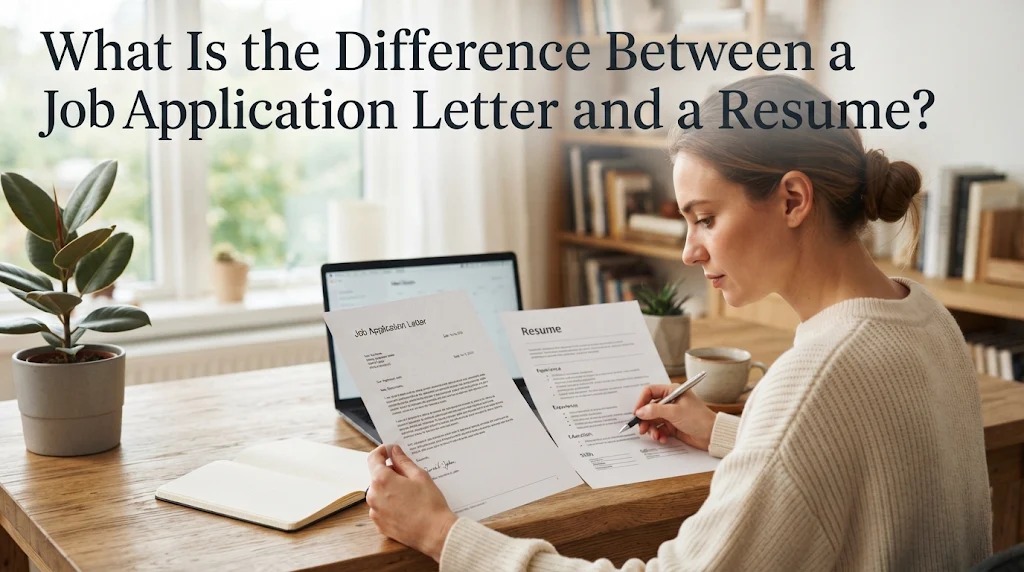
A job application letter and a resume are two important documents used when applying for a job. Employers often request both documents to understand an applicant's background, qualifications, and interest in a particular position. Although they are usually submitted together, each document has a different purpose and structure. A job application letter explains why someone wants the job and why they are suitable for the role, while a resume summarizes their education, work experience, skills, and achievements. Understanding the difference between these documents helps job seekers prepare more effective applications and present themselves professionally during the recruitment process.
DEFINITION OF A JOB APPLICATION LETTER AND A RESUME
A job application letter is a formal document written by an applicant to express interest in a specific job opportunity. It introduces the applicant, identifies the position they want, and explains why their qualifications match the company's requirements. The letter also allows applicants to communicate their motivation and highlight relevant strengths in a professional way.
A resume is a structured document that summarizes an individual's professional and educational background. It generally includes contact information, education, employment history, skills, achievements, and other relevant qualifications. Unlike an application letter, a resume presents information in organized sections so recruiters can review the applicant's background quickly. Both documents provide useful information, but they serve different purposes in the hiring process.
DIFFERENCES IN PURPOSE AND FUNCTION
The main difference between a job application letter and a resume is their purpose. An application letter is designed to explain the applicant's interest in a position and persuade the employer to consider their qualifications. It provides an opportunity to describe how personal experience and abilities relate to the responsibilities of the job. A resume, meanwhile, helps recruiters evaluate the applicant's background and determine whether they meet the required qualifications.
These documents complement each other during recruitment. The application letter communicates the applicant's motivation, while the resume provides supporting details about their experience and abilities. For example, someone applying for an administrative position may explain their interest in office management in the letter. Their resume can then provide evidence through previous administrative experience, computer skills, or relevant training.
DIFFERENCES IN CONTENT AND INFORMATION
A job application letter usually contains information presented in several connected paragraphs. It includes an introduction, the position being applied for, relevant qualifications, reasons for applying, and a polite closing. Applicants should focus on the experience and abilities that are most relevant to the specific vacancy. The information should be concise and should not repeat every detail already included in the resume.
A resume contains more detailed information about the applicant's background. It may include educational history, previous employment, internships, organizational activities, technical skills, language abilities, certifications, and professional achievements. The information is generally arranged using headings and bullet points to make it easier to read. Applicants should prioritize recent and relevant experiences while keeping all details accurate. This structure allows recruiters to identify important qualifications without reading long paragraphs.
DIFFERENCES IN FORMAT AND WRITING STYLE
A job application letter generally follows a formal business letter format. It includes the date, recipient information when available, greeting, opening paragraph, main content, and closing. Its writing style should be polite, professional, and persuasive without sounding exaggerated. The letter is usually written in paragraph form and should be concise enough for recruiters to understand its main message quickly.
A resume uses a more flexible format based on the applicant's experience and the requirements of the position. It commonly contains separate sections for personal information, professional summary, education, work experience, and skills. Bullet points, short descriptions, and clear headings help organize the information. Although visual designs can vary, the resume should remain simple, readable, and professional. Both documents need consistent formatting and accurate information to create a positive impression.
WHY ARE BOTH DOCUMENTS IMPORTANT IN JOB APPLICATIONS?
Submitting both a job application letter and a resume gives employers a more complete understanding of a candidate. The letter explains why the applicant is interested in the opportunity and how their abilities relate to the position. The resume provides supporting information that allows recruiters to evaluate education, experience, and skills. Together, they help employers assess whether the applicant is suitable for the next stage of recruitment.
These documents also demonstrate different professional abilities. A well-written application letter can show communication skills, attention to detail, and an understanding of the job opportunity. A clear resume demonstrates the applicant's ability to organize information and present qualifications effectively. However, submitting both documents does not automatically guarantee an interview or job offer. Their quality and relevance must still match the employer's requirements.
TIPS FOR PREPARING A PROFESSIONAL JOB APPLICATION LETTER AND RESUME
Job seekers should prepare both documents carefully and adjust their content according to each position. Start by reading the job description to identify the education, experience, and skills required by the employer. Use this information to select the most relevant qualifications for the application letter and resume. Avoid sending identical documents to every company without checking whether the details match the vacancy.
Make sure the information in both documents is consistent, especially regarding employment dates, educational background, and professional achievements. Use formal language in the application letter and clear descriptions in the resume. Check spelling, grammar, contact details, and document formatting before submission. If the employer requests PDF files, save both documents in that format and use clear file names. Following these steps can help applicants present a professional and organized job application.
CONCLUSION
A job application letter and a resume have different but complementary roles in the recruitment process. The application letter explains the applicant's motivation, interest, and reasons for being suitable for a particular position. Meanwhile, the resume provides a structured summary of education, work experience, skills, and achievements. Both documents are important because they help employers understand not only what applicants can offer but also why they want the opportunity. By preparing accurate, relevant, and professional documents, job seekers can improve the quality of their applications and make a stronger impression on recruiters.
Recent Posts

Mengapa Surat Lamaran Kerja yang Personal... 20.11.2026/14 View

Apa Saja Kesalahan Mahasiswa dalam Membangun... 20.11.2026/15 View

Bagaimana Cara Menunjukkan Kemampuan Diri agar... 20.11.2026/16 View

Apa Saja Kesalahan yang Harus Dihindari... 20.11.2026/17 View

Apa yang Dimaksud dengan Evaluasi Harian... 20.11.2026/16 View
