

What Is the Difference Between a Membership Card and an Identity Card?
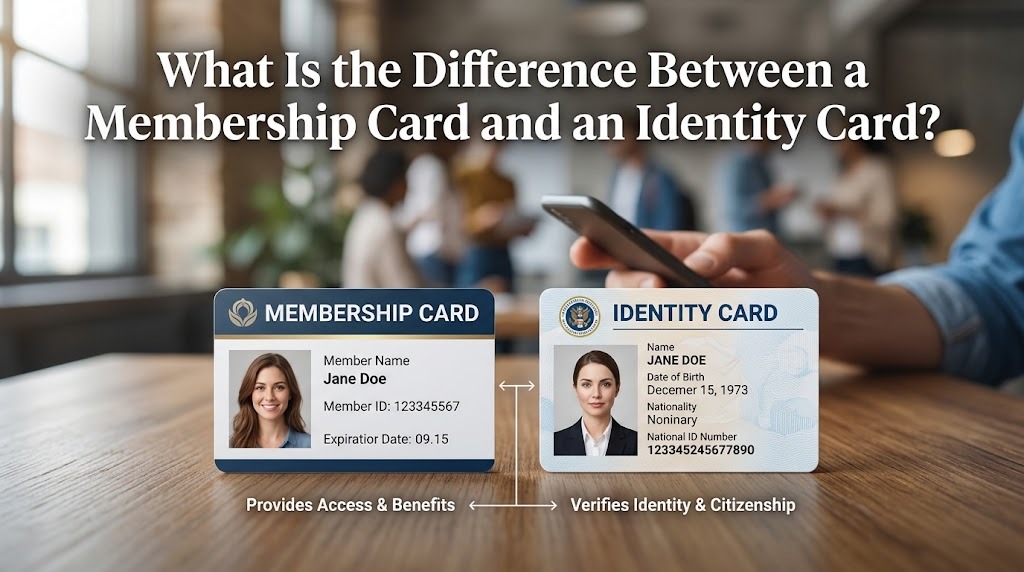
A membership card and an identity card are documents used to identify individuals, but they have different purposes and functions. A membership card is issued by an organization, association, institution, or community to confirm that someone is an officially registered member. Meanwhile, an identity card is an official document used to establish a person's personal identity. Both documents may contain similar information, such as a full name, photograph, and identification number.
Understanding the difference between these two documents is important because they are not always interchangeable. An identity card can be used for various administrative and legal purposes, while a membership card is generally intended for activities and services within a particular organization. Knowing their respective functions helps individuals use the correct document when required.
DIFFERENCES IN PURPOSE AND MAIN FUNCTION
The main difference between a membership card and an identity card lies in their primary purposes. A membership card is designed to confirm that an individual belongs to a specific organization or group. It helps administrators recognize registered members and determine their eligibility to participate in organizational activities. In contrast, an identity card is used to establish a person's identity in everyday situations and official administrative processes.
An identity card generally has broader functions because it can be required for banking services, government administration, healthcare registration, and other formal activities. A membership card usually has a more limited purpose based on the organization's policies. An identity card proves who a person is, while a membership card proves their membership in an organization. This distinction makes both documents important in different situations.
DIFFERENCES IN THE ISSUING AUTHORITY
Another important difference concerns the institutions responsible for issuing these documents. Membership cards are generally issued by organizations, professional associations, educational institutions, clubs, or communities. Each organization establishes its own procedures for registration, verification, and card issuance. The design and information included on the card may also differ depending on the organization's needs.
Identity cards, on the other hand, are issued by authorized government agencies or other legally recognized institutions, depending on the type of identification document. In Indonesia, for example, the Electronic Identity Card or KTP-el is issued through the government's civil registration administration system. The issuing authority determines the official purpose and recognition of each document. Therefore, individuals should understand whether a document is issued by a private organization or an authorized government institution.
DIFFERENCES IN INFORMATION DISPLAYED ON THE CARD
Membership cards and identity cards may contain similar personal information, but the details displayed are not necessarily the same. A membership card commonly includes the member's full name, photograph, membership number, organization name, membership category, and validity period. Some cards also include a QR code or barcode to simplify membership verification. These details help organizations manage their members and provide access to specific services.
An identity card usually contains information required to establish a person's legal identity. Depending on the country and document type, this may include a full name, identification number, place and date of birth, address, photograph, and other official details. Membership cards focus on organizational information, whereas identity cards prioritize personal identification. Understanding these differences can help individuals recognize the purpose of each document and avoid confusing them.
DIFFERENCES IN LEGAL STATUS AND OFFICIAL RECOGNITION
Identity cards generally have formal recognition within government and administrative systems. They are commonly used to verify personal identity when accessing public services, completing legal procedures, or conducting official transactions. Their issuance and use are usually regulated by applicable laws and government policies. For this reason, identity cards often have a broader level of recognition than membership cards.
Membership cards generally do not replace government-issued identity documents. Their validity is usually limited to the organization that issues them and the services connected to that membership. For example, a professional association membership card may demonstrate that someone is registered with the association, but it does not automatically serve as legal proof of personal identity. A membership card cannot generally be used as a substitute for an official identity card. Members should follow the requirements of the institution requesting identification.
DIFFERENCES IN BENEFITS AND ACCESS RIGHTS
Membership cards often provide access to specific benefits offered by an organization. These benefits may include discounted services, special events, training programs, professional networks, organizational facilities, or exclusive member activities. Some organizations also use membership cards to verify eligibility for voting in internal elections or receiving certain membership privileges. The benefits depend on the organization's membership rules and policies.
Identity cards provide a different type of access because they are used to verify personal identity rather than organizational membership. They may be required when opening bank accounts, registering for public services, completing official transactions, or confirming personal details. Membership cards provide organization-related privileges, while identity cards support broader personal and administrative needs. Both documents can be useful, but their benefits and access rights serve different purposes.
THE IMPORTANCE OF KEEPING BOTH DOCUMENTS SAFE AND UPDATED
Although membership cards and identity cards have different functions, both should be stored carefully and protected against unauthorized use. Losing either document may create inconvenience, especially when it is needed for verification or administrative purposes. Individuals should avoid sharing photographs or copies of their cards through untrusted platforms because personal information could be misused. Organizations and government institutions should also apply appropriate security measures to protect identification data.
Keeping both documents updated is equally important. Identity card information should be corrected through the appropriate government procedures when personal details change. Meanwhile, membership information should be updated through the organization that issued the card. Protecting personal data and maintaining accurate information can reduce administrative problems and help prevent identity misuse. Individuals should also report lost or damaged cards as soon as possible to obtain replacements when necessary.
CONCLUSION
Membership cards and identity cards serve different but equally important purposes. A membership card confirms an individual's registration in a particular organization and provides access to membership-related services. An identity card establishes personal identity and is generally recognized for broader administrative and legal purposes. The main differences involve their functions, issuing authorities, displayed information, legal recognition, and benefits. By understanding these distinctions, individuals can use each document appropriately and protect their personal information more effectively.
Recent Posts

Bagaimana Sistem SKS pada Program Kuliah... 22.11.2026/49 View

How Does Technology Make Daily Evaluation... 21.11.2026/76 View

Apa Strategi Menghadapi Kesenjangan antara Kompetensi... 21.11.2026/78 View

Mengapa Inventaris Aset Penting bagi Kelancaran... 21.11.2026/74 View

When Should Musicians Join a Record... 21.11.2026/78 View
