

What Is the Difference Between a Nuclear Family and an Extended Family?
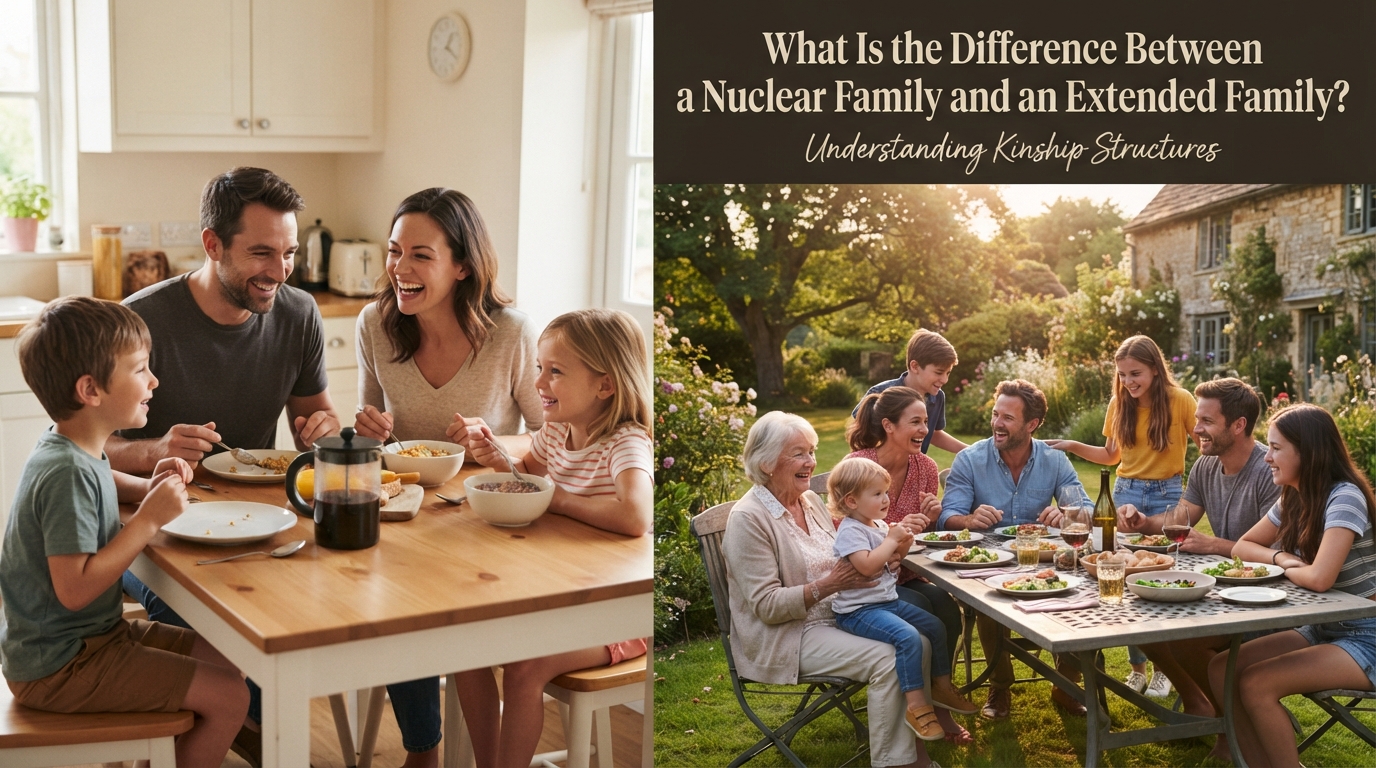
Family is an important part of society because it provides love, protection, education, and emotional support. However, families can have different structures depending on the number of members, relationships, and living arrangements. Two common family structures are the nuclear family and the extended family. Although both play important roles in raising children and maintaining family relationships, they have several differences in terms of composition, responsibilities, daily activities, and social interactions.
A nuclear family generally consists of parents and their children, while an extended family includes additional relatives such as grandparents, uncles, aunts, and cousins. Some extended families live together in one household, while others maintain close relationships despite living separately. Understanding the differences between these two family structures can help people recognize their advantages, challenges, and contributions to children's development and society.
UNDERSTANDING THE MEANING OF A NUCLEAR FAMILY
A nuclear family is a family structure that generally consists of two parents and their children living as one household. It is often considered a smaller family unit because it does not necessarily include other relatives in everyday household activities. Parents usually take primary responsibility for raising children, managing household needs, and making important family decisions. This structure is common in many modern societies, particularly where people move to different cities for education or employment.
In a nuclear family, daily activities and responsibilities are generally managed within the immediate household. Parents and children often develop close relationships through shared routines, conversations, and family activities. However, this does not mean that nuclear families are disconnected from grandparents, uncles, aunts, or other relatives. They can still maintain strong relationships with their wider family network even when they live separately.
UNDERSTANDING THE MEANING OF AN EXTENDED FAMILY
An extended family is a family structure that includes relatives beyond parents and their children. These relatives may include grandparents, uncles, aunts, cousins, nieces, nephews, and other family members connected through blood, marriage, or adoption. In some households, several generations live together and share daily responsibilities. In other situations, relatives live separately but remain closely involved in one another's lives.
Extended families often provide a wider support network because more relatives can participate in family activities and responsibilities. Grandparents may help care for grandchildren, while uncles and aunts can provide guidance and companionship. Family members may also share household expenses and assist one another during difficult situations. The level of involvement depends on family traditions, personal relationships, and individual circumstances.
DIFFERENCES IN FAMILY MEMBERS AND STRUCTURE
The most noticeable difference between a nuclear family and an extended family is the number and composition of family members. A nuclear family generally consists of parents and their children, creating a smaller immediate household. Meanwhile, an extended family includes additional relatives from different generations or branches of the family. This broader structure allows more relatives to participate in family life.
For example, a household consisting of parents and two children is generally considered a nuclear family. However, when grandparents, an uncle, and their children also live in the same household, the arrangement can be considered an extended family. Nevertheless, family structures can vary, and not every extended family needs to live under one roof. The main distinction is the involvement of additional relatives beyond the immediate family unit.
DIFFERENCES IN DAILY RESPONSIBILITIES
Nuclear and extended families may also differ in how they distribute daily responsibilities. In a nuclear family, parents generally manage childcare, household activities, and financial needs within their immediate household. Children may also participate in simple activities according to their age and abilities. Because fewer people are involved, household decisions and responsibilities may be easier to coordinate.
In an extended family, responsibilities can be shared among several relatives. Grandparents may help supervise children, while other adults may contribute to cooking, cleaning, or household expenses. This arrangement can reduce the burden on individual family members when responsibilities are distributed fairly. However, it also requires clear communication to prevent disagreements about duties and expectations.
DIFFERENCES IN EMOTIONAL AND SOCIAL SUPPORT
Both family structures can provide emotional support, but the number of available relatives may differ. In a nuclear family, children often receive daily emotional support primarily from their parents and siblings. This can create close relationships within the immediate household and provide opportunities for parents to understand their children's needs. However, additional support may also come from relatives, friends, and the wider community.
Extended families can offer a broader support network because children and adults may have more relatives to turn to. Grandparents, aunts, uncles, and cousins can provide companionship, advice, and encouragement. These relationships may help individuals feel connected to different generations and develop stronger social skills. However, the quality of emotional support depends on the health of family relationships rather than simply the number of relatives.
DIFFERENCES IN FINANCIAL MANAGEMENT
Financial management can also differ between nuclear and extended families. In a nuclear family, parents generally organize household expenses such as food, housing, education, transportation, and utilities. Financial decisions are usually made within the immediate household, allowing parents to manage their budget according to their family's priorities. However, the financial responsibility may become challenging when only a small number of adults contribute to household income.
In an extended family, several working relatives may contribute to shared household expenses. This can help reduce individual financial pressure when contributions are agreed upon fairly. However, managing money can become complicated if family members have different incomes, spending habits, and financial expectations. Therefore, transparent agreements about expenses and contributions are important for maintaining financial stability.
DIFFERENCES IN CHILDREN'S DEVELOPMENT
Family structure can influence children's experiences and opportunities for personal and social development. In a nuclear family, children may receive more direct attention from their parents because the household includes fewer members. Parents can organize routines, monitor educational progress, and guide their children's behavior according to their needs. This environment may also encourage children to develop independence through daily activities.
In an extended family, children have more opportunities to interact with relatives of different ages and personalities. They can learn respect, cooperation, patience, and communication through relationships with grandparents, cousins, and other relatives. Older family members may also share knowledge and cultural traditions. However, both family structures can support healthy child development when children receive consistent guidance, care, and emotional support.
ADVANTAGES AND CHALLENGES OF A NUCLEAR FAMILY
One advantage of a nuclear family is the opportunity to maintain privacy and independence within a smaller household. Parents can generally organize daily routines and make decisions without involving many relatives. Children may also receive more focused attention from their parents. This structure can be suitable for families who prefer a more independent lifestyle.
However, nuclear families may face challenges when parents have limited support for childcare or household responsibilities. Managing work, education, and family needs can become stressful, especially when both parents have demanding schedules. Financial pressure may also increase when household expenses depend on a limited number of income earners. Building relationships with relatives and other support networks can help address some of these challenges.
ADVANTAGES AND CHALLENGES OF AN EXTENDED FAMILY
One major advantage of an extended family is the availability of shared support and responsibilities. Relatives can help one another with childcare, household activities, financial needs, and emotional difficulties. Children also have more opportunities to learn from older generations and develop relationships with cousins and other relatives. These connections can strengthen family traditions and create a wider sense of belonging.
However, living with many relatives can create challenges related to privacy, personal boundaries, and differences of opinion. Family members may have different parenting approaches, lifestyles, and expectations about household responsibilities. Financial arrangements can also become complicated without clear agreements. Open communication, mutual respect, and fair cooperation are essential for maintaining harmony in an extended household.
WHICH FAMILY STRUCTURE IS BETTER?
There is no single answer to whether a nuclear family or an extended family is better because each structure has different advantages and challenges. The most suitable arrangement depends on individual needs, financial circumstances, cultural traditions, personal preferences, and family relationships. Some people prefer the independence of a nuclear family, while others value the shared responsibilities and wider support available in an extended family.
What matters most is the quality of relationships within the household. Children need love, protection, guidance, and opportunities to develop, regardless of how many relatives live with them. Both family structures can provide a healthy environment when members communicate effectively, respect one another, and share responsibilities. A supportive family is ultimately defined by care and cooperation rather than its size.
CONCLUSION
The main difference between a nuclear family and an extended family lies in their structure and the relatives involved. A nuclear family generally consists of parents and their children, while an extended family includes additional relatives such as grandparents, uncles, aunts, and cousins. These differences can influence household responsibilities, financial management, emotional support, and children's daily experiences.
Both family structures have valuable benefits and possible challenges. Nuclear families may offer greater privacy and independence, while extended families can provide wider support and shared responsibilities. Ultimately, the success of either structure depends on love, communication, mutual respect, and cooperation among family members.
Recent Posts

How Does Technology Make Daily Evaluation... 21.11.2026/57 View

Apa Strategi Menghadapi Kesenjangan antara Kompetensi... 21.11.2026/59 View

Mengapa Inventaris Aset Penting bagi Kelancaran... 21.11.2026/55 View

When Should Musicians Join a Record... 21.11.2026/54 View

Daily Evaluation or Daily Planning Which... 21.11.2026/61 View
