

What Is the Difference Between a School Health Unit and a Community Health Center?
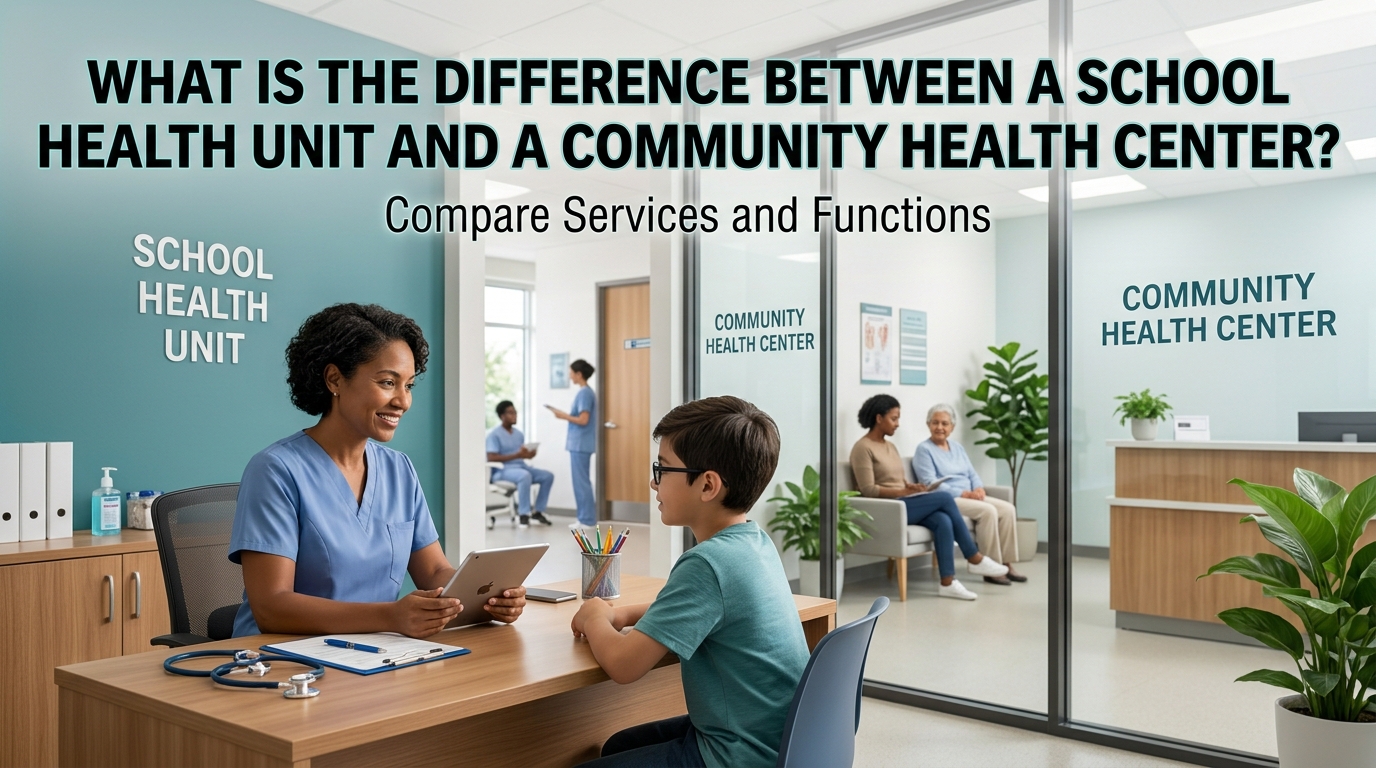
Health services play an important role in maintaining the well-being of students and the wider community. In Indonesia, two familiar healthcare facilities are the School Health Unit (UKS) and the Community Health Center (Puskesmas). Although both aim to promote health and prevent diseases, they have different functions, services, and target groups. A School Health Unit focuses on maintaining students' health within the educational environment, while a Community Health Center provides broader healthcare services for people in a particular area. Understanding the difference between these two facilities helps students, parents, and communities recognize where to seek appropriate health assistance.
1. UNDERSTANDING THE SCHOOL HEALTH UNIT
A School Health Unit (UKS) is a health program established within schools to maintain and improve the health of students and the school community. It focuses on health education, disease prevention, and basic health services. The program helps students understand the importance of personal hygiene, balanced nutrition, physical activity, and healthy daily habits. UKS activities are generally carried out through cooperation between teachers, school management, healthcare professionals, and students. Its main purpose is to create a healthy school environment that supports students' growth and learning activities.
In Indonesia, UKS is commonly implemented through three main programs known as Trias UKS. These include health education, health services, and fostering a healthy school environment. Activities may involve health campaigns, basic health checks, first aid, and maintaining clean classrooms and sanitation facilities. Through these activities, students can develop greater awareness of their health from an early age. However, UKS is not a substitute for professional medical facilities when students require more advanced treatment.
2. UNDERSTANDING THE COMMUNITY HEALTH CENTER
A Community Health Center (Puskesmas) is a government healthcare facility that provides primary healthcare services to people in its working area. Unlike UKS, which mainly serves the school environment, Puskesmas serves individuals and families from different age groups. Its services include health consultations, medical examinations, disease prevention, maternal and child health services, immunization, and basic medical treatment. Puskesmas also plays an important role in promoting public health through education and community programs. Its services are designed to improve health conditions across the wider community.
In addition to providing individual healthcare, Puskesmas carries out public health activities such as disease surveillance, environmental health programs, and health promotion. Healthcare workers may visit schools, community centers, or other locations to provide education and preventive services. Puskesmas also refers patients to hospitals or other healthcare facilities when their conditions require more advanced treatment. This makes it an important part of the national healthcare system. Its main objective is to provide accessible and comprehensive primary healthcare for the community.
3. DIFFERENCES IN MAIN FUNCTIONS AND OBJECTIVES
The main difference between UKS and Puskesmas lies in their primary functions and objectives. UKS focuses on maintaining students' health and creating a healthy educational environment. Its activities are closely connected to school programs and daily student routines. Meanwhile, Puskesmas provides healthcare services for the general population, including children, teenagers, adults, and older people. It has a broader responsibility for improving public health in its service area.
Another important difference is the scope of their healthcare activities. UKS generally provides basic health support, health education, and simple first aid within schools. Puskesmas has healthcare professionals and facilities to conduct medical examinations, diagnose common health conditions, and provide appropriate primary treatment. Therefore, UKS emphasizes health promotion and prevention in schools, while Puskesmas combines preventive, promotive, and curative healthcare services. Both facilities complement each other in supporting better health outcomes.
4. DIFFERENCES IN TARGET GROUPS AND SERVICE AREAS
UKS primarily serves students, teachers, and other members of the school community. Its activities are designed according to students' health needs and the conditions of the educational environment. For example, schools may organize health education sessions, monitor students' basic health conditions, and provide first aid during school activities. These programs help students maintain their health while participating in learning activities. The services are generally limited to the school environment.
On the other hand, Puskesmas serves a much wider population within a designated geographical area. Its patients may include infants, children, teenagers, pregnant women, working adults, and elderly individuals. The healthcare services are provided through the health center and, when available, supporting community activities such as outreach services. This wider coverage allows Puskesmas to address various health needs across different stages of life. Therefore, the difference between UKS and Puskesmas can also be seen in their service coverage and target populations.
5. DIFFERENCES IN TYPES OF HEALTH SERVICES
The types of services provided by UKS and Puskesmas are different because their responsibilities are not the same. UKS generally offers basic health activities such as first aid, health education, simple health monitoring, and guidance on personal hygiene. Students may receive initial assistance when they experience minor injuries, dizziness, or other common complaints at school. UKS can also help identify students who need further medical examinations. However, serious medical conditions must be handled by qualified healthcare professionals at an appropriate medical facility.
Puskesmas provides more extensive primary healthcare services. These may include medical consultations, treatment of common illnesses, immunization, maternal and child healthcare, family planning services, and health screening. Depending on its facilities and available healthcare personnel, a Puskesmas may also provide dental care, laboratory examinations, and other basic medical services. Patients with conditions beyond its capabilities can be referred to hospitals or specialist healthcare facilities. This difference shows that Puskesmas has a broader medical role than UKS.
6. THE ROLE OF UKS AND PUSKESMAS IN DISEASE PREVENTION
Both UKS and Puskesmas contribute to disease prevention, but they approach this responsibility in different ways. UKS focuses on teaching students how to maintain personal hygiene, consume nutritious food, exercise regularly, and avoid unhealthy habits. Schools can also organize handwashing campaigns, environmental cleanliness activities, and health awareness programs. These efforts help reduce the risk of common illnesses spreading within the school environment. Early health education also encourages students to develop positive habits that can continue into adulthood.
Meanwhile, Puskesmas supports disease prevention through broader public health programs. These activities may include immunization, health screening, disease monitoring, sanitation education, and community health campaigns. Healthcare professionals can also collaborate with schools to conduct health checks or provide educational sessions for students. Such cooperation helps connect school-based health programs with professional healthcare services. The collaboration between UKS and Puskesmas is therefore important for building a healthier school and community environment.
7. THE IMPORTANCE OF COOPERATION BETWEEN UKS AND PUSKESMAS
Cooperation between UKS and Puskesmas is essential because both facilities have complementary responsibilities. Schools can work with healthcare professionals to organize health examinations, immunization activities, and educational programs. Puskesmas can provide professional guidance to teachers and school staff about basic health procedures and disease prevention. This partnership also helps schools identify students who may need additional medical attention. As a result, students can receive more appropriate health support.
Furthermore, cooperation allows schools to respond more effectively to health problems that require professional assistance. For example, when a student experiences symptoms that cannot be handled through basic school health services, the school can coordinate with parents and refer the student to a Puskesmas or another suitable healthcare facility. Regular communication can also improve health monitoring and preventive activities. By working together, UKS and Puskesmas can create a more connected healthcare support system for students.
8. WHEN SHOULD STUDENTS VISIT UKS OR PUSKESMAS?
Students can visit the UKS when they experience minor health complaints during school activities. Examples include mild headaches, small cuts, minor injuries, or feeling unwell while attending classes. UKS staff can provide initial assistance and determine whether the student needs further medical attention. If the symptoms become serious, persist, or require professional examination, students should be referred to an appropriate healthcare facility. Parents or guardians should also be informed when further treatment is necessary.
Students and parents should visit a Puskesmas when they need medical consultations, health examinations, immunization, or treatment for common illnesses. Puskesmas is also an appropriate place to seek healthcare advice for conditions that require professional assessment. For severe or life-threatening emergencies, patients should receive immediate emergency medical assistance rather than waiting for routine services. Understanding when to use each facility helps students and families obtain suitable healthcare. Choosing the right healthcare service can improve treatment access and prevent unnecessary delays.
CONCLUSION
The School Health Unit (UKS) and Community Health Center (Puskesmas) have different but complementary roles in maintaining public health. UKS focuses on students' health through education, basic health services, and a healthy school environment. Meanwhile, Puskesmas provides broader primary healthcare services for people of all age groups within its working area. Both facilities contribute to disease prevention, health promotion, and early identification of health problems. Therefore, cooperation between UKS and Puskesmas is important to ensure that students receive appropriate health support while helping create a healthier community.
Recent Posts

Bagaimana Sistem SKS pada Program Kuliah... 22.11.2026/35 View

How Does Technology Make Daily Evaluation... 21.11.2026/69 View

Apa Strategi Menghadapi Kesenjangan antara Kompetensi... 21.11.2026/70 View

Mengapa Inventaris Aset Penting bagi Kelancaran... 21.11.2026/67 View

When Should Musicians Join a Record... 21.11.2026/69 View
