

What Is the Difference Between a Work Leave Letter and an Absence Letter?
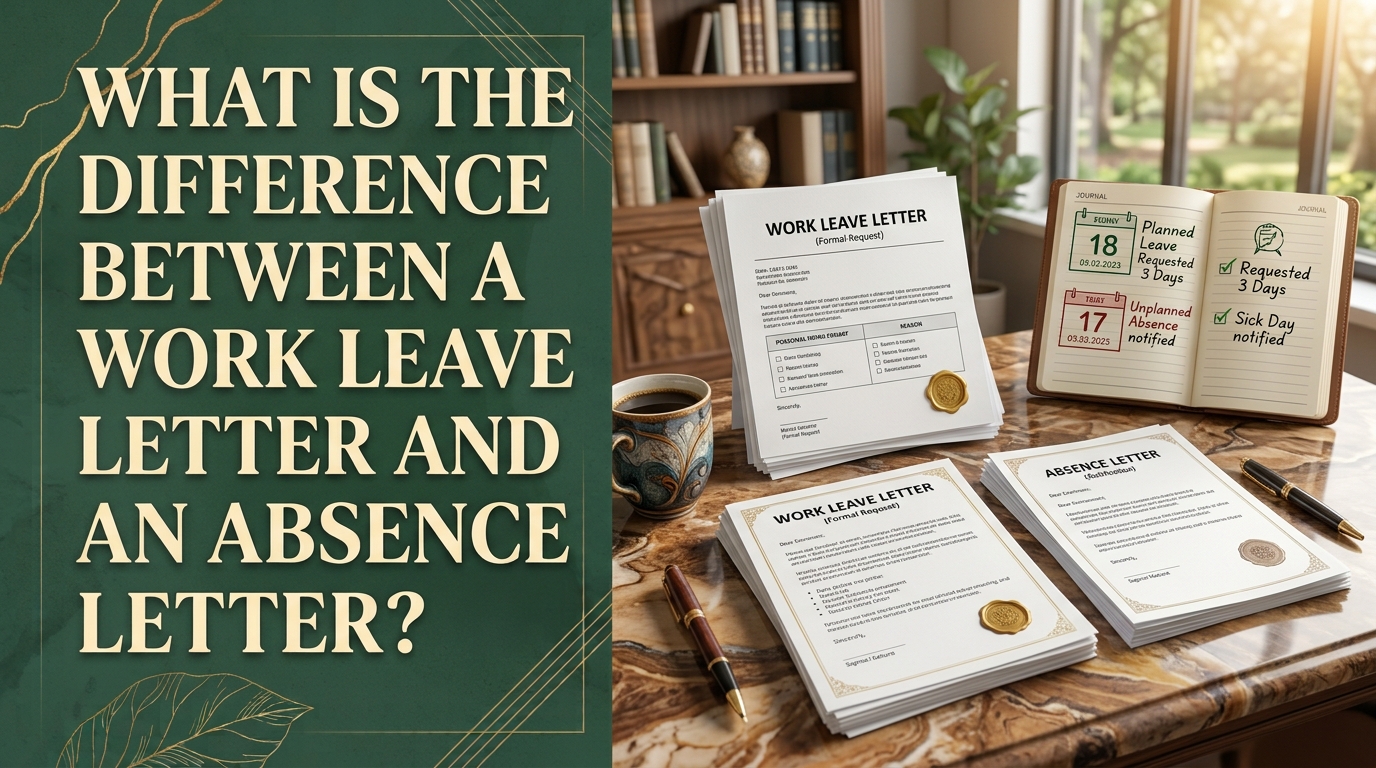
In the workplace, employees sometimes need to take time off for personal matters, medical reasons, family responsibilities, or unexpected situations. When this happens, proper communication with an employer is important. Two common documents used to communicate about time away from work are a work leave letter and an absence letter.
Although both documents explain why an employee will not be at work, they have different purposes and are generally used in different situations. Understanding these differences helps employees choose the right document, follow workplace procedures, and maintain professional communication with their managers.
WHAT IS A WORK LEAVE LETTER?
A work leave letter is a formal document employees use to request permission to take time off from work. It is usually submitted before the planned absence so managers can review the request and decide whether to approve it. Employees may need this letter for annual vacations, personal matters, family events, medical appointments, or other permitted reasons.
This letter normally includes the employee's name, position, requested leave dates, reason for the request, and expected return date. It may also explain how the employee plans to manage unfinished tasks before leaving. The main purpose of a work leave letter is to request approval in advance, rather than simply inform the employer that the employee will be absent.
WHAT IS AN ABSENCE LETTER?
An absence letter is a formal written notification explaining that an employee will be away from work or has already missed working hours. It is commonly used when an employee cannot attend work because of illness, an emergency, family responsibilities, or another unexpected situation. Depending on company procedures, it may be sent before the absence, on the day it occurs, or after the employee returns.
An absence letter usually explains the reason for not attending work, the relevant date or period, and the expected return date if known. Supporting documents, such as a medical certificate, may also be required under company policy. The main purpose of an absence letter is to notify and explain an absence, rather than request advance permission for planned time off.
THE MAIN DIFFERENCES BETWEEN A WORK LEAVE LETTER AND AN ABSENCE LETTER
The biggest difference between these documents is their purpose. A work leave letter is generally used to request permission for a planned period away from work, while an absence letter explains or reports an employee's absence. This distinction affects when each document is submitted and what information it contains.
A work leave letter is commonly submitted before the leave begins, giving managers time to review staffing needs and arrange workloads. An absence letter may be submitted when an unexpected situation occurs or when an employee needs to provide an explanation afterward. One focuses on requesting approval, while the other focuses on reporting an absence. However, the exact terminology and procedures can vary between organizations.
DIFFERENCES IN TIMING AND SUBMISSION
Timing is another important distinction between a work leave letter and an absence letter. Employees generally submit work leave requests in advance, especially when planning annual leave, vacations, or personal activities. Early submission gives managers enough time to consider the request and organize work schedules.
An absence letter is often used when an employee cannot attend work unexpectedly. For example, someone who wakes up with a fever may need to inform their manager immediately and provide a formal explanation according to company rules. In other situations, an employee may submit the letter after returning to work. The submission time depends on whether the absence is planned or unexpected and on the employer's reporting requirements.
DIFFERENCES IN PURPOSE AND CONTENT
A work leave letter focuses on the employee's intention to take time off and the permission they are requesting. Therefore, it should clearly state the requested dates, type of leave, reason, and expected return date. It may also include a work handover plan to show how responsibilities will be managed during the employee's absence.
An absence letter focuses more on explaining why the employee could not attend work. It usually identifies the date of absence, provides a brief explanation, and mentions when the employee expects to return, if known. Supporting documents may be included when required. Both letters should be accurate, clear, and professional, but their content should match the situation being reported.
EXAMPLES OF WHEN TO USE EACH LETTER
A work leave letter is appropriate when an employee plans to take several days off for a family vacation. In this situation, the employee knows the dates in advance and can request approval before making final arrangements. It is also suitable for planned medical appointments, weddings, personal activities, and other reasons covered by company policy.
An absence letter is more appropriate when an employee suddenly becomes ill and cannot attend work. It may also be used when an urgent family matter requires the employee to leave unexpectedly. For example, an employee who needs to accompany a family member to the hospital may notify their manager through an absence letter. Choose the document based on the situation and the company's official procedure, rather than assuming both documents are interchangeable.
HOW TO WRITE A PROFESSIONAL WORK LEAVE LETTER
To write a professional work leave letter, begin with a clear subject or heading that identifies it as a leave request. Include your name, position, department, and the dates you want to take off. Explain your reason briefly and politely without including unnecessary personal information.
You should also mention your expected return date and explain how urgent tasks will be handled during your absence. Use respectful language and submit the letter through the communication channel required by your company. Before sending it, check that all dates and details are correct. A well-prepared leave letter makes it easier for managers to evaluate your request and plan workplace activities.
HOW TO WRITE A PROFESSIONAL ABSENCE LETTER
An absence letter should clearly identify the date or period when you could not attend work. Start by addressing your manager or the relevant department, then explain the reason for your absence in a concise and honest manner. If you know when you will return, include the expected date so your team can plan accordingly.
If your company requires supporting evidence, attach the appropriate document, such as a medical certificate. When the absence is unexpected, inform your manager as soon as reasonably possible rather than waiting until you can prepare a detailed letter. Keep a copy of your communication for reference. Prompt notification and accurate information help maintain trust and ensure that your absence is properly recorded.
WHY IS IT IMPORTANT TO UNDERSTAND THE DIFFERENCE?
Understanding the difference between these letters helps employees communicate their needs correctly. Sending a leave request when an employee should report an unexpected absence may delay important communication. Similarly, submitting only an absence explanation for a planned vacation may not satisfy the company's approval requirements.
Using the correct document also helps managers maintain accurate attendance records and organize staffing arrangements. Employees can avoid misunderstandings, follow internal procedures, and demonstrate responsibility toward their work. Choosing the appropriate letter supports professional communication and smoother workplace administration.
COMMON MISTAKES TO AVOID
One common mistake is assuming that a work leave letter and an absence letter have exactly the same function. Although both explain time away from work, they may serve different administrative purposes. Another mistake is failing to include important details, such as the absence dates or expected return date.
Employees should also avoid submitting requests too late when the leave is planned, giving inaccurate reasons, or ignoring company reporting procedures. Do not assume that sending a letter automatically means the leave has been approved. For unexpected absences, communicate promptly and provide any required documents. Following the correct process helps prevent confusion and protects your professional reputation.
CONCLUSION
A work leave letter and an absence letter both help employees communicate about time away from work, but they serve different purposes. A work leave letter is primarily used to request permission for planned time off, while an absence letter is used to notify or explain an employee's absence, particularly when it is unexpected or has already occurred.
Knowing when and how to use each document helps employees follow company policies and communicate more effectively with managers. By providing accurate information, submitting documents at the appropriate time, and using professional language, employees can manage workplace absences responsibly and maintain good working relationships
Recent Posts

Bagaimana Sistem SKS pada Program Kuliah... 22.11.2026/37 View

How Does Technology Make Daily Evaluation... 21.11.2026/70 View

Apa Strategi Menghadapi Kesenjangan antara Kompetensi... 21.11.2026/73 View

Mengapa Inventaris Aset Penting bagi Kelancaran... 21.11.2026/68 View

When Should Musicians Join a Record... 21.11.2026/71 View
