

What Is the Difference Between an SKTM and an Income Certificate?
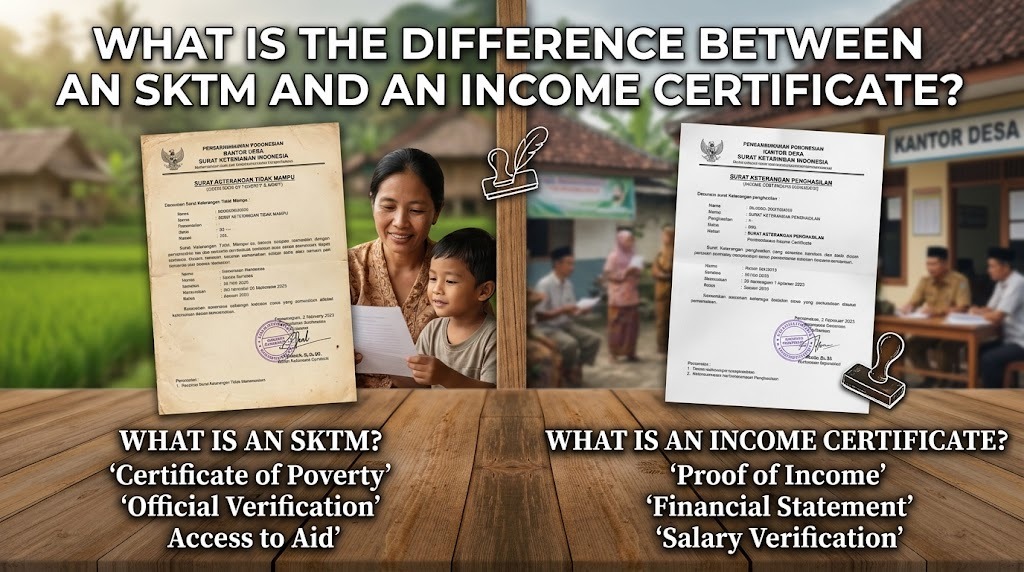
An SKTM (Surat Keterangan Tidak Mampu) and an income certificate are both administrative documents that may be used to provide information about a person's financial circumstances. They are sometimes requested when applying for scholarships, social assistance, educational support, or other public services. Although these documents may serve similar purposes, they are not necessarily the same.
The main difference lies in the information each document provides and its intended purpose. An SKTM generally confirms that an individual or household is considered financially disadvantaged, while an income certificate provides information about a person's earnings. Understanding these differences can help applicants prepare the correct document for their administrative needs.
UNDERSTANDING THE PURPOSE OF AN SKTM
An SKTM is a certificate generally issued through an authorized local government office to confirm a person's or family's financial hardship. It may be used as supporting documentation when applying for certain forms of educational assistance, social programs, or other services that consider economic circumstances.
The document is commonly associated with people or households that need to demonstrate limited financial resources. Its issuance may involve administrative verification based on local procedures and the information provided by the applicant. However, having an SKTM does not automatically guarantee eligibility for a scholarship, financial assistance, or other benefits because each program has its own requirements.
UNDERSTANDING THE PURPOSE OF AN INCOME CERTIFICATE
An income certificate is a document that provides information about a person's earnings or income sources. Depending on the circumstances, it may be issued by an employer, a local government office, or another authorized institution. The document can state an estimated or confirmed income amount within a particular period.
This certificate may be requested for administrative purposes such as financial assistance applications, school or university requirements, or other processes that need proof of income. Unlike an SKTM, its primary purpose is to explain how much a person earns rather than directly confirm that the person is classified as financially disadvantaged.
DIFFERENCES IN THE INFORMATION PROVIDED
The most noticeable difference between an SKTM and an income certificate is the type of financial information they communicate. An SKTM generally confirms a person's or household's financial hardship based on the applicable local administrative process. An income certificate, on the other hand, focuses on the amount or source of income.
For example, a household may request an SKTM to support an application for an assistance program that considers financial hardship. Meanwhile, an employee may need an income certificate to show their monthly earnings. These examples demonstrate that the two documents provide different types of information, even though both relate to financial circumstances.
DIFFERENCES IN ISSUING AUTHORITIES AND REQUIREMENTS
The issuing authority for an SKTM is generally connected to the local government administration, such as a village or subdistrict office, depending on the procedures in the applicant's area. The process may involve identity verification, family information, and an assessment or confirmation of the applicant's circumstances.
An income certificate may come from different sources depending on the applicant's employment or financial situation. Employees may obtain proof of income from their employer, while individuals with other income arrangements may need documentation from an appropriate local authority or institution. The required documents and procedures therefore depend on the purpose of the certificate and the rules of the organization requesting it.
CHOOSING THE RIGHT DOCUMENT FOR YOUR NEEDS
Before applying for either document, applicants should check the requirements of the institution or program requesting financial information. If the requirement specifically asks for an SKTM, an income certificate may not be accepted as a substitute. Similarly, if the institution requires proof of a particular income amount, an SKTM may not provide sufficient information.
Applicants should also confirm whether additional documents are needed, such as a family card, identity card, salary statement, or other financial records. Checking the requirements in advance can help prevent delays and repeated applications. When the instructions are unclear, contacting the institution directly is the most practical way to determine which document is appropriate.
CONCLUSION
The difference between an SKTM and an income certificate lies mainly in their purpose and the information they provide. An SKTM generally confirms financial hardship through a local administrative process, while an income certificate explains a person's earnings or income sources. Their issuing authorities and application requirements may also differ.
Although both documents can be used to support administrative applications, they are not automatically interchangeable. Applicants should follow the specific requirements of the institution requesting the document and confirm the applicable procedures with the authorized issuing office. Choosing the correct financial document can make the application process more accurate and organized.
Recent Posts

Bagaimana Sistem SKS pada Program Kuliah... 22.11.2026/48 View

How Does Technology Make Daily Evaluation... 21.11.2026/76 View

Apa Strategi Menghadapi Kesenjangan antara Kompetensi... 21.11.2026/78 View

Mengapa Inventaris Aset Penting bagi Kelancaran... 21.11.2026/73 View

When Should Musicians Join a Record... 21.11.2026/78 View
