

What Is The Difference Between Archaeology And History?
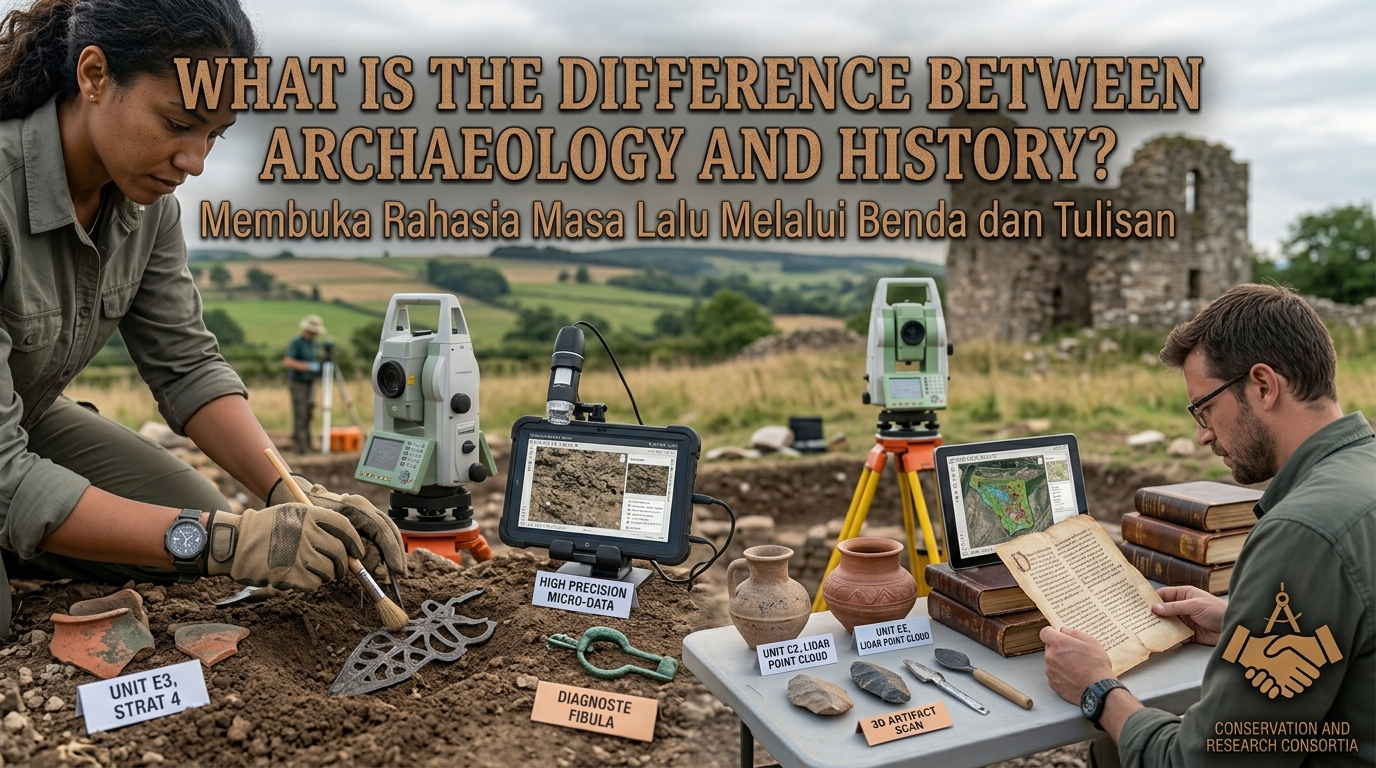
Archaeology and history are two important fields that help us understand the human past. Both explore how people lived, developed societies, and influenced the world around them. However, they use different types of evidence and research methods to investigate past events and civilizations. Archaeology focuses mainly on physical remains, while history often examines written records and documented events. Understanding the difference between archaeology and history helps us recognize how these disciplines work together to build a more complete picture of the past.
WHAT IS ARCHAEOLOGY?
Archaeology is the study of past human societies through material remains left behind by people. These remains include tools, pottery, buildings, bones, jewelry, coins, and other objects that provide evidence of past activities. Archaeologists investigate these materials to understand how people lived, worked, traded, and practiced their beliefs. They often conduct field surveys, excavations, laboratory analysis, and scientific dating to examine archaeological evidence. This approach allows researchers to investigate societies that existed long before written records were created.
Archaeology is not limited to ancient civilizations or prehistoric periods. Archaeologists also study more recent historical sites, including abandoned industrial buildings, old settlements, and places connected to modern conflicts. The location and context of an artifact are often just as important as the object itself because they can reveal how it was used and what it meant to the people who left it behind. Researchers carefully document discoveries to preserve this information for further study. Through these methods, archaeology provides valuable insights into human behavior and cultural development.
WHAT IS HISTORY?
History is the study of the human past, often using written documents and other historical sources to investigate events, people, and societies. Historians examine materials such as letters, diaries, official records, newspapers, inscriptions, manuscripts, and published accounts. They compare different sources to understand what happened, why events occurred, and how people experienced them. Historical research also considers the background, purpose, and reliability of each source. This process helps historians develop explanations based on available evidence rather than assumptions.
History can cover many subjects, including political changes, wars, economic development, social movements, religion, and everyday life. Historians may also use photographs, oral histories, maps, and physical objects when these sources help answer their research questions. Critical analysis of historical evidence is essential because written accounts can contain bias, errors, or incomplete information. By comparing different perspectives, historians can identify disagreements and develop more balanced interpretations. Their work helps explain how past events have shaped societies and influenced the present.
THE MAIN DIFFERENCES BETWEEN ARCHAEOLOGY AND HISTORY
The main difference between archaeology and history lies in the types of evidence they commonly examine. Archaeologists usually focus on material remains, such as buildings, tools, pottery, and human-made structures. Historians often concentrate on written records, including documents, letters, and official accounts. However, these boundaries are not absolute because archaeologists can study inscriptions and historical objects, while historians can use archaeological findings. Both disciplines rely on careful research and evidence-based interpretation.
Their research methods also differ in several ways. Archaeologists may excavate sites, map landscapes, analyze soil, and examine artifacts using laboratory techniques. Historians generally study documents, compare accounts, evaluate authorship, and place events within their historical context. Archaeology often reveals how people lived through physical evidence, while history frequently helps explain events through written descriptions and records. When combined, these approaches provide a deeper understanding of past societies than either discipline could offer alone.
TYPES OF EVIDENCE USED IN BOTH FIELDS
Archaeologists commonly study artifacts, structures, ecofacts, and archaeological layers. Artifacts are objects made or modified by humans, such as tools and pottery, while structures include buildings, walls, and roads. Ecofacts are natural remains, such as seeds, animal bones, and pollen, that provide information about past environments and human activities. The position of these materials within archaeological layers can help researchers establish a sequence of events. Together, these forms of evidence reveal information about technology, diet, settlement patterns, and cultural practices.
Historians frequently examine written sources such as government documents, personal correspondence, legal records, and historical narratives. These sources can provide details about decisions, beliefs, relationships, and events that physical remains may not explain directly. Nevertheless, neither written records nor archaeological objects tell the complete story on their own. A document may reflect the perspective of its author, while an artifact may have several possible interpretations. Researchers therefore compare sources and consider their limitations before drawing conclusions.
HOW ARCHAEOLOGY AND HISTORY WORK TOGETHER
Archaeology and history often complement each other when researchers investigate past civilizations. Written records may describe a settlement, ruler, or major event, while archaeological discoveries can provide physical evidence about the people and places involved. For example, historical documents might describe trade between two regions, while pottery, coins, and other imported objects can help researchers investigate how that trade operated. If the evidence does not match the written accounts, researchers may reconsider earlier explanations. Combining archaeological and historical evidence can produce a more detailed and balanced interpretation of the past.
These disciplines are particularly useful when studying societies with limited written records. Archaeology can reveal information about communities whose histories were not documented in surviving texts. Meanwhile, historical sources can help researchers interpret the purpose of buildings, inscriptions, and objects found at archaeological sites. Collaboration between archaeologists, historians, anthropologists, and other specialists can also introduce new perspectives. An interdisciplinary approach helps explain not only what happened in the past but also how and why societies changed over time.
WHY ARCHAEOLOGY AND HISTORY ARE IMPORTANT
Archaeology and history help preserve knowledge about human civilization and cultural heritage. They reveal how earlier societies developed technologies, organized communities, adapted to environmental changes, and interacted with other groups. Their findings can also help explain the origins of traditions, languages, political institutions, and cultural practices. Understanding the past encourages people to appreciate cultural diversity and recognize the experiences of different communities. These fields also help protect historical knowledge from being lost or misrepresented.
Both disciplines support education, research, museum collections, and heritage conservation. Archaeological discoveries can attract visitors to historical locations, while historical research can provide context for understanding their significance. Their findings may also help communities make informed decisions about preserving monuments, artifacts, and traditional landscapes. Studying the past encourages critical thinking because researchers must question evidence, compare explanations, and recognize uncertainty. By learning from history and archaeology, people can better understand the long-term development of human societies.
CONCLUSION
The difference between archaeology and history mainly concerns their common sources of evidence and research methods. Archaeology studies the material remains of past human activities, while history often investigates the past through written records and other historical sources. Although their approaches differ, both disciplines aim to understand human experiences, social changes, and cultural development. They become especially powerful when researchers combine physical evidence with written accounts to test interpretations and fill gaps in knowledge. Together, archaeology and history help us understand the past more accurately and preserve its lessons for future generations.
Recent Posts

Bagaimana Sistem SKS pada Program Kuliah... 22.11.2026/49 View

How Does Technology Make Daily Evaluation... 21.11.2026/79 View

Apa Strategi Menghadapi Kesenjangan antara Kompetensi... 21.11.2026/79 View

Mengapa Inventaris Aset Penting bagi Kelancaran... 21.11.2026/75 View

When Should Musicians Join a Record... 21.11.2026/80 View
