

What Is the Difference Between Business Certification and a Business Degree?
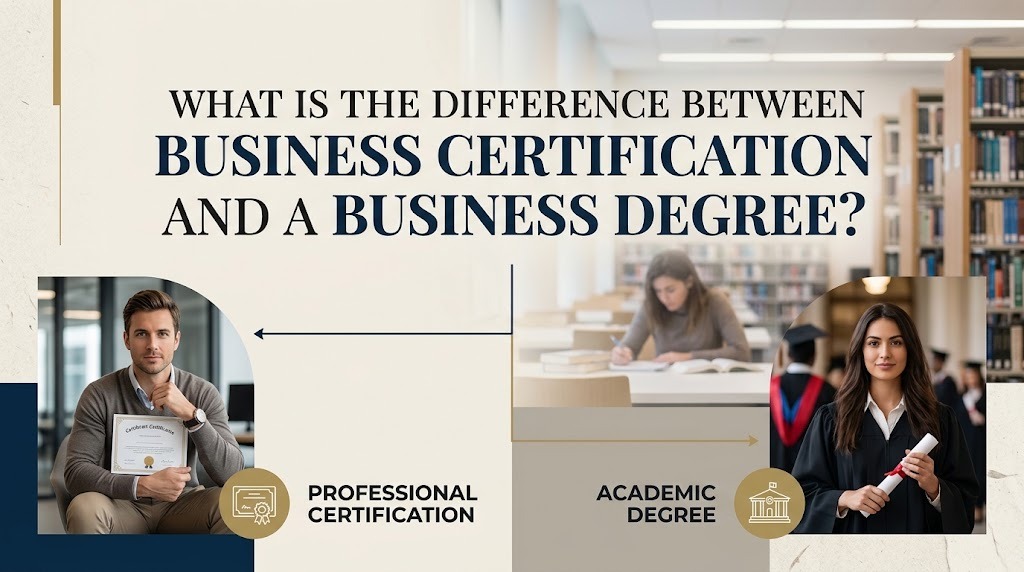
Choosing the right path for professional development can be challenging, especially when deciding between a business certification and a business degree. Both can help individuals develop business knowledge and improve their qualifications, but they differ in purpose, duration, cost, and learning approach. Understanding these differences can help students, graduates, and professionals make decisions that align with their career goals.
A business degree typically provides a broad academic foundation through a structured college or university program. In contrast, a business certification usually focuses on specific skills, knowledge areas, or professional competencies. Although both can be valuable, their relevance depends on the position, industry, and requirements of potential employers.
DIFFERENCES IN PURPOSE AND LEARNING OBJECTIVES
A business degree is designed to provide a comprehensive understanding of business principles and practices. Students may study subjects such as management, marketing, accounting, economics, finance, organizational behavior, and business strategy. This broad foundation can help graduates understand how different business functions operate and interact within an organization.
A business certification, on the other hand, generally focuses on a particular area of professional knowledge. Examples include project management, business analysis, digital marketing, human resources, and financial management. Certification programs may be useful for individuals who want to develop a specific competency without completing an entire degree program. The exact scope depends on the curriculum and requirements established by the issuing organization.
DIFFERENCES IN DURATION AND LEARNING FORMAT
One major difference between business certification and a business degree is the time required to complete each program. A bachelor's degree commonly takes several years of full-time study, while a certification program may take weeks or months, depending on its complexity, prerequisites, and assessment requirements. Some professional certifications also require substantial preparation and relevant work experience before candidates can qualify.
Business degrees are usually delivered through structured academic programs that include lectures, assignments, examinations, group projects, and sometimes internships. Certification programs may offer online courses, classroom training, self-paced learning, or examination-based preparation. These flexible formats can help working professionals learn while maintaining their existing responsibilities, although the actual schedule varies by provider.
DIFFERENCES IN COST AND FINANCIAL COMMITMENT
The cost of a business degree generally includes tuition fees, academic materials, administrative expenses, and other education-related costs. The total amount depends on the institution, location, program length, and whether the student receives financial assistance. Because a degree requires a longer period of study, the overall financial commitment can be substantial.
A business certification may cost less than a full degree because many programs have a narrower scope and shorter duration. However, costs vary widely depending on the issuing organization, training provider, examination fees, and renewal requirements. Some certifications also require paid study materials or continuing education. Before enrolling, candidates should compare the total cost with the skills they expect to gain and the relevance of the credential to their intended career.
DIFFERENCES IN CAREER OPPORTUNITIES AND EMPLOYER REQUIREMENTS
A business degree may be important for positions that require a university qualification or provide a broad foundation for entry-level and management career paths. Certain graduate programs and professional opportunities also require a specific academic background. A degree can demonstrate sustained academic learning, although it does not automatically guarantee employment or promotion.
A business certification may be useful when employers seek evidence of specialized knowledge or familiarity with particular professional methods. For example, a certification related to project management may support an application for a role involving project coordination. However, certification cannot replace a degree when an employer or professional regulation explicitly requires one. Job seekers should review actual job descriptions to determine which qualifications are necessary, preferred, or optional.
HOW TO CHOOSE BETWEEN A BUSINESS CERTIFICATION AND A BUSINESS DEGREE
Choosing between the two depends on a person's current qualifications, professional goals, budget, and available time. Someone who wants a broad academic foundation and meets the admission requirements may consider a business degree. Meanwhile, a graduate or employee who already has relevant education and wants to strengthen a particular skill may find a certification more suitable.
It is also possible to pursue both options at different stages of a career. A person may complete a business degree first and later earn certifications to develop specialized expertise. Others may begin with a certification to explore a field before deciding whether further formal education is necessary. Comparing program quality, employer recognition, learning outcomes, and career requirements can help individuals make a more informed decision.
CONCLUSION
The main difference between business certification and a business degree lies in their scope, duration, learning objectives, and career applications. A business degree usually offers broad academic knowledge through a structured university program, while a business certification generally focuses on a specific professional skill or area of expertise. Their costs, learning formats, and recognition also vary.
Neither option is universally better for every career situation. The appropriate choice depends on the qualifications required for a target position, the individual's existing experience, and long-term professional goals. By evaluating these factors carefully, students and professionals can select an educational path that supports their career development and practical needs.
Recent Posts

Bagaimana Sistem SKS pada Program Kuliah... 22.11.2026/57 View

How Does Technology Make Daily Evaluation... 21.11.2026/86 View

Apa Strategi Menghadapi Kesenjangan antara Kompetensi... 21.11.2026/84 View

Mengapa Inventaris Aset Penting bagi Kelancaran... 21.11.2026/82 View

When Should Musicians Join a Record... 21.11.2026/86 View
