

What Is the Difference Between Business Logistics and Supply Chain Management?
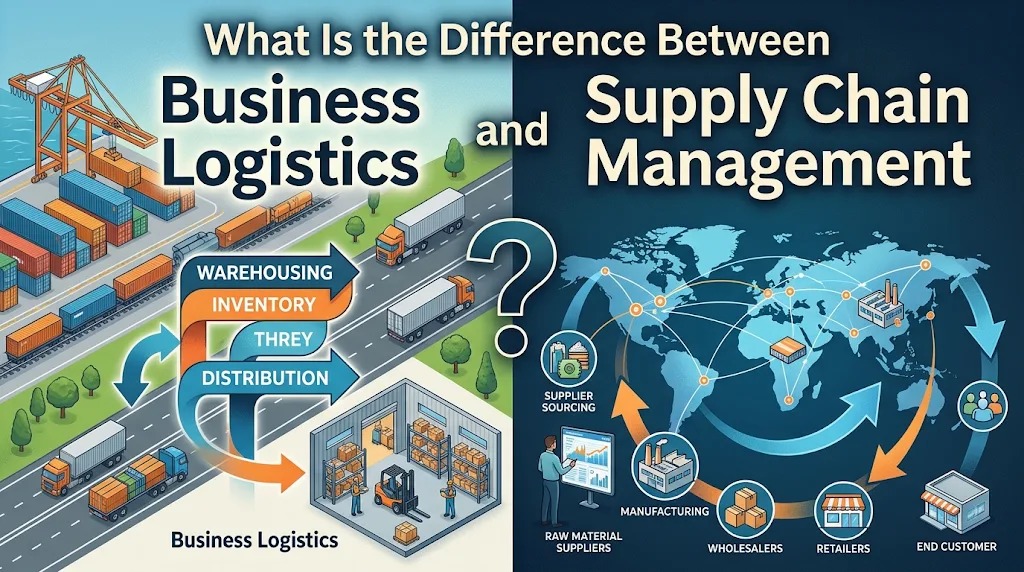
Business logistics and supply chain management are two important concepts in modern business operations. Both focus on ensuring that products move efficiently from suppliers to customers, but they have different responsibilities and areas of focus. Business logistics mainly deals with transportation, warehousing, inventory control, and product distribution. Meanwhile, supply chain management covers a broader range of activities, including supplier relationships, purchasing, production planning, logistics, and customer delivery. Understanding the difference between these concepts helps companies organize their operations, reduce costs, and improve overall business performance.
UNDERSTANDING BUSINESS LOGISTICS
Business logistics refers to the process of planning, implementing, and controlling the movement and storage of goods, services, and related information from their origin to their final destination. Its primary objective is to ensure that products are delivered to the right place, at the right time, in the right condition, and at an efficient cost.
Business logistics includes several important activities, such as transportation management, inventory control, warehousing, packaging, and order processing. For example, an online retail company needs an effective logistics system to store products, prepare customer orders, and arrange deliveries. These activities must be properly coordinated to prevent delays and maintain product quality. Effective logistics management helps businesses improve distribution efficiency and provide reliable services to customers.
UNDERSTANDING SUPPLY CHAIN MANAGEMENT
Supply chain management (SCM) is a broader business process that involves coordinating the flow of products, information, and financial resources from suppliers to manufacturers, distributors, retailers, and final customers. Its purpose is to ensure that all parties involved in producing and delivering products work together efficiently.
Supply chain management includes activities such as supplier selection, purchasing raw materials, production planning, demand forecasting, inventory management, and product distribution. For example, a clothing manufacturer must coordinate with fabric suppliers, production facilities, warehouses, transportation providers, and retail stores. Each stage must work together to ensure that finished products reach customers according to demand and delivery schedules. Effective supply chain management helps companies strengthen business relationships, manage resources, and maintain consistent product availability.
THE MAIN DIFFERENCES BETWEEN BUSINESS LOGISTICS AND SUPPLY CHAIN MANAGEMENT
The main difference between business logistics and supply chain management lies in their scope and responsibilities. Business logistics focuses primarily on the efficient movement, storage, and distribution of products. Supply chain management covers the entire network of activities required to transform raw materials into finished products and deliver them to customers.
Another difference involves their operational objectives. Logistics management aims to improve transportation efficiency, warehouse operations, inventory control, and delivery performance. In contrast, supply chain management focuses on coordinating all business partners, managing procurement activities, planning production, and improving the performance of the entire supply network.
Although they have different responsibilities, these concepts are closely connected. Logistics is an important part of supply chain management because product movement and storage are necessary throughout the supply chain. Without effective logistics, companies may struggle to maintain efficient distribution and meet customer expectations.
HOW LOGISTICS AND SUPPLY CHAIN MANAGEMENT WORK TOGETHER
Business logistics and supply chain management must work together to support successful company operations. Supply chain management establishes the overall coordination between suppliers, manufacturers, distributors, and customers. Logistics then supports this process by managing the transportation, storage, and distribution of products between different locations.
For example, a food company needs supply chain management to coordinate agricultural suppliers, production schedules, packaging materials, and distribution partners. Its logistics department manages warehouse storage, transportation arrangements, inventory levels, and product deliveries. If these activities are properly coordinated, the company can reduce unnecessary expenses and maintain product availability.
Digital technology also strengthens the relationship between logistics and supply chain management. Companies can use integrated information systems to monitor inventory, track shipments, evaluate supplier performance, and forecast customer demand. This improves communication between departments and helps businesses respond more quickly to operational problems. As a result, better coordination can improve efficiency throughout the entire business network.
WHY COMPANIES NEED EFFECTIVE LOGISTICS AND SUPPLY CHAIN MANAGEMENT
Companies need effective logistics and supply chain management to maintain operational stability and compete in changing markets. Proper coordination helps businesses reduce transportation expenses, control inventory costs, prevent production disruptions, and improve delivery performance. These improvements allow organizations to use their resources more efficiently.
Another important benefit is customer satisfaction. Customers expect products to be available, delivered on time, and received in good condition. When companies manage their logistics and supply chain activities effectively, they can provide more reliable services and build stronger customer relationships. In addition, businesses can become more flexible when responding to changes in market demand, supplier problems, or unexpected distribution disruptions. Combining effective logistics with strategic supply chain management helps companies achieve sustainable growth and maintain a competitive advantage.
CONCLUSION
Business logistics and supply chain management have different but closely connected responsibilities in company operations. Business logistics focuses on transportation, warehousing, inventory control, and product distribution, while supply chain management covers the broader coordination of suppliers, purchasing, production, logistics, and customer delivery. Logistics is an essential component of the supply chain because it ensures that products move efficiently between different stages of the business process. By managing both areas effectively, companies can reduce operating costs, improve productivity, maintain product availability, and increase customer satisfaction.
Recent Posts

How Does Technology Make Daily Evaluation... 21.11.2026/62 View

Apa Strategi Menghadapi Kesenjangan antara Kompetensi... 21.11.2026/63 View

Mengapa Inventaris Aset Penting bagi Kelancaran... 21.11.2026/59 View

When Should Musicians Join a Record... 21.11.2026/58 View

Daily Evaluation or Daily Planning Which... 21.11.2026/66 View
