

What Is the Difference Between Campus Buses and Public Transportation?
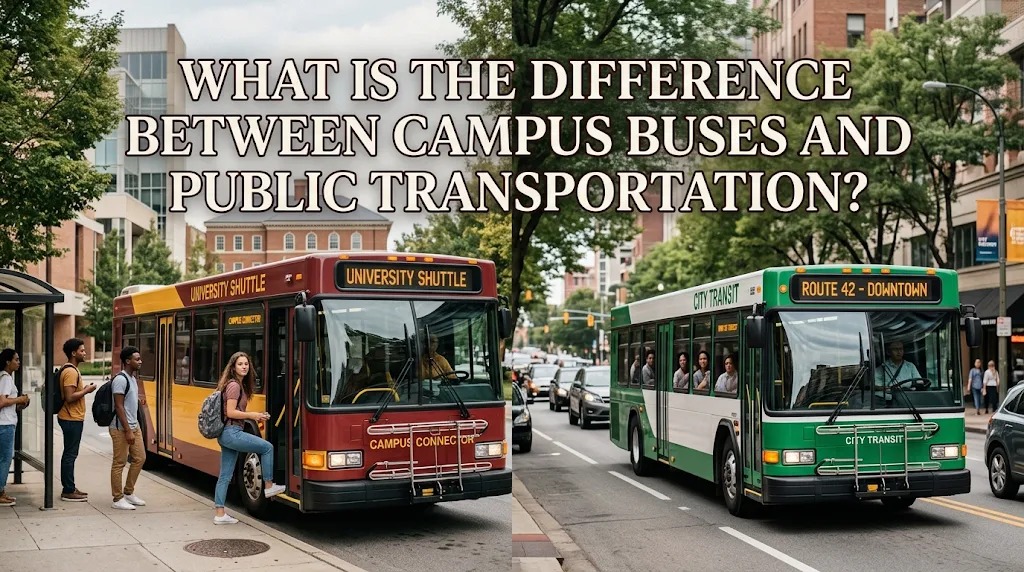
Campus buses and public transportation are both transportation services that help people travel from one location to another. However, they have different purposes, operating systems, service areas, and passenger requirements. Campus buses are generally provided by universities to support the mobility of students, lecturers, and campus staff. Meanwhile, public transportation is designed to serve a wider community, including workers, students, tourists, and other passengers. Understanding the difference between campus buses and public transportation can help students choose the most suitable transportation option for their daily activities.
UNDERSTANDING CAMPUS BUSES AND PUBLIC TRANSPORTATION
Campus buses are transportation services organized or supported by universities to help students and staff move between important locations. Their routes usually connect lecture buildings, libraries, laboratories, dormitories, parking areas, and other campus facilities. Some universities also provide transportation between separate campus locations or nearby student accommodation. These services are generally designed around academic schedules and the transportation needs of the university community.
Public transportation refers to transportation services available to the general public. Examples include city buses, trains, commuter rail, and other shared transportation services. These vehicles usually operate along established routes that connect residential areas, business districts, shopping centers, and public facilities. Unlike campus buses, public transportation is not limited to a particular educational institution. Anyone who meets the service requirements can generally use it by following the applicable ticketing and payment procedures.
DIFFERENCES IN ROUTES AND SERVICE AREAS
One major difference between campus buses and public transportation is their service coverage. Campus buses usually operate within a university environment or along specific routes connecting university facilities. Their stops are selected based on the locations frequently visited by students and university employees. This makes campus transportation particularly useful for people who need to travel between buildings without walking long distances.
Public transportation generally covers a much wider geographical area. City buses and trains connect different neighborhoods, towns, commercial areas, and transportation terminals. Their routes are planned to serve the mobility needs of the wider population rather than one institution. As a result, public transportation is more suitable for people who need to travel outside the campus or reach destinations across a city. The difference in service coverage makes both transportation options useful for different travel purposes.
DIFFERENCES IN PASSENGERS AND ACCESS REQUIREMENTS
Campus buses primarily serve members of the university community, such as students, lecturers, administrative employees, and other authorized individuals. Some universities require passengers to show student identification cards or register through an internal transportation system. Other institutions allow visitors to use campus buses under certain conditions. These access policies depend on university regulations and the purpose of the transportation service.
Public transportation is generally available to a much broader range of passengers. People do not usually need to belong to a particular institution to use city buses or trains. They only need to follow the operator's rules and pay the required fare when applicable. This makes public transportation an important part of urban mobility because it supports different communities and travel needs. Therefore, the main distinction is that campus buses are institution-oriented, while public transportation is intended for the general public.
DIFFERENCES IN COST AND OPERATING SCHEDULES
Campus bus services are often provided as a university facility, so students may be able to use them for free or at a relatively low cost. The operating expenses may be supported by university budgets, transportation partnerships, or other institutional funding. Their schedules are usually adjusted to match lecture times, academic activities, and campus operating hours. During holidays or periods with fewer academic activities, bus frequency may be reduced or services may temporarily stop.
Public transportation generally operates using a fare system determined by the transportation provider or relevant authority. Ticket prices may depend on travel distance, transportation type, or payment policies. Its schedules are usually designed to serve public travel demand throughout the day, including commuting hours and other busy periods. Some public transportation services also operate during weekends and holidays, although their frequency may change. These differences mean that passengers should check the applicable fares and operating schedules before traveling.
WHICH TRANSPORTATION OPTION IS MORE SUITABLE FOR STUDENTS?
The most suitable transportation option depends on the student's destination, travel distance, schedule, and transportation needs. Campus buses are generally more convenient for students who frequently travel between university buildings or facilities. They can reduce walking distances, help students save transportation expenses, and make daily campus activities more manageable. However, their limited routes may not be suitable for students who need to travel to locations outside the university.
Public transportation is a better option when students need to travel between campus and other parts of the city. It provides access to shopping centers, workplaces, residential areas, railway stations, and other public destinations. Students can also combine campus buses with public transportation to complete longer journeys. For example, they can use a city bus to reach the university area and continue their journey using a campus shuttle. Combining both services can provide greater flexibility and support more efficient daily mobility.
CONCLUSION
Campus buses and public transportation have different purposes, service areas, passenger requirements, costs, and operating schedules. Campus buses focus on supporting the transportation needs of university communities, while public transportation serves the wider population. Both options offer important benefits depending on the passenger's destination and travel requirements. By understanding their differences, students can choose the most practical transportation service and manage their daily journeys more efficiently.
Recent Posts

Bagaimana Sistem SKS pada Program Kuliah... 22.11.2026/31 View

How Does Technology Make Daily Evaluation... 21.11.2026/67 View

Apa Strategi Menghadapi Kesenjangan antara Kompetensi... 21.11.2026/66 View

Mengapa Inventaris Aset Penting bagi Kelancaran... 21.11.2026/64 View

When Should Musicians Join a Record... 21.11.2026/65 View
