

What Is the Difference Between Closing Commission and Base Salary?
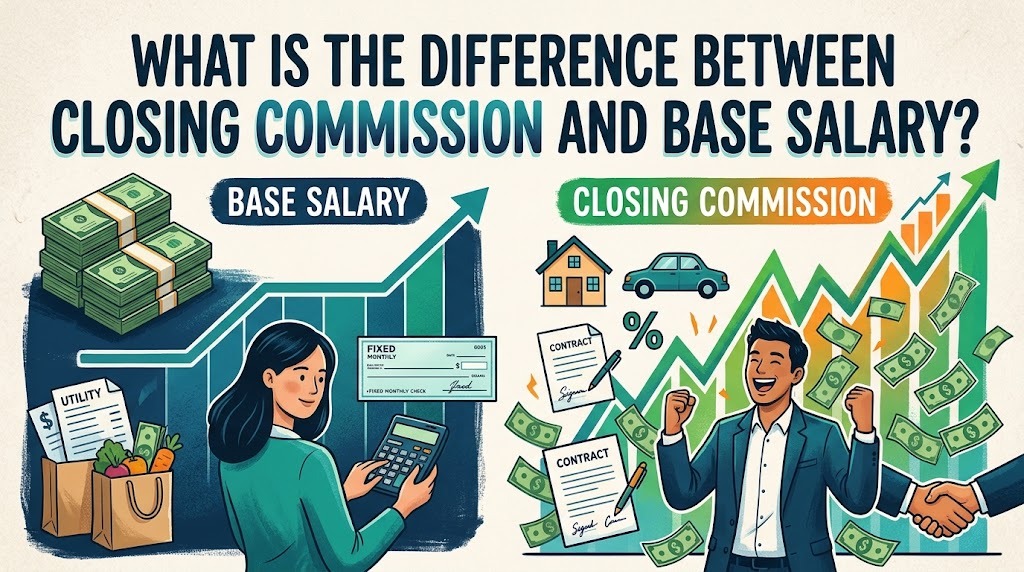
A closing commission and a base salary are two common forms of compensation used in sales jobs. Although both provide income to employees, they work differently and serve different purposes. A base salary is a fixed amount paid regularly, while a closing commission is generally earned when a salesperson successfully completes a qualifying transaction. Understanding these differences helps employees evaluate job offers, estimate their potential earnings, and manage their finances. For employers, combining these two payment methods can help balance income stability with sales performance incentives.
UNDERSTANDING BASE SALARY
A base salary is the fixed amount of money an employee receives for performing their job, regardless of how many sales they complete. It is usually paid monthly, although some employers use weekly or biweekly payment schedules. For example, a salesperson with a monthly base salary of $3,000 generally receives that amount before applicable taxes and deductions, even if sales are lower than expected. This predictable income helps employees cover regular expenses such as housing, transportation, food, and bills.
Base salary also provides financial stability because employees do not need to rely entirely on successful sales transactions to earn an income. It can be particularly helpful for new salespeople who are still learning about products, building customer relationships, and developing their sales skills. However, a fixed salary may provide less direct financial incentive for exceeding sales targets if additional performance rewards are unavailable. The actual salary structure depends on the employer, employment agreement, and applicable labor regulations.
UNDERSTANDING CLOSING COMMISSION
A closing commission is compensation earned when a salesperson successfully completes a qualifying sale or transaction under the company's commission policy. The payment may be calculated as a percentage of eligible sales revenue, a fixed amount per transaction, or another agreed formula. For example, if a salesperson earns a 5 percent commission on $10,000 in eligible sales, the commission is $500. The actual amount depends on the commission rate, the transaction's eligibility, and the company's written payment rules.
Unlike a base salary, closing commission can change from one pay period to another because sales performance varies. Employees who close more qualifying transactions may earn higher commissions, while those who complete fewer sales may receive less variable compensation. The timing of payment also depends on the employer's policy, such as whether the commission becomes payable when a contract is signed, a transaction is completed, or customer payment is received. Therefore, salespeople should understand the commission agreement before accepting a job.
KEY DIFFERENCES BETWEEN CLOSING COMMISSION AND BASE SALARY
The main difference between closing commission and base salary is how each type of compensation is earned. Base salary provides a predetermined amount, while closing commission depends on qualifying sales results and the applicable payment formula. This difference affects income predictability, motivation, and the way employees plan their monthly budgets. A fixed salary generally offers greater short-term certainty, whereas commission provides an opportunity to increase earnings through successful sales.
Another difference is the financial risk associated with each payment method. Employees who rely heavily on commission may experience fluctuating income when customer demand decreases or sales cycles become longer. Base salary can reduce this uncertainty, although the amount may still be affected by employment terms, unpaid absences, or other lawful adjustments. Companies also use these compensation methods differently depending on their industry, business model, and sales objectives. Understanding these distinctions helps employees determine which arrangement best matches their financial needs and career goals.
HOW BASE SALARY AND CLOSING COMMISSION WORK TOGETHER
Many companies use a base salary plus commission model to provide employees with stable income while rewarding successful sales performance. Under this arrangement, employees receive a fixed salary and can earn additional money through eligible transactions. For example, a salesperson who earns a monthly base salary of $3,000 and receives $500 in closing commission may earn $3,500 before applicable taxes and deductions. This combination can make compensation more predictable while maintaining an incentive to achieve sales targets.
The effectiveness of this model depends on whether the salary and commission rates are appropriate for the job. A reasonable base salary can support employees during slower sales periods, while a well-designed commission plan rewards productivity and profitable transactions. Employers should explain how commissions are calculated, when they are paid, and how cancellations or refunds are handled. Employees should also check whether commission rates change after reaching specific targets. A transparent compensation structure helps both parties understand their financial expectations and responsibilities.
ADVANTAGES AND DISADVANTAGES OF EACH PAYMENT METHOD
A major advantage of base salary is income predictability, which makes it easier for employees to plan expenses and manage financial commitments. It may also encourage salespeople to focus on customer service, product knowledge, and long-term relationships rather than immediate transactions alone. However, employees may have limited opportunities to increase their earnings if salary increases are infrequent and no additional incentives are available. Employers must also maintain payroll commitments during periods when sales revenue declines.
Closing commission offers a different set of advantages and disadvantages. It can motivate employees to improve their sales techniques, pursue qualified leads, and reach performance targets. High-performing salespeople may earn considerably more when commission opportunities are strong, but their income can fluctuate with market conditions and customer demand. Commission-based incentives may also encourage unsuitable selling practices if the company rewards sales volume without considering customer satisfaction or profitability. A balanced compensation plan can reduce these risks by combining clear performance standards with appropriate financial rewards.
HOW TO CHOOSE THE RIGHT COMPENSATION STRUCTURE
Choosing between base salary, closing commission, or a combination of both depends on an employee's financial priorities and the nature of the sales role. People who value predictable monthly income may prefer positions with a stronger base salary. Those who are comfortable with variable earnings and have strong sales skills may be attracted to roles offering greater commission potential. However, employees should evaluate the entire compensation package rather than focusing only on the advertised commission rate.
Before accepting a sales position, review the base salary, commission formula, payment schedule, sales targets, and any conditions that affect eligibility. Ask whether the employer provides training, qualified leads, and reasonable opportunities to reach performance goals. It is also useful to compare realistic total earnings rather than relying solely on the highest possible income advertised by the company. Finally, confirm that the compensation agreement complies with applicable employment laws and clearly explains how earned commissions are handled when employment ends.
CONCLUSION
Closing commission and base salary serve different purposes in employee compensation. Base salary provides a fixed and generally predictable source of income, while closing commission rewards employees for completing qualifying sales transactions. A salary-only arrangement may suit employees who prioritize stability, whereas commission-based compensation can appeal to those seeking greater earning potential. Many companies combine both methods to balance financial security with performance incentives. By understanding the payment rules and evaluating realistic earnings, employees can make more informed career decisions.
Recent Posts

Bagaimana Sistem SKS pada Program Kuliah... 22.11.2026/52 View

How Does Technology Make Daily Evaluation... 21.11.2026/81 View

Apa Strategi Menghadapi Kesenjangan antara Kompetensi... 21.11.2026/81 View

Mengapa Inventaris Aset Penting bagi Kelancaran... 21.11.2026/77 View

When Should Musicians Join a Record... 21.11.2026/82 View
