

What Is the Difference Between Dapodik and Other Educational Information Systems?
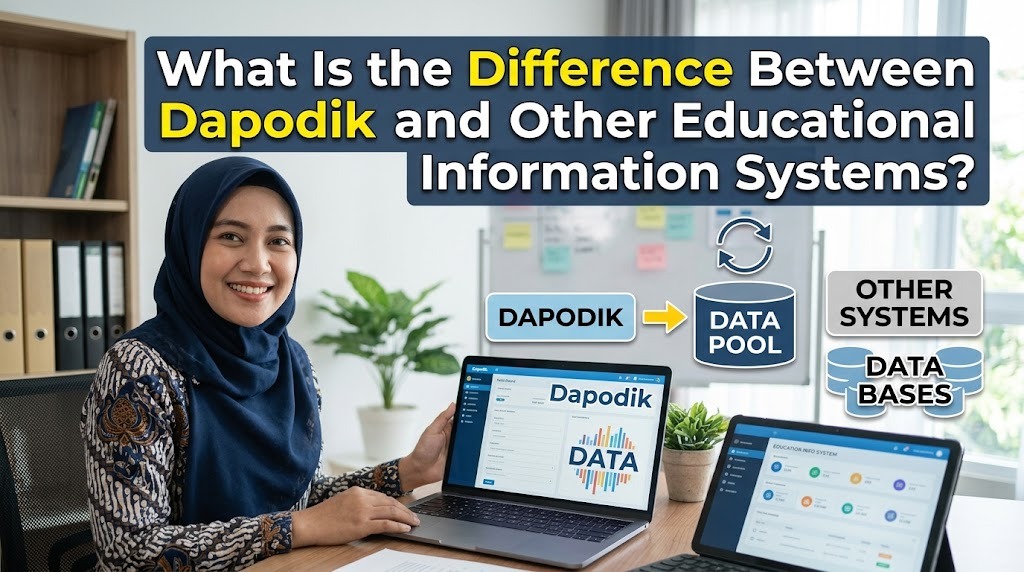
Educational institutions use digital systems to collect, organize, and manage information more efficiently. In Indonesia, Dapodik (Data Pokok Pendidikan) is an important national education data system that records information about schools, students, teachers, education staff, and other educational resources. The data supports education administration and planning at different levels of government.
However, Dapodik is not the only digital system used in education. Schools and government institutions may also use platforms for student admissions, academic management, school examinations, financial administration, and educational services. Understanding the difference between Dapodik and other educational information systems helps schools identify the purpose of each platform and use it appropriately.
UNDERSTANDING THE MAIN PURPOSE OF DAPODIK
The primary purpose of Dapodik is to collect and manage basic education data from schools within its designated scope. The system contains information about educational institutions, students, teachers, education staff, and other resources needed to describe school conditions. This information can support government planning, monitoring, and the administration of various education programs.
Dapodik is therefore closely associated with the availability and accuracy of school-level data. School operators are responsible for managing information according to applicable procedures and official technical guidance. The system is not simply a platform for checking student grades or accessing classroom materials. Instead, it serves as a source of structured educational information that can be used for administrative and planning purposes.
DIFFERENCES IN DATA AND INFORMATION MANAGED
One major difference between Dapodik and other education systems is the type of information each platform manages. Dapodik focuses on basic educational data, including school profiles, student records, teacher information, and educational facilities within its scope. Other systems may focus on more specific information, such as attendance, grades, class schedules, learning materials, or student admissions.
For example, a school management platform may help teachers record daily attendance and calculate grades, while a learning management system may provide assignments, digital resources, and online assessments. These functions are different from Dapodik's primary role in collecting basic education data. Although some information may overlap, each system can have different data fields, procedures, and intended uses.
DIFFERENCES IN USERS AND RESPONSIBILITIES
Another distinction concerns the people who use each system and the responsibilities assigned to them. Dapodik is commonly managed at the school level by authorized operators who enter, verify, and update educational information in accordance with official requirements. School leaders and relevant staff may also be involved in reviewing the accuracy and completeness of the records.
Other educational information systems may have a broader range of everyday users. Teachers may use academic platforms to manage classes, students may access learning materials or view grades, and parents may use designated applications to monitor school activities. The responsibilities of each user depend on the system's design and institutional policies. Understanding these roles helps schools avoid confusion about who should enter, verify, approve, or access particular information.
DIFFERENCES IN HOW THE DATA IS USED
The information collected by Dapodik can support educational planning and administration. Depending on applicable policies and program requirements, education authorities may use verified data to understand school conditions, assess resource needs, and support the administration of certain education programs. Accurate records are therefore important for maintaining a reliable picture of educational institutions.
Other systems may use information for more immediate operational purposes. For instance, an academic information system may help a school prepare report cards, manage course registrations, or organize class schedules. A learning management system may help teachers monitor assignment completion and student participation. These different purposes explain why one platform cannot automatically replace another, even when they contain some similar information.
WHY SCHOOLS MAY NEED MORE THAN ONE SYSTEM
Schools may need to use several educational information systems because no single platform necessarily covers every administrative and learning requirement. Dapodik may support basic education data collection, while other applications handle school operations, digital learning, financial transactions, or specialized services. Using the appropriate system for each task can help schools organize their work more effectively.
However, operating multiple platforms also creates challenges. School staff may need to enter similar information in different places, learn separate procedures, and ensure that records remain consistent. Schools should therefore follow official guidance, establish clear responsibilities, and protect personal information when using these platforms. Where data integration is available, it should be handled through authorized methods rather than informal or unapproved transfers.
CONCLUSION
The difference between Dapodik and other educational information systems lies mainly in their purposes, the types of information they manage, their users, and how their data is used. Dapodik focuses on collecting and managing basic education data, while other platforms may support academic administration, digital learning, admissions, attendance, or other specialized activities.
Understanding these distinctions helps schools use each system according to its intended function. Accurate data entry, clear user responsibilities, appropriate security practices, and compliance with official procedures remain important across all platforms. By managing these systems carefully, schools can support more organized administration and contribute to the effective use of educational information.
Recent Posts

Bagaimana Sistem SKS pada Program Kuliah... 22.11.2026/50 View

How Does Technology Make Daily Evaluation... 21.11.2026/79 View

Apa Strategi Menghadapi Kesenjangan antara Kompetensi... 21.11.2026/79 View

Mengapa Inventaris Aset Penting bagi Kelancaran... 21.11.2026/75 View

When Should Musicians Join a Record... 21.11.2026/80 View
