

What Is the Difference Between Financial Staff and Accounting Staff?
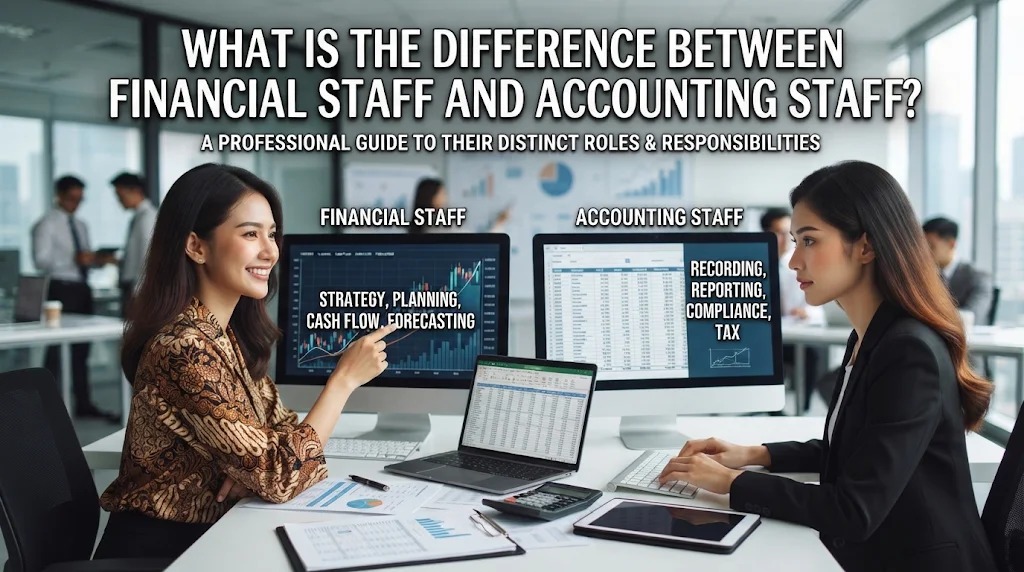
Financial staff and accounting staff are two important positions in a company's financial department. Both roles are related to managing money, recording transactions, and maintaining financial information. However, they have different responsibilities and focus on different aspects of financial operations. Understanding these differences is important for individuals who want to build a career in finance or accounting.
In general, financial staff focus on managing financial activities, monitoring cash flow, processing payments, and controlling company budgets. Meanwhile, accounting staff concentrate more on recording, classifying, reviewing, and reporting financial transactions according to accounting principles. Although their duties are different, both positions work together to maintain accurate financial information and support company operations.
UNDERSTANDING THE ROLE OF FINANCIAL STAFF
Financial staff are responsible for supporting the company's financial activities and ensuring that available funds are managed properly. Their daily tasks may include processing payments, monitoring incoming and outgoing money, checking invoices, and recording operational expenses. They also help prepare budgets and monitor whether company spending follows approved financial plans. These responsibilities help the company maintain sufficient funds for its daily operations.
In addition, financial staff often monitor cash flow to ensure that the company can meet its financial obligations. They may coordinate with suppliers, customers, and other departments regarding payment schedules and financial documents. Their work also involves identifying potential cash shortages and reporting financial issues to management. Therefore, financial staff play an important role in maintaining financial stability and effective resource management.
UNDERSTANDING THE ROLE OF ACCOUNTING STAFF
Accounting staff focus on recording and organizing a company's financial transactions based on established accounting principles. Their responsibilities include preparing journal entries, classifying transactions, maintaining ledgers, and checking financial records. They also help prepare financial statements that explain the company's financial position and performance. These activities ensure that financial information is properly documented and can be reviewed when necessary.
Another important responsibility of accounting staff is performing account reconciliations and supporting financial reporting processes. They may compare company records with bank statements, identify differences, and correct recording errors. Accounting staff also assist with tax documentation and audit preparation, depending on their position and the company's requirements. Accurate accounting records help management, auditors, and other stakeholders understand the company's financial condition.
DIFFERENCES IN DAILY TASKS AND RESPONSIBILITIES
The main difference between financial staff and accounting staff can be seen in their daily activities. Financial staff generally handle operational financial activities, such as processing payments, monitoring cash flow, managing budgets, and checking financial obligations. Their work focuses on ensuring that money is available and used according to company requirements. They often communicate with other departments to coordinate payments and financial needs.
Accounting staff, on the other hand, focus on documenting and reporting financial transactions. They prepare journal entries, update financial ledgers, reconcile accounts, and assist in producing financial statements. Their work emphasizes the accuracy and consistency of financial records. Although both positions may handle invoices, receipts, and payment documents, their purposes can be different depending on the company's organizational structure.
DIFFERENCES IN SKILLS AND KNOWLEDGE REQUIRED
Financial staff need strong skills in financial management, cash flow monitoring, budgeting, and payment administration. They should understand how to manage company funds and evaluate whether expenses are consistent with financial plans. Communication and problem-solving skills are also important because they regularly coordinate with different departments. Proficiency in Microsoft Excel and financial management software can make their work more efficient.
Accounting staff require a stronger understanding of accounting principles, bookkeeping, financial statements, and account reconciliation. They must know how to classify transactions correctly and maintain organized financial records. Attention to detail is particularly important because accounting mistakes can affect financial reports and business evaluations. Knowledge of accounting software, taxation, and applicable financial reporting standards is also useful for performing their responsibilities professionally.
HOW FINANCIAL STAFF AND ACCOUNTING STAFF WORK TOGETHER
Although financial staff and accounting staff have different responsibilities, their work is closely connected. Financial staff may process company payments and collect transaction documents, while accounting staff use those documents to record and classify financial activities. Both teams need to exchange accurate information to ensure that every transaction is properly managed. Cooperation between these positions helps prevent missing records and unnecessary financial errors.
For example, when a company pays a supplier, financial staff may verify the invoice and process the payment according to company procedures. Accounting staff then record the transaction in the appropriate accounts and include it in the company's financial records. Both teams may also participate in monthly financial reviews and help resolve differences between payment records and accounting data. Effective teamwork and information sharing improve financial accuracy and support better company management.
CAREER OPPORTUNITIES AND PROFESSIONAL DEVELOPMENT
Financial staff and accounting staff offer different career opportunities within the business and finance sectors. Financial staff can develop their careers into positions such as financial analyst, finance officer, finance supervisor, treasury staff, or finance manager. These opportunities are suitable for individuals interested in budgeting, financial planning, cash flow management, and business finance. Developing analytical abilities and financial management knowledge can help them advance professionally.
Accounting staff can pursue careers as accountants, senior accountants, accounting supervisors, tax specialists, internal auditors, or accounting managers. Professional development may involve learning advanced accounting systems, taxation, auditing, and financial reporting standards. Both career paths can offer opportunities in private companies, government institutions, financial organizations, and other industries. Continuous learning, practical experience, and professional certifications can improve career prospects in both fields.
CONCLUSION
Financial staff and accounting staff have different but interconnected responsibilities within a company. Financial staff mainly focus on managing company funds, monitoring cash flow, processing payments, and controlling budgets. Meanwhile, accounting staff concentrate on recording transactions, maintaining financial records, reconciling accounts, and preparing financial statements.
Despite these differences, both positions are essential for maintaining accurate financial information and supporting business operations. Financial staff help ensure that company resources are managed effectively, while accounting staff ensure that financial activities are documented and reported correctly. Understanding these roles can help individuals choose a career path that matches their interests, knowledge, and professional abilities.
Recent Posts

How Does Technology Make Daily Evaluation... 21.11.2026/56 View

Apa Strategi Menghadapi Kesenjangan antara Kompetensi... 21.11.2026/58 View

Mengapa Inventaris Aset Penting bagi Kelancaran... 21.11.2026/52 View

When Should Musicians Join a Record... 21.11.2026/53 View

Daily Evaluation or Daily Planning Which... 21.11.2026/60 View
