

What Is the Difference Between Global Warming and Climate Change?
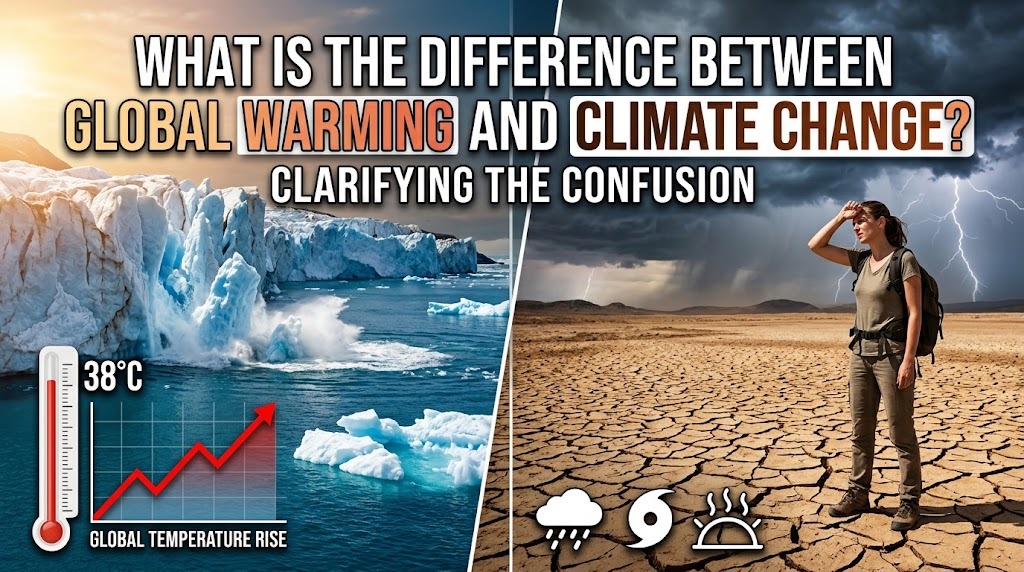
Global warming and climate change are often used interchangeably, but they have different meanings. Both terms describe environmental changes that affect the Earth, yet they refer to different aspects of the same broader issue. Global warming specifically refers to the long-term increase in Earth's average surface temperature, while climate change includes a wider range of long-term changes in temperature, rainfall, sea levels, and other climate patterns.
Understanding the difference between global warming and climate change helps people recognize how human activities influence the environment. The two concepts are closely connected because rising temperatures can affect the atmosphere, oceans, and natural systems. Learning how they differ also makes it easier to understand environmental reports, scientific discussions, and efforts to address climate-related risks.
UNDERSTANDING THE MEANING OF GLOBAL WARMING
Global warming refers to the long-term rise in Earth's average surface temperature. The main cause of modern global warming is the increase in greenhouse gases released through human activities, particularly the burning of coal, oil, and natural gas. These gases absorb and re-emit heat, causing more energy to remain within the Earth system.
Deforestation, industrial processes, and certain agricultural activities also contribute to greenhouse gas emissions. As these gases accumulate, they strengthen the natural greenhouse effect and lead to long-term warming. Global warming does not mean that every place becomes hotter at the same rate or that every day is warmer than the previous one. Instead, it describes a persistent upward trend in average global temperature over many years.
UNDERSTANDING THE MEANING OF CLIMATE CHANGE
Climate change refers to long-term changes in the Earth's climate system. These changes can involve average temperatures, rainfall patterns, seasonal conditions, sea levels, and the frequency or intensity of certain extreme weather events. Climate change can affect both the atmosphere and the oceans, as well as land surfaces and natural ecosystems.
Climate patterns can change because of natural processes, such as variations in solar activity, volcanic eruptions, and changes in ocean circulation. However, the rapid warming observed in recent decades is primarily driven by human-caused greenhouse gas emissions. Modern climate change therefore includes global warming as well as its wider effects. For example, changing rainfall patterns and rising sea levels are climate-related changes that occur alongside increasing global temperatures.
THE MAIN DIFFERENCE BETWEEN GLOBAL WARMING AND CLIMATE CHANGE
The main difference between global warming and climate change is the scope of each term. Global warming focuses specifically on the increase in Earth's average temperature, whereas climate change covers a broader range of long-term changes in climate conditions. In simple terms, global warming describes one major part of the problem, while climate change describes the wider set of changes associated with it.
For example, rising global temperatures are evidence of global warming. Changes in seasonal rainfall, melting glaciers, rising sea levels, and shifts in the distribution of some plant and animal species are examples of broader climate-related impacts. These effects are connected, but they are not identical. Understanding the distinction helps explain why scientists study temperature records alongside rainfall data, ocean measurements, ice observations, and other indicators of climate conditions.
HOW GLOBAL WARMING CONTRIBUTES TO CLIMATE CHANGE
Global warming contributes to climate change by altering the way energy moves through the Earth's atmosphere, oceans, and land. As the planet warms, ocean water expands and land-based ice melts, contributing to rising sea levels. Higher temperatures also increase evaporation and allow the atmosphere to hold more water vapor, which can influence rainfall and the risk of heavy precipitation under suitable weather conditions.
Warming can also affect ecosystems and human activities. Some regions may experience more intense heatwaves, while others face changing patterns of drought or rainfall. Warmer ocean conditions can threaten coral reefs, and shifting temperatures can affect agricultural productivity and the habitats of many species. The exact effects depend on local conditions and other environmental factors, but reducing greenhouse gas emissions can limit future warming and help reduce many associated risks.
WHY UNDERSTANDING BOTH TERMS IS IMPORTANT
Understanding the distinction between global warming and climate change helps people interpret environmental information more accurately. When a report discusses rising average temperatures, it is generally describing global warming. When it discusses changes in rainfall, sea levels, ecosystems, or long-term weather patterns, it may be addressing climate change more broadly.
This understanding also helps people recognize that climate-related impacts are interconnected. Reducing fossil fuel use, improving energy efficiency, protecting forests, and expanding cleaner energy sources can help limit global warming. At the same time, communities can prepare for climate impacts by improving water management, protecting coastal areas, strengthening infrastructure, and developing early-warning systems. Clear knowledge of these concepts supports informed decisions about environmental protection and climate action.
CONCLUSION
The difference between global warming and climate change lies mainly in their scope. Global warming refers to the long-term increase in Earth's average surface temperature, while climate change includes wider, long-term changes in temperature, rainfall, sea levels, and other climate patterns. Global warming is therefore a major component of modern climate change, but the two terms do not mean exactly the same thing.
Both concepts are important for understanding the environmental challenges facing the world. Human-caused greenhouse gas emissions are the main driver of current global warming, and the resulting changes affect natural systems and human communities. By reducing emissions, protecting ecosystems, and preparing for climate impacts, people and governments can help limit future risks and support a more sustainable environment.
Recent Posts

Bagaimana Sistem SKS pada Program Kuliah... 22.11.2026/47 View

How Does Technology Make Daily Evaluation... 21.11.2026/75 View

Apa Strategi Menghadapi Kesenjangan antara Kompetensi... 21.11.2026/77 View

Mengapa Inventaris Aset Penting bagi Kelancaran... 21.11.2026/73 View

When Should Musicians Join a Record... 21.11.2026/77 View
