

What Is the Difference Between Indonesian and English Language Competitions?
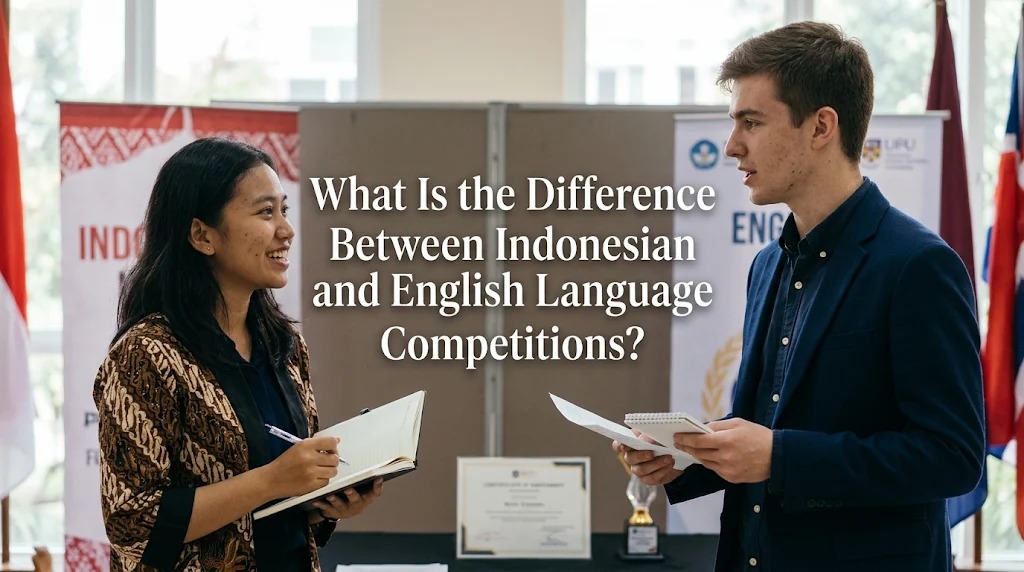
Indonesian and English language competitions are educational activities designed to develop students' language abilities through various challenges. Both competitions encourage participants to improve communication, vocabulary, grammar, reading, writing, and speaking skills. They are commonly organized in schools, universities, and educational institutions to support students' academic development.
The main difference lies in the language being used and the skills being emphasized. Indonesian language competitions focus on mastering the national language, including its grammar, vocabulary, literature, and effective communication. Meanwhile, English language competitions focus on developing English proficiency, particularly the ability to understand and communicate using an international language. Although their purposes are similar, each competition provides different learning experiences.
DIFFERENCES IN LANGUAGE SKILLS AND MATERIALS
Indonesian language competitions generally test participants' understanding of standard Indonesian, sentence structure, spelling, punctuation, vocabulary, and literary works. Some activities include poetry reading, speech contests, storytelling, essay writing, and Indonesian language quizzes. Participants are expected to use appropriate language according to Indonesian grammar rules and communication contexts.
In comparison, English language competitions assess participants' understanding of English vocabulary, grammar, pronunciation, listening, reading, and writing. Common activities include English speech contests, spelling bees, storytelling, debates, and essay writing. Participants must demonstrate their ability to use English correctly and communicate ideas clearly. Therefore, the learning materials differ because each competition follows the characteristics and rules of its respective language.
DIFFERENCES IN COMMUNICATION AND PRONUNCIATION
Another important difference can be seen in pronunciation and communication techniques. In Indonesian language competitions, participants are generally assessed on clear pronunciation, appropriate intonation, sentence delivery, and the correct use of standard Indonesian. They must also understand formal and informal language depending on the competition requirements.
English language competitions place additional emphasis on English pronunciation, stress, intonation, and fluency. Participants may need to demonstrate their ability to pronounce unfamiliar words and communicate naturally in English. Some competitions also assess listening comprehension and the ability to respond to questions in English. These requirements can create different challenges, especially for students who are still developing their foreign language abilities.
DIFFERENCES IN LEARNING PURPOSES AND BENEFITS
Indonesian language competitions help students strengthen their understanding and appreciation of their national language. They encourage participants to communicate effectively, understand Indonesian literature, and use proper language in academic and everyday situations. These activities also support cultural awareness because language is closely connected to national identity and literary traditions.
Meanwhile, English language competitions provide opportunities for students to develop foreign language proficiency. English skills can support access to international information, educational resources, and communication with people from different countries. Participating in these competitions can also help students prepare for academic opportunities and future professional environments where English is useful.
Both types of competitions provide important benefits, including confidence, critical thinking, creativity, discipline, and sportsmanship. The difference is mainly related to the language knowledge and communication abilities that participants are expected to demonstrate.
HOW TO PREPARE FOR BOTH TYPES OF COMPETITIONS
Preparation for Indonesian and English language competitions requires consistent practice and an understanding of the competition format. Students should first learn the rules, assessment criteria, and materials that will be tested. This helps them create an effective preparation strategy based on the specific requirements of each event.
For Indonesian competitions, students can improve their skills by reading Indonesian books, studying spelling rules, practicing formal writing, and exploring literary works. They can also practice delivering speeches, reading poetry, and answering language-related questions.
For English competitions, students should regularly practice vocabulary, grammar, pronunciation, listening, and speaking. Reading English articles, watching educational videos, and practicing conversations can help improve their language abilities. Students should also participate in practice quizzes and speaking exercises to become more familiar with competition challenges.
CONCLUSION
The main difference between Indonesian and English language competitions is the language knowledge and communication skills being evaluated. Indonesian competitions emphasize mastery of the national language, including grammar, spelling, literature, and effective communication. English competitions focus on English proficiency, including vocabulary, pronunciation, grammar, and the ability to communicate in an international language.
Both competitions are valuable for students because they provide opportunities to develop knowledge, confidence, creativity, and communication skills. By participating in either activity, students can improve their language abilities and gain useful experiences for their academic and professional development.
Recent Posts

How Does Technology Make Daily Evaluation... 21.11.2026/62 View

Apa Strategi Menghadapi Kesenjangan antara Kompetensi... 21.11.2026/63 View

Mengapa Inventaris Aset Penting bagi Kelancaran... 21.11.2026/59 View

When Should Musicians Join a Record... 21.11.2026/58 View

Daily Evaluation or Daily Planning Which... 21.11.2026/66 View
