

What Is the Difference Between Ionizing and Non-Ionizing Radiation?
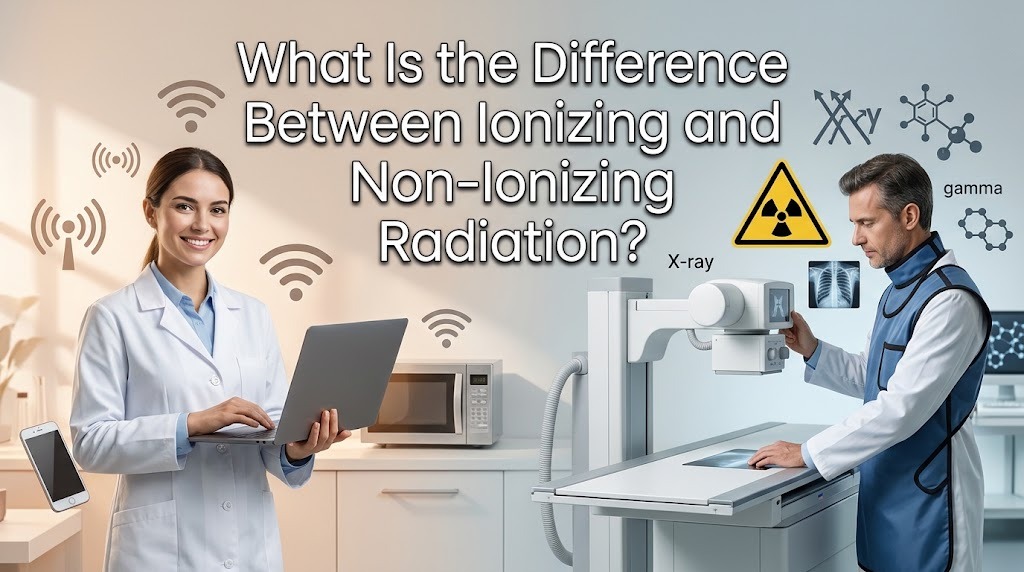
Radiation is a word that often makes people nervous, yet it is a natural part of everyday life. Sunlight, radio signals, and the heat from a stove are all forms of radiation. However, not all radiation affects the body in the same way. Understanding the difference between ionizing and non-ionizing radiation helps you separate real risks from common myths.
WHAT IS RADIATION?
Radiation is energy that travels through space or matter in the form of waves or particles. It comes from natural sources, such as the sun, the earth’s soil, and cosmic rays, as well as from man-made sources like medical machines and mobile phones. Radiation is usually grouped along the electromagnetic spectrum, which ranges from very low-energy radio waves to very high-energy gamma rays.
The key factor that separates one type of radiation from another is energy level. Higher-energy radiation can change the structure of atoms, while lower-energy radiation usually cannot. This single difference splits radiation into two main groups: ionizing and non-ionizing.
WHAT IS IONIZING RADIATION?
Ionizing radiation carries enough energy to remove electrons from atoms and molecules, a process called ionization. When this happens inside living tissue, it can damage cells and DNA. This type of radiation includes X-rays, gamma rays, alpha particles, and beta particles, and it also comes from radioactive materials such as uranium and radon.
Because of its power, ionizing radiation can cause health problems when exposure is high or repeated over time. These effects include skin burns, radiation sickness, and a higher risk of cancer. Even so, it is also very useful, since doctors rely on it for medical imaging and cancer treatment, and power plants use it to produce electricity.
WHAT IS NON-IONIZING RADIATION?
Non-ionizing radiation has lower energy and cannot remove electrons from atoms. It can still make atoms vibrate or heat up, but it does not break chemical bonds in the same way. Common examples include radio waves, microwaves, infrared light, visible light, and low-energy ultraviolet (UV) rays.
This type of radiation surrounds us daily. It comes from Wi-Fi routers, mobile phones, microwave ovens, remote controls, and TV signals. At normal exposure levels, non-ionizing radiation is generally considered safe, although very intense sources can cause harm, such as burns from heat or eye damage from lasers.
KEY DIFFERENCES BETWEEN IONIZING AND NON-IONIZING RADIATION
The biggest difference is energy. Ionizing radiation has high energy and can alter atoms, while non-ionizing radiation has low energy and cannot. As a result, ionizing radiation is capable of damaging DNA directly, but non-ionizing radiation mostly causes heating effects.
They also differ in sources and uses. Ionizing radiation comes from X-ray machines, nuclear reactions, and radioactive elements, while non-ionizing radiation comes from communication devices, household appliances, and light. In terms of risk, ionizing radiation needs strict safety controls, whereas non-ionizing radiation is usually harmless at everyday levels.
The ultraviolet (UV) range deserves special attention because it sits on the border between the two groups. The lower-energy part of UV is non-ionizing, but it can still cause sunburn and skin cancer with long exposure. This is why sunscreen and protective clothing are important, even though UV is not as powerful as X-rays.
HEALTH EFFECTS AND SAFETY TIPS
Exposure to high doses of ionizing radiation can cause acute radiation syndrome, while smaller doses over many years may raise cancer risk. The effects depend on the dose, duration, and type of radiation. For non-ionizing radiation, the main concerns are heat injury and overexposure to UV light, since the energy from phones and Wi-Fi is too low to damage DNA.
You can lower your exposure with a few simple habits. For ionizing radiation, follow the ALARA principle, which means keeping exposure “as low as reasonably achievable” by limiting time, increasing distance, and using shielding like lead aprons. For non-ionizing radiation, wear sunscreen, avoid staring at strong light sources, and follow the safety instructions on your appliances.
Medical scans are not something to fear when they are truly needed, because the benefits usually outweigh the small risk. Always tell your doctor if you are pregnant before any X-ray or CT scan. Asking why a test is necessary is also a smart way to stay informed.
CONCLUSION
In short, ionizing radiation can remove electrons and damage DNA, while non-ionizing radiation lacks the energy to do so. Both exist all around us, and both have important roles in medicine, technology, and daily life. Knowing how they differ lets you stay safe without unnecessary worry.
Recent Posts

Bagaimana Sistem SKS pada Program Kuliah... 22.11.2026/53 View

How Does Technology Make Daily Evaluation... 21.11.2026/82 View

Apa Strategi Menghadapi Kesenjangan antara Kompetensi... 21.11.2026/81 View

Mengapa Inventaris Aset Penting bagi Kelancaran... 21.11.2026/77 View

When Should Musicians Join a Record... 21.11.2026/82 View
