

What Is the Difference Between Laboratory Testing in Hospitals and Clinics?
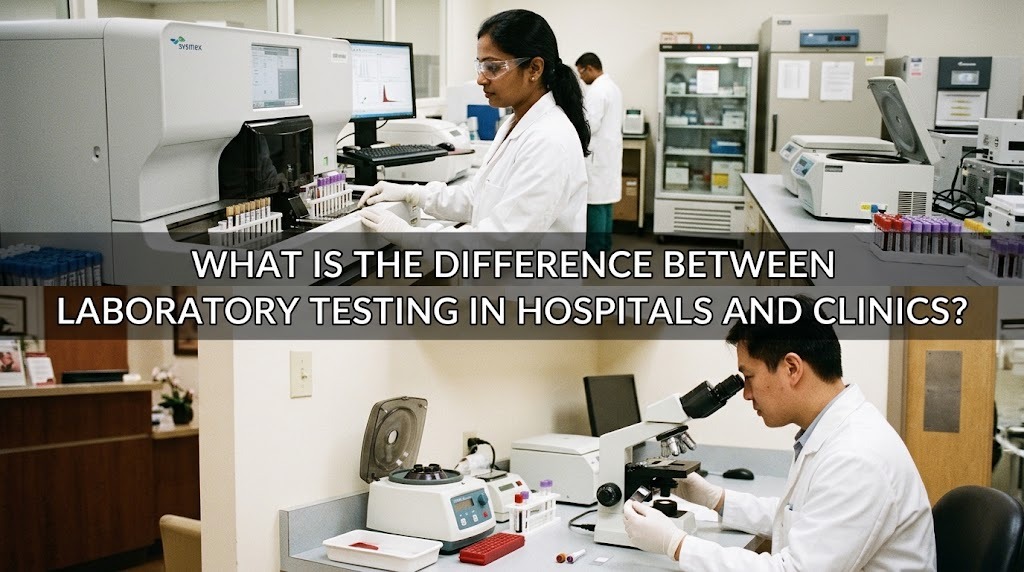
Laboratory testing is an important part of healthcare because it helps medical professionals examine health conditions, identify diseases, and monitor treatment progress. Hospitals and clinics both provide laboratory testing services, but they may differ in the types of examinations available, equipment, facilities, and testing capabilities. These differences are generally influenced by the size of the healthcare facility, available resources, and the complexity of medical services provided.
Understanding the difference between laboratory testing in hospitals and clinics can help patients choose appropriate healthcare services based on their medical needs. While clinics commonly provide routine examinations and basic diagnostic services, hospitals generally have access to broader laboratory facilities that support more complex medical investigations. However, the exact services available depend on each healthcare facility.
WHAT IS LABORATORY TESTING IN HOSPITALS?
Hospital laboratory testing refers to medical examinations performed in laboratories within hospitals or through their laboratory services. These facilities support various medical departments by providing information needed to diagnose diseases, monitor patients, and evaluate treatment outcomes. Hospital laboratories generally handle a wide range of biological samples, including blood, urine, stool, and other body fluids.
Hospitals may provide routine examinations as well as specialized laboratory testing. Common services include complete blood counts, blood glucose measurements, kidney function tests, liver function tests, and microbiological examinations. Larger hospitals may also offer advanced testing for infectious diseases, hormonal disorders, and other complex medical conditions.
Hospital laboratories are often integrated with emergency departments, inpatient services, surgical units, and specialist clinics. This integration allows laboratory results to support medical decisions for patients with different levels of healthcare needs. Depending on the facility and examination, some results may also be processed with urgent priority.
WHAT IS LABORATORY TESTING IN CLINICS?
Laboratory testing in clinics involves medical examinations provided by outpatient healthcare facilities. Clinics generally focus on routine healthcare services, basic diagnostic examinations, preventive care, and the management of common medical conditions. Their laboratory services are usually designed to support the needs of patients who do not require hospital admission.
Common examinations available in clinics may include blood glucose testing, cholesterol measurements, hemoglobin checks, urine analysis, and pregnancy testing. Some clinics have their own laboratory equipment, while others collect patient samples and send them to external laboratories for further analysis. The available services depend on the clinic's facilities, medical personnel, and laboratory capabilities.
Clinic laboratory testing can be useful for routine health monitoring and initial medical assessments. Patients may visit clinics to investigate common symptoms, undergo periodic health examinations, or monitor existing conditions. When more specialized testing is necessary, doctors may refer patients to hospitals or laboratories with the appropriate equipment.
DIFFERENCES IN TYPES OF LABORATORY TESTS
One of the main differences between hospital and clinic laboratory testing is the range of examinations available. Hospitals, particularly larger facilities, generally have broader laboratory capabilities because they support various medical specialties and complex healthcare services. Their laboratories may perform routine blood examinations, microbiological testing, immunological analysis, and specialized diagnostic procedures.
Clinics usually concentrate on basic and commonly requested examinations. These may include blood sugar testing, cholesterol checks, urine analysis, and other routine health assessments. However, some specialized clinics also provide more advanced testing depending on their medical focus and available resources.
The difference does not mean that every hospital provides every type of laboratory test or that clinics are limited to basic examinations. Some clinics work with external diagnostic laboratories to provide additional services. Patients should check the available testing facilities before undergoing an examination.
DIFFERENCES IN LABORATORY EQUIPMENT AND TECHNOLOGY
Laboratory equipment plays an important role in determining which examinations a healthcare facility can perform. Hospitals often have access to a broader range of laboratory instruments because they serve patients with different medical conditions. These facilities may use automated blood analyzers, clinical chemistry equipment, microbiology instruments, and specialized diagnostic technologies.
Clinics generally use equipment that supports their most frequently requested examinations. Depending on the facility, this may include blood glucose meters, rapid diagnostic testing devices, urine analyzers, and basic hematology equipment. More complex samples may be sent to laboratories with specialized instruments.
Technology also influences how laboratory samples are processed and how results are delivered. Modern healthcare facilities may use digital laboratory information systems to record patient information, manage samples, and communicate examination results. The availability of these technologies varies between individual hospitals and clinics.
DIFFERENCES IN LABORATORY PERSONNEL
Another difference concerns the number and specialization of personnel involved in laboratory testing. Hospitals, especially those with large laboratory departments, may employ medical laboratory technologists, laboratory analysts, pathologists, microbiology specialists, and other qualified professionals. Their responsibilities include sample processing, laboratory analysis, quality control, and supporting medical investigations.
Clinics generally operate with smaller healthcare teams. Depending on their services, laboratory examinations may be handled by trained laboratory personnel or other authorized healthcare workers. Some clinics rely on external laboratories when examinations require specialized equipment or expertise.
Regardless of the healthcare facility, laboratory personnel must have appropriate qualifications and follow established procedures. Professional competence is essential for maintaining sample quality, preventing errors, and producing reliable results. Proper supervision and quality assurance are also important in both hospitals and clinics.
DIFFERENCES IN TESTING TIME AND RESULT AVAILABILITY
The time required to complete laboratory testing depends on the type of examination, laboratory workload, equipment, and sample processing requirements. Some routine tests can produce results within a relatively short period, while specialized examinations may require several hours or days.
Hospitals may provide urgent laboratory testing for patients in emergency departments and inpatient units. Certain tests receive priority because doctors need the results to make immediate medical decisions. However, not every hospital test is processed immediately, and routine examinations may follow standard laboratory schedules.
Clinics may provide rapid results for simple examinations performed directly at the facility. However, tests sent to external laboratories require additional transportation and processing time. Patients should ask healthcare professionals when their results are expected to be available.
DIFFERENCES IN COST AND HEALTHCARE SERVICES
The cost of laboratory testing may differ between hospitals and clinics because of variations in facilities, equipment, staffing, and administrative arrangements. Clinics may offer certain routine examinations at different prices because their services generally focus on outpatient healthcare. Hospitals may have additional operational costs associated with their broader medical facilities and specialized services.
However, it is not always true that laboratory testing in clinics is cheaper than testing in hospitals. Prices depend on the specific examination, healthcare provider, laboratory technology, and applicable insurance coverage. Some hospitals may offer competitive prices for routine tests, while specialized clinics may charge more for certain examinations.
Patients should compare the cost and scope of the requested examination before making a decision. It is also important to confirm whether the price includes sample collection, laboratory analysis, and medical consultation. Choosing a testing facility should involve consideration of medical needs, service quality, and accessibility rather than price alone.
WHEN SHOULD PATIENTS CHOOSE HOSPITAL LABORATORY TESTING?
Hospital laboratory testing may be necessary when patients require specialized examinations or more comprehensive medical investigations. Doctors may recommend hospital-based testing when symptoms suggest complex health problems that need additional diagnostic procedures. Hospitals are also important for patients who require emergency assessments or laboratory monitoring during hospitalization.
Patients with complicated medical conditions may need several types of laboratory examinations to evaluate different organs and body systems. Hospitals can coordinate these tests with specialist consultations, imaging procedures, and other medical services. This arrangement helps healthcare professionals evaluate a patient's condition using multiple sources of information.
However, patients do not always need to visit a hospital for routine examinations. The appropriate facility depends on the doctor's recommendation and the type of test required. For many common health assessments, a properly equipped clinic may provide suitable laboratory services.
WHEN ARE CLINIC LABORATORY TESTS SUITABLE?
Clinic laboratory testing is generally suitable for patients who need routine examinations, preventive health assessments, or monitoring of common medical conditions. People may visit clinics to check blood glucose, cholesterol, hemoglobin, and other basic health indicators. These services can help doctors identify possible abnormalities and recommend further evaluation when necessary.
Clinics are also useful for patients who need regular follow-up appointments without requiring hospital admission. For example, individuals managing certain chronic conditions may undergo routine testing as part of their healthcare plan. Depending on the clinic's facilities, some results may be available relatively quickly.
If the examination requires specialized laboratory equipment, doctors may recommend referral to another facility. This does not mean that clinic services are inadequate, but rather that different examinations require different resources. Following professional recommendations helps ensure that patients receive appropriate testing.
FACTORS TO CONSIDER WHEN CHOOSING A LABORATORY TESTING FACILITY
Choosing between hospital and clinic laboratory testing requires consideration of several important factors. Patients should first understand the type of examination recommended by their doctors. Some tests can be performed in most healthcare facilities, while others require specialized laboratory capabilities.
The availability of qualified personnel, appropriate equipment, and quality control procedures is also important. Patients should consider whether the facility follows proper sample collection, handling, and reporting standards. Reliable laboratory services depend on consistent procedures throughout the entire testing process.
Accessibility, examination costs, result availability, and insurance coverage may also influence the decision. However, patients should not choose a facility based only on convenience or price. The most appropriate location is one that can perform the required examination according to established medical and laboratory standards.
CONCLUSION
Laboratory testing in hospitals and clinics serves the same fundamental purpose: providing medical information that helps healthcare professionals examine health conditions, identify diseases, and monitor treatment. The main differences generally involve the range of examinations, available equipment, laboratory personnel, testing capabilities, and integration with other healthcare services.
Hospitals generally provide broader laboratory services and may support more complex medical investigations, while clinics commonly focus on routine examinations and outpatient healthcare. Nevertheless, the actual capabilities of each facility can vary. Understanding these differences helps patients choose appropriate laboratory services based on their medical needs and professional recommendations.
Recent Posts

Bagaimana Sistem SKS pada Program Kuliah... 22.11.2026/47 View

How Does Technology Make Daily Evaluation... 21.11.2026/74 View

Apa Strategi Menghadapi Kesenjangan antara Kompetensi... 21.11.2026/75 View

Mengapa Inventaris Aset Penting bagi Kelancaran... 21.11.2026/72 View

When Should Musicians Join a Record... 21.11.2026/75 View
