

What Is the Difference Between Lecturer Seminars Workshops and Academic Training?
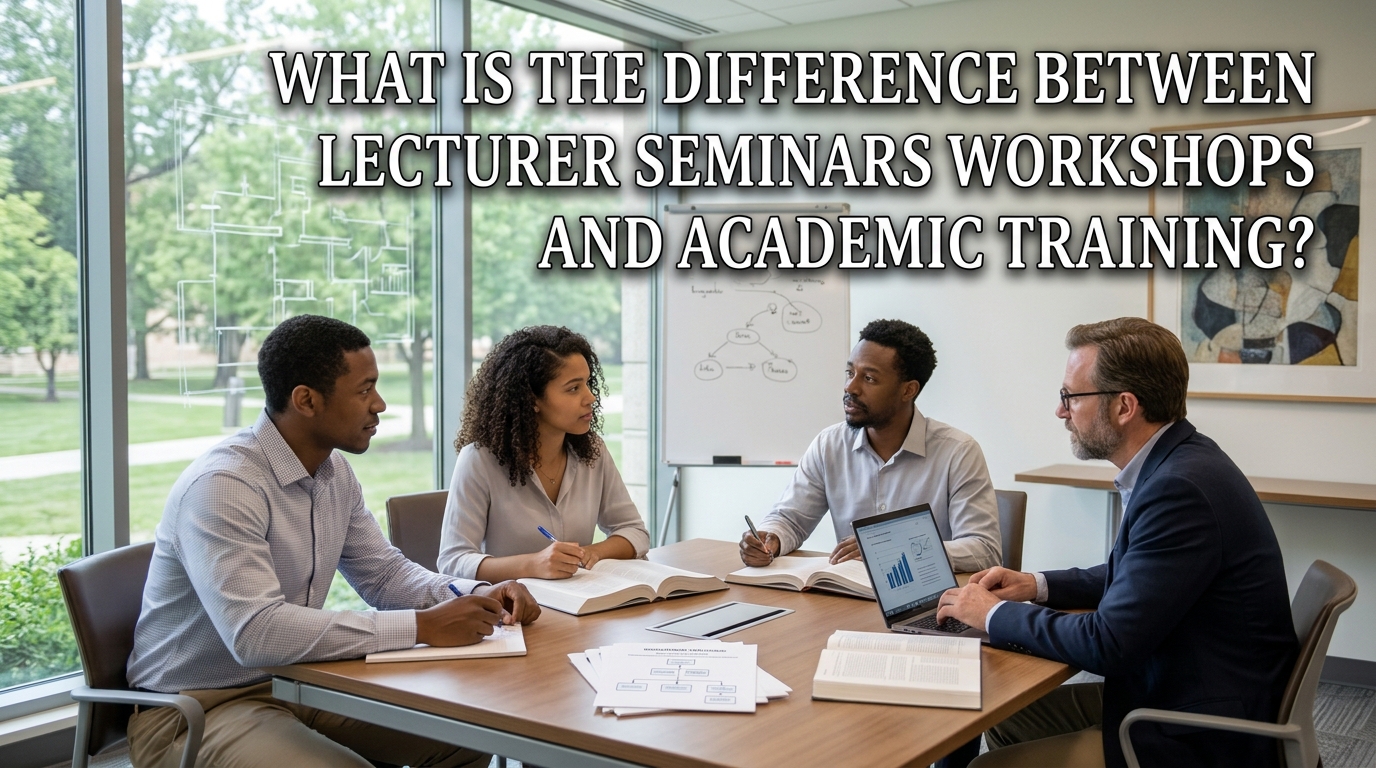
Lecturer seminars, workshops, and academic training are important activities that help lecturers improve their knowledge, teaching skills, and professional development. Although these activities may seem similar, each has a different purpose, learning method, and expected outcome. Understanding these differences helps lecturers and universities choose the most suitable program based on their needs. By participating in the right activities, lecturers can improve their teaching quality, strengthen research abilities, and adapt to changes in higher education.
WHAT IS A LECTURER SEMINAR?
A lecturer seminar is an academic event where lecturers, researchers, or experts share knowledge, present research findings, and discuss important topics in higher education. Seminars usually focus on exchanging ideas, exploring new information, and discussing challenges related to teaching, research, or academic development. Participants can learn from speakers who have experience in specific fields. They may also ask questions, provide feedback, and discuss different perspectives.
The main purpose of a seminar is to encourage knowledge sharing and academic discussion. For example, a lecturer seminar may discuss the use of artificial intelligence in education, innovative teaching methods, or the latest research developments. Participants generally spend more time listening, discussing, and analyzing information than practicing specific skills. Therefore, seminars are particularly useful for expanding knowledge and building professional networks.
WHAT IS A LECTURER WORKSHOP?
A lecturer workshop is a practical learning activity that allows participants to develop specific skills through direct practice. Unlike seminars, workshops usually involve hands-on exercises, group assignments, demonstrations, and guided activities. Participants are encouraged to apply the information they receive rather than simply listen to presentations. This approach helps lecturers understand how to use new methods or tools in real academic situations.
For example, a workshop may teach lecturers how to design interactive learning materials, use digital teaching platforms, analyze research data, or write scientific articles. During the activity, participants may complete exercises and receive feedback from instructors. The main objective is to improve practical skills and problem-solving abilities. Workshops are most effective when participants actively practice the skills they want to develop.
WHAT IS ACADEMIC TRAINING?
Academic training is a structured learning program designed to improve professional knowledge, competencies, and performance in an academic environment. It may include lectures, practical sessions, mentoring, assignments, assessments, and independent learning. Depending on the program, academic training can last several hours, several days, or even months. Its content is usually organized around specific learning objectives and competency standards.
For lecturers, academic training may cover curriculum development, classroom management, educational technology, research methodology, academic writing, or student assessment. Some programs also help lecturers prepare for professional certifications or meet institutional development requirements. Unlike a single seminar, training often follows a planned learning sequence and may include an evaluation of participants' progress. Its main goal is to support systematic and measurable competency development.
WHAT ARE THE MAIN DIFFERENCES BETWEEN SEMINARS WORKSHOPS AND ACADEMIC TRAINING?
The main difference lies in their purpose, learning approach, duration, and expected outcomes. Seminars primarily focus on sharing information and discussing ideas. Workshops emphasize practical activities that help participants develop or improve specific skills. Academic training usually provides a more structured process for developing competencies over a defined period.
The following table summarizes their key characteristics.
| Aspect | Lecturer Seminar | Lecturer Workshop | Academic Training |
|---|---|---|---|
| Main purpose | Share knowledge and ideas | Develop practical skills | Build broader competencies |
| Learning method | Presentations and discussions | Hands-on practice and exercises | Structured lessons and assessments |
| Participant role | Listen, discuss, and ask questions | Actively practice and collaborate | Learn, practice, and demonstrate progress |
| Typical duration | A few hours or a day | A few hours to several days | Several days or longer |
| Main outcome | New insights and understanding | Improved practical abilities | More systematic competency development |
These differences are general guidelines rather than strict rules. A seminar may include practical activities, a workshop may contain presentations, and academic training may combine both formats. The most appropriate choice depends on the learning objectives, participants' needs, and available resources. Universities should therefore evaluate the expected outcomes before selecting a program.
WHEN SHOULD LECTURERS ATTEND A SEMINAR WORKSHOP OR ACADEMIC TRAINING?
Lecturers should attend a seminar when they want to understand new developments, explore academic issues, or exchange ideas with other professionals. Seminars are also useful when lecturers need inspiration for research topics or want to learn about emerging trends in higher education. They provide opportunities to hear expert perspectives and establish professional connections. However, attending a seminar alone may not provide enough practice to master a new skill.
A workshop is more suitable when lecturers need hands-on experience, such as learning to use research software or developing digital learning materials. Meanwhile, academic training is appropriate when lecturers need a structured program to strengthen competencies over time. For example, a lecturer who wants to improve research skills may attend a research seminar, join a data-analysis workshop, and then complete a longer research methodology training program. Combining these activities can create a more comprehensive professional development plan.
HOW CAN UNIVERSITIES CHOOSE THE RIGHT ACADEMIC DEVELOPMENT PROGRAM?
Universities should begin by identifying lecturers' needs and the institution's academic priorities. If the goal is to introduce new ideas or discuss current issues, a seminar may be sufficient. If lecturers need to practice a specific technique, a workshop is often more appropriate. When the objective involves developing several competencies through a structured process, academic training may offer better support.
Universities should also consider program costs, duration, instructor qualifications, participant readiness, and available facilities. The effectiveness of a program should be evaluated through participant feedback and evidence of learning. For workshops and training, assessments or practical assignments can help determine whether participants have developed the intended skills. Universities can also review whether the knowledge gained leads to improvements in teaching, research, or academic services.
WHAT ARE THE BENEFITS OF COMBINING SEMINARS WORKSHOPS AND ACADEMIC TRAINING?
Combining seminars, workshops, and academic training can provide lecturers with a more complete professional development experience. Seminars introduce new concepts and encourage academic discussion, while workshops help lecturers turn those concepts into practical skills. Academic training can then reinforce the learning process through structured activities and assessments. This combination supports both theoretical understanding and practical application.
For example, a university planning to improve research quality could begin with a seminar about current research trends. Lecturers could then join a workshop on research data analysis before participating in academic training on research methodology and publication practices. Each activity contributes a different part of the learning process. When these programs are planned effectively, lecturers can strengthen their competencies and contribute more effectively to institutional academic goals.
CONCLUSION
Lecturer seminars, workshops, and academic training all support professional development, but they serve different purposes. Seminars focus on knowledge sharing and discussion, workshops emphasize practical skill development, and academic training provides a structured approach to building competencies. Understanding these differences helps lecturers select activities that match their professional goals.
Universities can achieve better development outcomes by combining these approaches according to their needs. With clear objectives, qualified instructors, and appropriate evaluations, these activities can improve teaching quality, research performance, and academic professionalism. Choosing the right program helps lecturers continue learning and respond effectively to the changing demands of higher education.
Recent Posts

Bagaimana Sistem SKS pada Program Kuliah... 22.11.2026/49 View

How Does Technology Make Daily Evaluation... 21.11.2026/77 View

Apa Strategi Menghadapi Kesenjangan antara Kompetensi... 21.11.2026/78 View

Mengapa Inventaris Aset Penting bagi Kelancaran... 21.11.2026/74 View

When Should Musicians Join a Record... 21.11.2026/79 View
