

What Is the Difference Between Lecturer Training and Academic Professional Development
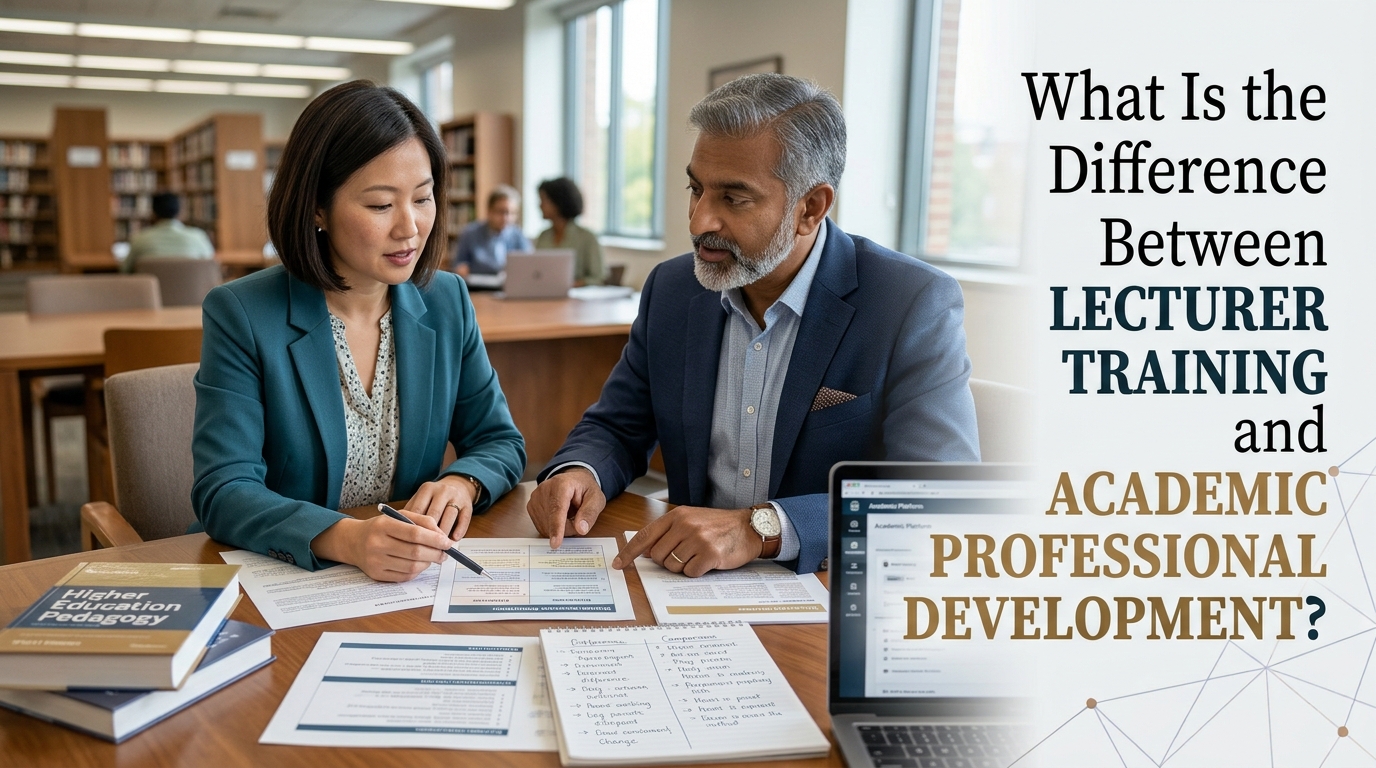
Lecturers play an important role in maintaining the quality of higher education. To perform their responsibilities effectively, they need to improve their teaching abilities, academic knowledge, research skills, and professional competencies. Two common approaches to this improvement are lecturer training and academic professional development. Although these terms are closely related, they have different purposes, methods, and scopes. Understanding the difference helps lecturers and universities choose suitable programs to support professional growth and improve educational quality.
UNDERSTANDING LECTURER TRAINING
Lecturer training refers to structured learning activities designed to help lecturers develop specific skills or improve their performance in particular tasks. These programs often focus on practical competencies that lecturers can apply directly in their academic responsibilities. For example, training may cover digital teaching tools, classroom management, assessment methods, curriculum design, or the use of learning management systems. The activities usually have clear objectives and may take place through workshops, seminars, short courses, or hands-on sessions. The main goal of lecturer training is to help educators gain practical knowledge and skills for specific professional needs.
Lecturer training is often organized within a defined period and may focus on a particular skill gap. Participants usually practice techniques, explore tools, or complete activities related to the training topic. Some programs include assessments or demonstrations to evaluate what participants have learned. For instance, lecturers attending digital assessment training may learn to create online quizzes and provide feedback through educational platforms. This focused approach makes lecturer training useful when educators need to improve a particular competency efficiently.
UNDERSTANDING ACADEMIC PROFESSIONAL DEVELOPMENT
Academic professional development is a broader and ongoing process that helps lecturers improve their knowledge, skills, professional judgment, and career capabilities. It can include formal training, but it also covers activities such as research, academic conferences, mentoring, collaborative projects, peer observation, and further study. These experiences help lecturers develop throughout their careers rather than focus on one specific task. Professional development may also support long-term goals, such as becoming a research leader, improving academic publications, or taking on university leadership responsibilities. Its main purpose is continuous growth in teaching, research, service, and academic leadership.
Unlike a short training course, professional development can continue throughout a lecturer's career. Lecturers may identify their own learning needs, receive feedback from colleagues, and set goals for future improvement. Universities can support this process by providing mentoring opportunities, research funding, study programs, and career development plans. Professional development also encourages lecturers to reflect on their practices and respond to changes in higher education. As a result, it helps build a culture of lifelong learning and continuous academic improvement.
THE MAIN DIFFERENCES BETWEEN LECTURER TRAINING AND PROFESSIONAL DEVELOPMENT
The main difference between lecturer training and academic professional development lies in their scope and duration. Lecturer training usually focuses on a defined skill, task, or immediate learning need. Academic professional development covers a wider range of activities and supports growth over a longer period. Training may be one component of a professional development plan, but professional development is not limited to formal courses. Both approaches can contribute to better teaching and stronger academic performance.
Another difference is how progress is evaluated. Training programs may assess success through practical exercises, tests, demonstrations, or the ability to use a newly learned tool. Professional development may be evaluated over time through teaching improvements, research contributions, reflective practice, career progress, or leadership achievements. However, the exact evaluation method depends on the goals of each program. Training emphasizes specific skill acquisition, while professional development emphasizes broader and sustained professional growth.
DIFFERENCES IN LEARNING METHODS
Lecturer training commonly uses structured and practical learning methods. These may include instructor-led workshops, demonstrations, simulations, guided exercises, and short online courses. Participants generally follow a planned curriculum designed around specific learning outcomes. For example, a workshop on classroom assessment may guide lecturers through creating rubrics and evaluating student assignments. These methods help lecturers gain immediately applicable skills in a focused learning environment.
Academic professional development uses a wider variety of learning methods. Lecturers may participate in research collaborations, attend academic conferences, publish scholarly work, receive mentoring, or observe the teaching practices of experienced colleagues. They may also pursue postgraduate study or take part in interdisciplinary projects. These activities can strengthen knowledge, professional networks, and long-term career opportunities. The broader range of learning experiences allows lecturers to develop expertise beyond the limits of a single training course.
BENEFITS OF LECTURER TRAINING
Lecturer training provides several practical benefits for individuals and universities. It helps educators update their teaching methods, improve digital skills, strengthen assessment practices, and understand new academic procedures. Focused training can also help lecturers respond to immediate challenges, such as difficulties using an online learning platform or designing effective classroom activities. When the content is relevant to their responsibilities, lecturers can apply new techniques in their work soon after completing the program. This may improve teaching efficiency and student learning experiences.
Training can also help universities maintain consistent standards in academic activities. For example, training in assessment procedures can help lecturers apply grading criteria more clearly and fairly. Training in research ethics can improve awareness of responsible research practices. However, the benefits depend on the quality of the program and the opportunity to apply the skills afterward. Effective lecturer training connects practical learning with real academic responsibilities.
BENEFITS OF ACADEMIC PROFESSIONAL DEVELOPMENT
Academic professional development supports long-term career growth and continuous improvement. It gives lecturers opportunities to deepen subject knowledge, strengthen research capabilities, expand professional networks, and explore new areas of academic interest. Through conferences and research collaborations, lecturers can exchange ideas and learn about developments in their fields. Mentoring and peer feedback can also help them reflect on their strengths and identify areas that need improvement. These experiences contribute to a more adaptable and knowledgeable academic workforce.
Professional development may also prepare lecturers for greater responsibilities within their institutions. They can develop skills in academic leadership, curriculum planning, research management, and collaborative decision-making. Over time, these competencies may support career progression and greater contributions to university development. However, professional growth requires consistent effort and opportunities to apply new knowledge. Sustained professional development helps lecturers remain effective as academic expectations and educational practices evolve.
HOW LECTURERS CAN CHOOSE THE RIGHT PROGRAM
Lecturers should select programs based on their current needs, responsibilities, and long-term career goals. If they need to learn a specific tool or improve a particular teaching technique, a focused training program may be the most suitable choice. If they want to build research expertise, prepare for leadership roles, or strengthen their overall academic career, a broader professional development plan may be more appropriate. They should also consider the program's quality, relevance, schedule, and opportunities for practical application. The best choice depends on the skills lecturers need now and the professional goals they want to achieve.
Universities can help lecturers make these decisions by providing performance feedback, career guidance, and access to suitable learning opportunities. A professional development plan may combine several training courses with mentoring, research activities, conferences, and reflective teaching practices. This approach ensures that immediate skill needs and long-term career goals receive attention. Lecturers should periodically review their progress and adjust their learning plans when their responsibilities change. In this way, training and professional development can work together rather than compete with each other.
THE ROLE OF UNIVERSITIES IN SUPPORTING BOTH APPROACHES
Universities play an important role in providing lecturers with relevant training and professional development opportunities. Institutions can identify common skill gaps, organize workshops, support further study, and create mentoring programs. They should also consider differences in lecturers' experience, academic disciplines, and career stages. New lecturers may need support with teaching fundamentals, while experienced academics may benefit from advanced research training or leadership development. A well-planned institutional strategy connects immediate training needs with long-term academic growth.
Universities should also evaluate whether their programs produce meaningful improvements. Feedback from participants, observations of teaching practices, research outcomes, and progress toward professional goals can help institutions assess effectiveness. Access to suitable resources and time for learning is equally important. Lecturers may struggle to benefit from professional development if they have heavy workloads and limited institutional support. By creating a supportive environment, universities can encourage continuous learning, stronger teaching quality, and sustainable academic development.
CONCLUSION
Lecturer training and academic professional development are closely connected, but they serve different purposes. Lecturer training focuses on specific skills and practical needs, while academic professional development supports broader, long-term growth in teaching, research, leadership, and academic practice. Training can provide the foundation for professional development, while ongoing development helps lecturers continue improving throughout their careers. Both approaches are important for maintaining educational standards and responding to changes in higher education. When lecturers and universities combine focused training with continuous professional learning, they can strengthen academic performance and improve the quality of education.
Recent Posts

Bagaimana Sistem SKS pada Program Kuliah... 22.11.2026/45 View

How Does Technology Make Daily Evaluation... 21.11.2026/73 View

Apa Strategi Menghadapi Kesenjangan antara Kompetensi... 21.11.2026/75 View

Mengapa Inventaris Aset Penting bagi Kelancaran... 21.11.2026/71 View

When Should Musicians Join a Record... 21.11.2026/75 View
