

What Is the Difference Between Logistics Management and Supply Chain Management?
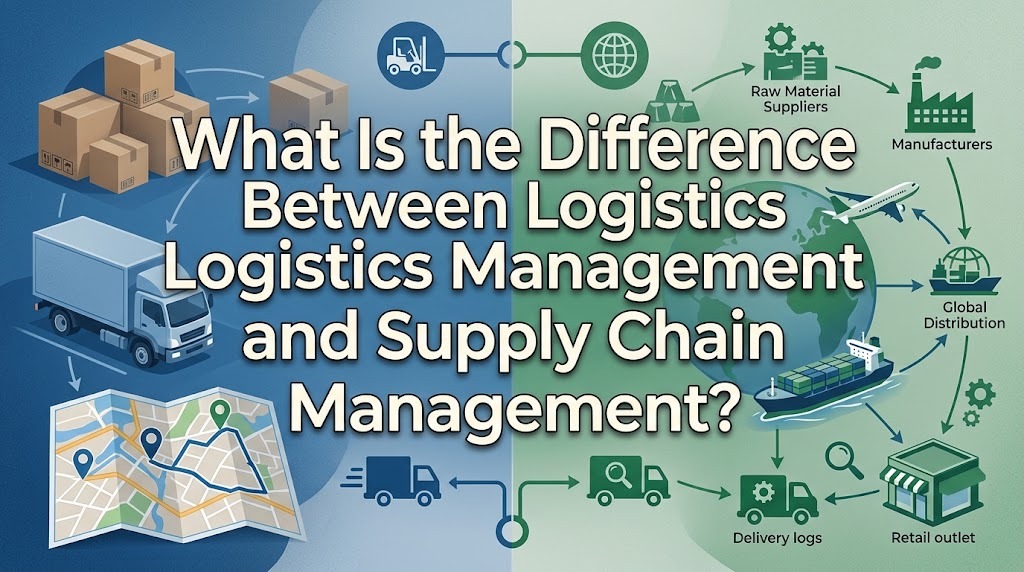
Logistics management and supply chain management are essential parts of modern business operations. Both help businesses move products from suppliers to customers, maintain product availability, and meet customer expectations. However, these two concepts have different scopes and responsibilities. Logistics management focuses mainly on the movement, storage, and distribution of goods, while supply chain management oversees the broader network of activities involved in producing and delivering products. Understanding their differences helps businesses organize operations, control costs, and improve overall efficiency.
UNDERSTANDING LOGISTICS MANAGEMENT
Logistics management is the process of planning, implementing, and controlling the efficient movement and storage of goods, services, and related information. It covers activities such as transportation, warehousing, inventory control, order processing, and product distribution. The main objective is to ensure that products reach the correct destination at the right time, in the right quantity, and in good condition. Effective logistics management helps businesses reduce delivery delays, minimize unnecessary expenses, and maintain reliable distribution services. These activities are important for companies that want to provide consistent service to their customers.
For example, an online store uses logistics management to organize warehouse storage, prepare customer orders, select shipping providers, and track deliveries. Employees must ensure that products are packed correctly and dispatched according to the delivery schedule. If a shipment experiences a delay, the logistics team must identify the problem and find a suitable solution. Efficient transportation and inventory control are therefore central to successful logistics operations. By managing these processes properly, businesses can improve delivery performance and customer satisfaction.
UNDERSTANDING SUPPLY CHAIN MANAGEMENT
Supply chain management involves coordinating the entire network of activities required to create and deliver a product. It includes sourcing raw materials, selecting suppliers, purchasing components, planning production, managing inventory, distributing finished goods, and coordinating relationships with business partners. Its scope is broader than logistics management because it covers activities before, during, and after the movement of products. The main goal is to improve the performance of the entire supply chain while balancing cost, quality, availability, and customer demand. This approach helps businesses connect different stages of production and distribution.
For example, a clothing manufacturer must obtain fabric, buttons, and other materials before producing garments. The company must coordinate with suppliers, plan manufacturing schedules, manage production quality, and ensure that finished products reach retailers. Supply chain management connects these activities so that each stage supports the next one. Poor coordination at the purchasing or production stage can create inventory shortages and delivery problems later. Therefore, effective supply chain management requires long-term planning, collaboration, and accurate information sharing.
KEY DIFFERENCES BETWEEN LOGISTICS AND SUPPLY CHAIN MANAGEMENT
The main difference between logistics management and supply chain management is their scope of responsibility. Logistics management concentrates on moving and storing products efficiently, whereas supply chain management coordinates the wider process of sourcing, producing, and delivering goods. Logistics is generally considered one important component of supply chain management. Both disciplines aim to improve business performance, but they approach this goal from different operational levels. Understanding this distinction helps companies assign responsibilities and establish suitable performance targets.
Another difference concerns planning and decision-making. Logistics managers often focus on delivery schedules, transportation costs, warehouse capacity, and inventory movement. Supply chain managers must also consider supplier selection, production planning, demand forecasting, purchasing strategies, and coordination across business partners. For instance, a logistics manager may choose the most efficient delivery route, while a supply chain manager may evaluate whether a supplier can provide materials at the required cost and time. Logistics focuses on product flow, while supply chain management focuses on the complete network that supports product availability.
HOW LOGISTICS MANAGEMENT SUPPORTS THE SUPPLY CHAIN
Logistics management supports supply chain performance by ensuring that materials and finished products move efficiently between locations. Even when suppliers and manufacturers perform their tasks correctly, poor transportation or warehouse management can disrupt the entire process. Late deliveries may interrupt production, while inaccurate inventory records can prevent orders from being fulfilled on time. Reliable logistics operations help connect suppliers, factories, warehouses, retailers, and customers. As a result, businesses can maintain smoother operations and respond more effectively to customer needs.
Coordination between logistics and other supply chain activities is also essential for controlling costs. For example, purchasing teams need accurate delivery information to plan when materials will arrive, while production teams need sufficient stock to maintain manufacturing schedules. Logistics teams can share shipment updates and inventory information to help other departments make better decisions. Integrated information systems make this coordination easier by providing updated data across different stages of the supply chain. When departments work together, companies can reduce waste, prevent unnecessary delays, and improve overall operational efficiency.
BENEFITS OF INTEGRATING BOTH MANAGEMENT SYSTEMS
Integrating logistics management with supply chain management helps businesses achieve better coordination and visibility. When purchasing, production, warehousing, and transportation teams share information, companies can identify potential problems earlier. This integration also helps businesses match inventory levels with customer demand and avoid unnecessary storage expenses. Furthermore, coordinated planning can improve delivery reliability and reduce disruptions caused by supplier or transportation issues. These benefits support greater business efficiency and customer satisfaction.
Technology plays an important role in achieving this integration. Enterprise resource planning systems, warehouse management software, transportation management systems, and data analytics tools can help businesses monitor operations and share information. Demand forecasting tools can also support purchasing and inventory decisions by identifying patterns in historical sales data. However, technology alone cannot guarantee success; companies also need clear procedures, trained employees, and reliable data. By combining suitable technology with effective collaboration, businesses can build a more responsive and competitive supply chain.
CHOOSING THE RIGHT APPROACH FOR BUSINESS NEEDS
The right management approach depends on a company's size, industry, and operational goals. Businesses that mainly need to improve transportation, warehouse organization, or delivery performance may prioritize logistics management. Companies that want to coordinate suppliers, purchasing, production, inventory, and distribution across multiple partners need a broader supply chain management strategy. However, these approaches should not be treated as completely separate because logistics activities directly affect the performance of the wider supply chain. The most effective strategy combines both disciplines according to the company's needs.
Businesses should begin by evaluating their current processes and identifying areas that require improvement. They can monitor indicators such as delivery accuracy, transportation expenses, inventory turnover, supplier reliability, and order fulfillment time. These measurements help managers determine whether problems originate in logistics activities or elsewhere in the supply chain. Regular communication between departments also makes it easier to establish priorities and implement improvements. Through continuous evaluation, businesses can strengthen operations, control costs, and provide more reliable services to customers.
CONCLUSION
The main difference between logistics management and supply chain management lies in their scope. Logistics management focuses on transportation, warehousing, inventory movement, and product distribution, while supply chain management coordinates the broader network of sourcing, purchasing, production, and delivery activities. Logistics is an essential part of the supply chain because it connects different stages and ensures that goods move efficiently. When both management systems work together, businesses can reduce costs, improve coordination, and increase customer satisfaction. Understanding and integrating these concepts helps companies build efficient, reliable, and competitive business operations.
Recent Posts

Bagaimana Sistem SKS pada Program Kuliah... 22.11.2026/60 View

How Does Technology Make Daily Evaluation... 21.11.2026/87 View

Apa Strategi Menghadapi Kesenjangan antara Kompetensi... 21.11.2026/85 View

Mengapa Inventaris Aset Penting bagi Kelancaran... 21.11.2026/83 View

When Should Musicians Join a Record... 21.11.2026/87 View
