

What Is the Difference Between Minor and Major Thesis Revisions?
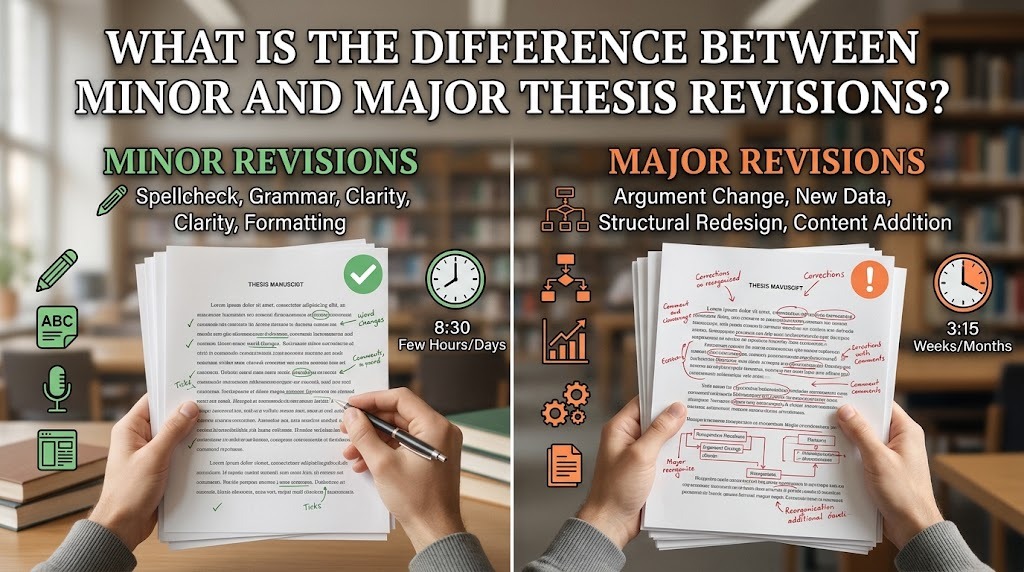
Thesis revision is an important part of the academic evaluation process. After reviewing a thesis draft or conducting an examination, supervisors and examiners may request changes to improve the quality of the research. However, not all corrections require the same amount of work. Some changes are relatively simple, while others may involve substantial improvements to the research structure, methodology, or analysis.
Understanding the difference between minor and major thesis revisions helps students recognize the level of correction required and plan their work accordingly. Both types of revision aim to improve the final thesis, but they differ in scope, complexity, and the amount of time needed. Knowing these differences can also help students respond to academic feedback more effectively.
UNDERSTANDING MINOR THESIS REVISIONS
Minor thesis revisions refer to relatively small corrections that do not substantially change the research direction or main findings. These revisions usually focus on improving the presentation, clarity, and consistency of the thesis. Examples include correcting grammar, adjusting sentence structure, fixing typographical errors, and improving paragraph transitions.
Other minor corrections may involve updating references, correcting citation formats, adjusting headings, or improving the presentation of tables and figures. Although these changes may seem simple, students should still complete them carefully because small mistakes can affect the readability and professionalism of an academic document. Minor revisions generally require less time than major revisions, depending on the number of comments and the condition of the original thesis.
UNDERSTANDING MAJOR THESIS REVISIONS
Unlike minor corrections, major thesis revisions involve substantial changes to important parts of the research. These revisions may be necessary when examiners identify weaknesses in the research framework, methodology, theoretical foundation, or interpretation of findings. Students may need to reorganize several sections or provide additional explanations to strengthen their arguments.
In some cases, major revisions can require further data analysis, additional academic references, or clarification of the research procedures. Students may also need to reconsider whether their conclusions are sufficiently supported by the evidence. Because these changes can affect multiple chapters, major revisions often require more time, careful planning, and further consultation with supervisors. The purpose is to ensure that the research is academically sound and consistent with its objectives.
DIFFERENCES IN SCOPE AND COMPLEXITY
The main difference between minor and major revisions lies in the scope of the required changes. Minor revisions usually address specific writing or presentation issues without altering the overall research structure. Major revisions, on the other hand, may affect the content, organization, or methodological foundation of the study.
For example, correcting a citation or rewriting an unclear sentence is generally considered a minor revision. However, changing the explanation of a research method, strengthening a theoretical framework, or conducting additional analysis may be classified as major revisions. The distinction depends on how significantly the requested changes affect the thesis. Understanding the scope helps students determine which corrections can be completed independently and which require further academic guidance.
DIFFERENCES IN TIME AND APPROVAL REQUIREMENTS
The amount of time required to complete revisions can also vary. Minor thesis corrections may be completed within a relatively short period because they usually involve limited adjustments. Students may only need to review specific paragraphs, correct references, or improve formatting before submitting the revised document.
Major revisions generally take longer because students may need to review research materials, reconsider their analysis, or revise several chapters. The approval process can also differ depending on university regulations and examiner instructions. Some institutions may require additional reviews or confirmation from supervisors after major corrections have been completed. Therefore, students should always check the applicable deadlines and thesis revision procedures rather than assuming that every type of revision follows the same process.
HOW STUDENTS SHOULD HANDLE EACH TYPE OF REVISION
Students should approach minor and major revisions with different levels of preparation. For minor corrections, creating a checklist can help ensure that every small issue is addressed. Students should review grammar, citations, formatting, and other presentation details systematically. After completing the changes, they should read the revised sections again to confirm that the document remains consistent.
For major revisions, students may need a more detailed plan. Start by identifying the main problems, discussing unclear instructions with the supervisor, and dividing the required changes into manageable tasks. It is also important to check whether one correction affects other chapters. Maintaining a record of completed changes can help students explain how they responded to examiner feedback. Through an organized thesis revision strategy, both minor and major corrections can be handled more carefully.
CONCLUSION
The difference between minor and major thesis revisions mainly involves the scope and complexity of the requested changes. Minor revisions generally focus on grammar, formatting, citations, and writing clarity, while major revisions may require substantial improvements to research arguments, methodology, theoretical frameworks, or data analysis.
Both types of revision are important for improving the quality of academic research. Students should understand the feedback, follow university procedures, and adjust their work according to the level of correction required. By handling each revision systematically and communicating with supervisors when necessary, students can prepare a more accurate and well-organized final thesis.
Recent Posts

Bagaimana Sistem SKS pada Program Kuliah... 22.11.2026/47 View

How Does Technology Make Daily Evaluation... 21.11.2026/74 View

Apa Strategi Menghadapi Kesenjangan antara Kompetensi... 21.11.2026/75 View

Mengapa Inventaris Aset Penting bagi Kelancaran... 21.11.2026/72 View

When Should Musicians Join a Record... 21.11.2026/75 View
