

What Is the Difference Between Numeracy Literacy and Basic Math Skills?
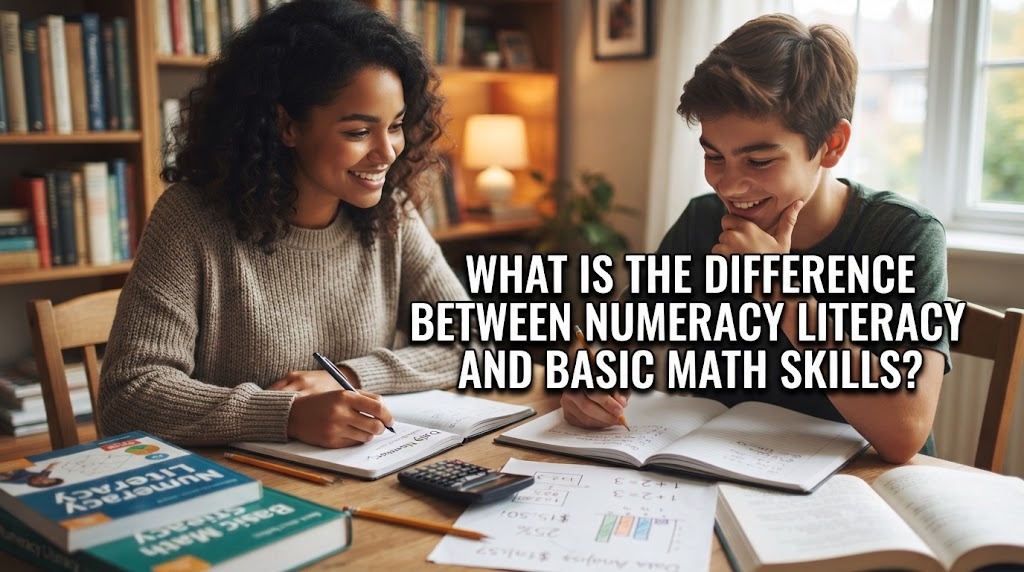
Numeracy literacy and basic math skills are closely related, but they are not exactly the same. Both involve understanding numbers, calculations, and mathematical concepts, yet they serve different purposes in learning and everyday life. Basic math skills focus on performing mathematical operations such as addition, subtraction, multiplication, division, and simple measurements. Numeracy literacy goes further by helping people interpret numerical information, apply mathematical knowledge, and make decisions in real-world situations. Understanding the difference between these two abilities is important for students, teachers, parents, and anyone who wants to improve practical problem-solving skills.
UNDERSTANDING BASIC MATH SKILLS
Basic math skills are the fundamental abilities needed to understand and perform simple mathematical operations. These skills usually include counting, recognizing numbers, adding, subtracting, multiplying, dividing, measuring, and understanding basic shapes. They form the foundation for learning more advanced mathematical topics such as algebra, geometry, statistics, and financial mathematics. Students generally develop these skills through classroom lessons, exercises, and repeated practice. Without a strong foundation in basic mathematics, it can be difficult to understand more complex numerical concepts.
For example, a student who knows how to calculate 25 multiplied by 4 has demonstrated a basic math skill. Similarly, understanding how to convert centimeters into meters or calculate the perimeter of a rectangle is part of basic mathematical knowledge. These abilities help learners become familiar with mathematical rules and procedures. They also support accuracy when solving numerical problems. However, knowing how to perform a calculation does not always mean someone understands when or why that calculation should be used.
Basic math skills are important because they provide the tools needed to work with numbers confidently. They help students complete academic tasks and prepare for more advanced learning. In daily life, these skills are used when counting money, checking quantities, measuring objects, or calculating simple expenses. Regular practice can improve speed, accuracy, and confidence. Therefore, basic math skills are an essential starting point for developing broader numerical understanding.
UNDERSTANDING NUMERACY LITERACY
Numeracy literacy is the ability to understand, interpret, and use mathematical information in different real-life situations. It involves more than calculating numbers because individuals must also understand what the results mean and how they can be applied. Numeracy literacy includes interpreting percentages, comparing quantities, reading graphs, estimating values, and using numerical information to make decisions. It also requires logical reasoning and the ability to recognize whether an answer makes sense in a particular situation. These abilities help people use mathematics as a practical tool rather than treating it only as a school subject.
For example, a person may know how to calculate a percentage but still need numeracy literacy to understand a discount advertisement. If a product costs 200,000 rupiah and has a 25 percent discount, the person must calculate the reduction and understand the final price before deciding whether to buy it. Another example is reading a chart that shows monthly expenses and identifying which category uses the largest portion of a budget. These activities require mathematical knowledge as well as interpretation and decision-making.
Numeracy literacy is also connected to critical thinking. People encounter numerical information in news reports, financial services, health instructions, digital platforms, and workplace documents. They need to understand the context behind the numbers instead of accepting every numerical claim without examination. For instance, interpreting a percentage increase requires knowing the original value and the period being compared. This ability helps individuals avoid misunderstandings and make decisions based on more accurate information.
THE MAIN DIFFERENCES BETWEEN NUMERACY LITERACY AND BASIC MATH SKILLS
The main difference between numeracy literacy and basic math skills lies in how mathematical knowledge is used. Basic math skills focus on understanding and performing mathematical operations correctly. Numeracy literacy focuses on applying those operations to understand situations, interpret information, and solve practical problems. Basic mathematics provides the tools, while numeracy literacy helps people decide which tools are needed and how to use the results. Both abilities are important, but numeracy literacy places greater emphasis on context and application.
Another difference is the type of thinking involved. Basic math exercises may ask students to calculate a specific answer using a known formula or operation. Numeracy literacy often requires individuals to analyze a situation, identify relevant information, choose an appropriate method, and explain the result. For example, calculating 15 percent of a number is a basic mathematical task. Comparing two loan offers with different interest rates and payment periods requires broader numeracy literacy because the person must interpret several pieces of information before making a decision.
The learning outcomes are also different. Basic math skills help learners become accurate and confident when working with numbers. Numeracy literacy helps them become independent users of numerical information in everyday life. A person may be able to solve multiplication problems but struggle to understand a complicated bill or financial chart. This shows why mathematical calculation alone is not always enough. Developing both abilities allows individuals to move from knowing how to calculate toward understanding how mathematics can support real decisions.
EXAMPLES OF NUMERACY LITERACY AND BASIC MATH SKILLS IN DAILY LIFE
Shopping provides a simple example of how these two abilities work together. Basic math skills are used to add product prices, calculate totals, and subtract change. Numeracy literacy is needed when comparing unit prices, evaluating discounts, or deciding whether a purchase fits a monthly budget. A shopper may calculate the price of two products correctly but still need to consider quantity and quality before choosing the better option. This demonstrates how practical numerical decisions involve more than performing calculations.
Financial management is another situation where both abilities are useful. Basic math skills help people calculate income, expenses, savings, and monthly payments. Numeracy literacy helps them understand interest rates, compare financial products, plan spending, and consider future consequences. For example, understanding how much money remains after paying bills is a basic calculation. Deciding how much to save while managing necessary expenses requires interpretation, planning, and judgment. These abilities can support more responsible financial decisions.
Numeracy literacy is also important in education, health, and professional activities. Students use basic math skills to solve calculations, while numeracy literacy helps them interpret scientific data, graphs, measurements, and research results. In health situations, basic calculations may help someone understand quantities, while numeracy literacy supports the interpretation of dosage instructions and nutritional information. At work, employees may calculate sales totals but also need to interpret performance reports or compare business results. These examples show that numeracy literacy connects mathematical knowledge with practical understanding across many areas of life.
WHY STUDENTS NEED BOTH SKILLS FOR FUTURE SUCCESS
Students need both basic math skills and numeracy literacy because each supports a different part of learning and development. Basic math skills provide a strong foundation for understanding numbers and mathematical procedures. Without this foundation, students may struggle when facing more complex problems. Numeracy literacy allows them to apply their knowledge to situations that do not always look like textbook exercises. Together, these abilities help students become more flexible and confident when solving problems.
In education, students are frequently required to interpret information rather than simply calculate an answer. Science lessons involve measurements and data, geography uses maps and statistics, and economics includes prices and percentages. Numeracy literacy helps students understand the meaning of these numerical elements and connect them with the topic being studied. It also encourages them to explain their reasoning and evaluate whether a conclusion is supported by the information available. These abilities can improve learning across different subjects.
Both skills are also valuable for future careers. Many workplaces require employees to understand quantities, schedules, budgets, reports, or numerical targets. Basic math skills help workers perform calculations accurately, while numeracy literacy supports analysis and decision-making. Students who develop these abilities can become better prepared for academic challenges, professional responsibilities, and everyday financial choices. Therefore, learning mathematics should not stop at memorizing formulas but should also include understanding how numerical information works in real situations.
HOW TO DEVELOP NUMERACY LITERACY AND BASIC MATH SKILLS
Developing basic math skills begins with consistent practice of fundamental concepts. Students can improve their abilities by reviewing addition, subtraction, multiplication, division, fractions, percentages, and measurements. Understanding the meaning behind each operation is more useful than memorizing procedures without knowing how they work. Teachers and parents can support learning by providing examples that are appropriate for the learner's age and level. Regular practice helps improve accuracy and builds confidence when working with numbers.
Numeracy literacy can be strengthened by connecting mathematical learning with everyday activities. Students can practice calculating shopping expenses, comparing product prices, planning a simple budget, or estimating travel time. Reading graphs, tables, weather information, and survey results can also help them become more comfortable interpreting numerical information. Instead of focusing only on the final answer, learners should be encouraged to explain how they reached a conclusion. This process develops reasoning and helps them understand the practical meaning of mathematics.
Technology can also support the development of both abilities. Educational applications, interactive exercises, spreadsheets, and digital learning platforms provide opportunities to practice calculations and interpret data. However, technology should be used as a learning aid rather than a complete replacement for understanding. Students should still learn to estimate results, recognize possible errors, and explain their reasoning. With a combination of classroom learning, daily practice, and practical problem-solving, basic math skills and numeracy literacy can develop together.
CONCLUSION
Numeracy literacy and basic math skills are related abilities that play different but complementary roles. Basic math skills involve understanding and performing fundamental mathematical operations, while numeracy literacy focuses on interpreting and applying numerical information in real-life situations. Basic mathematics provides the foundation for working with numbers, whereas numeracy literacy helps individuals use that knowledge to solve problems and make informed decisions. Both are important in education, financial management, health, professional activities, and everyday responsibilities.
Students should develop these abilities together through regular practice and practical learning experiences. Learning calculations is important, but understanding when and how to apply them is equally valuable. By connecting mathematics with shopping, budgeting, reading data, and solving everyday problems, learners can build stronger numerical understanding. Developing both skills can help individuals become more confident, independent, and prepared for future challenges. Ultimately, mathematics becomes more meaningful when people can use what they learn beyond the classroom.
Recent Posts

Bagaimana Sistem SKS pada Program Kuliah... 22.11.2026/31 View

How Does Technology Make Daily Evaluation... 21.11.2026/67 View

Apa Strategi Menghadapi Kesenjangan antara Kompetensi... 21.11.2026/66 View

Mengapa Inventaris Aset Penting bagi Kelancaran... 21.11.2026/64 View

When Should Musicians Join a Record... 21.11.2026/65 View
