

What Is the Difference Between Online and Hospital Color Blindness Tests?
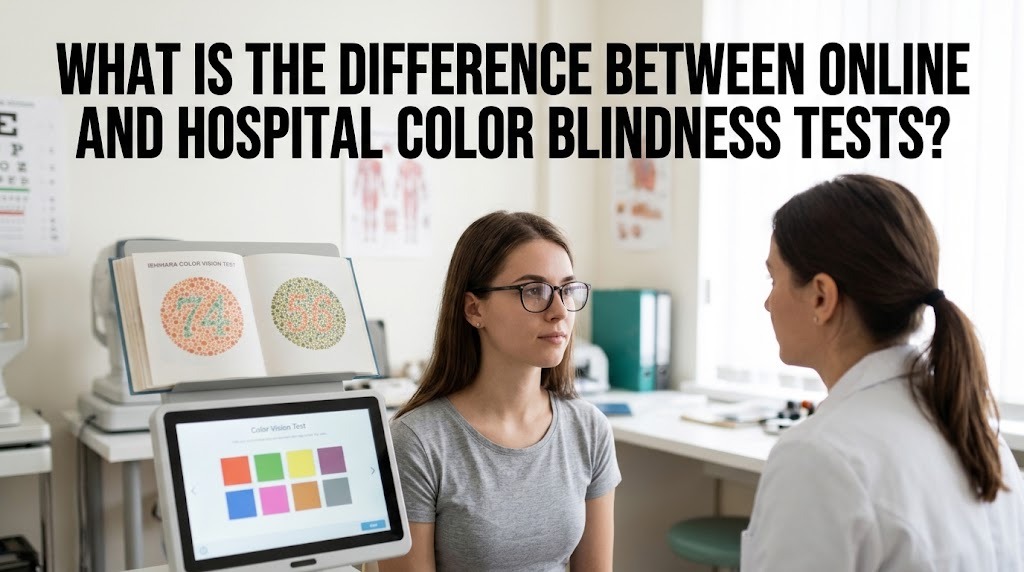
Color blindness tests are used to determine whether someone has difficulty distinguishing certain colors. These examinations are important for identifying color vision deficiencies that may affect daily activities, education, and professional responsibilities. Today, people can check their color vision through online tests using computers or smartphones, as well as professional examinations at hospitals and eye clinics.
Although both methods aim to evaluate color perception, they have important differences in accuracy, testing procedures, equipment, and result interpretation. Online color blindness tests are generally easier to access and can provide an initial indication of possible color vision problems. Meanwhile, hospital examinations use standardized testing materials and professional assessment to provide more reliable results. Understanding these differences can help individuals choose the most appropriate examination.
UNDERSTANDING ONLINE COLOR BLINDNESS TESTS
An online color blindness test is a digital examination that allows individuals to check their color perception through a website or application. Most online tests use images containing colored dots, numbers, or patterns similar to those found in traditional color vision examinations. Users are asked to identify the numbers or symbols displayed on their screens. The system then evaluates their answers and provides an estimated result indicating whether they may have difficulty distinguishing certain colors.
One of the main advantages of online testing is convenience. Individuals can take the examination at home without visiting a hospital or making an appointment. Many online tests are also free and can be completed within a few minutes. However, their accuracy depends heavily on screen quality, brightness, color calibration, and surrounding lighting conditions. Therefore, online results should only be considered an initial screening and not a definitive medical diagnosis.
UNDERSTANDING HOSPITAL COLOR BLINDNESS TESTS
A hospital color blindness test is a professional examination conducted by an eye care professional or trained medical examiner. Unlike most online tests, hospital examinations use standardized testing materials and controlled procedures to evaluate color perception. One commonly used method is the Ishihara test, which consists of specially designed plates containing colored dots arranged into numbers or patterns. The examiner observes the individual's responses and compares them with established testing criteria.
Hospitals and eye clinics may also use additional examination methods depending on the individual's symptoms and medical history. For example, the Farnsworth D-15 test evaluates how well someone can distinguish and arrange different colored objects. An anomaloscope may also be used to provide more detailed information about certain types of color vision deficiency. These examinations allow professionals to assess color perception more thoroughly and determine whether additional eye evaluations are necessary.
DIFFERENCES IN ACCURACY AND RELIABILITY
One of the most significant differences between online and hospital color blindness tests is their accuracy. Online examinations depend on the display characteristics of the device being used. Different smartphones, tablets, and computer monitors may produce different shades of the same color. As a result, an individual may receive different results when taking the same test on multiple devices.
Hospital examinations generally provide more reliable results because they use standardized testing materials and appropriate examination conditions. Medical professionals can also identify factors that may influence the results, such as lighting conditions, testing distance, and the individual's understanding of the instructions. If the initial examination suggests a color vision deficiency, additional assessments can be performed to clarify the findings. This makes professional testing more appropriate when an accurate evaluation is required for medical or occupational purposes.
DIFFERENCES IN COST, ACCESSIBILITY, AND TESTING PROCEDURES
Online color blindness tests are usually more accessible because they can be completed using an internet-connected device. Most examinations do not require registration, travel, or special equipment. They are suitable for individuals who want to explore their color vision without immediately visiting a healthcare facility. However, free access does not guarantee that the results are medically reliable.
Hospital examinations usually require individuals to visit a medical facility and may involve consultation or examination fees. The process can take longer because a healthcare professional may need to review medical history, conduct visual assessments, and explain the results. Although hospital testing requires more time and preparation, it provides a more structured examination. The availability of specialized testing methods also makes hospitals and eye clinics more suitable for individuals who need detailed color vision assessments.
WHEN SHOULD YOU CHOOSE AN ONLINE OR HOSPITAL COLOR BLINDNESS TEST?
An online color blindness test can be a reasonable starting point for individuals who are curious about their color perception. It may help identify possible difficulties in distinguishing certain color combinations. Students, parents, or individuals who have never checked their color vision can use online screening to decide whether a professional examination may be necessary. However, they should avoid treating the results as a confirmed diagnosis.
A hospital color blindness test is more appropriate when someone experiences persistent color recognition difficulties or needs an official examination for educational, medical, or employment purposes. Individuals who notice sudden changes in color perception should also seek professional evaluation because acquired color vision problems may be associated with certain eye or neurological conditions. A healthcare professional can determine which examination is appropriate and whether further investigation is needed. Choosing the correct testing method helps ensure that color vision problems are identified and evaluated properly.
CONCLUSION
The main difference between online and hospital color blindness tests lies in their accuracy, accessibility, testing procedures, and professional evaluation. Online tests are convenient and useful for initial screening, but their results can be affected by screen quality and environmental conditions. Hospital examinations provide more reliable assessments because they use standardized testing methods and professional interpretation. Therefore, online testing should not replace a medical examination when an accurate diagnosis is needed. Individuals who suspect they have color blindness should consider consulting an eye care professional to understand their condition and receive appropriate guidance.
Recent Posts

Bagaimana Sistem SKS pada Program Kuliah... 22.11.2026/40 View

How Does Technology Make Daily Evaluation... 21.11.2026/71 View

Apa Strategi Menghadapi Kesenjangan antara Kompetensi... 21.11.2026/73 View

Mengapa Inventaris Aset Penting bagi Kelancaran... 21.11.2026/69 View

When Should Musicians Join a Record... 21.11.2026/73 View
