

What Is the Difference Between Performance Evaluation Based on Targets and Competencies?
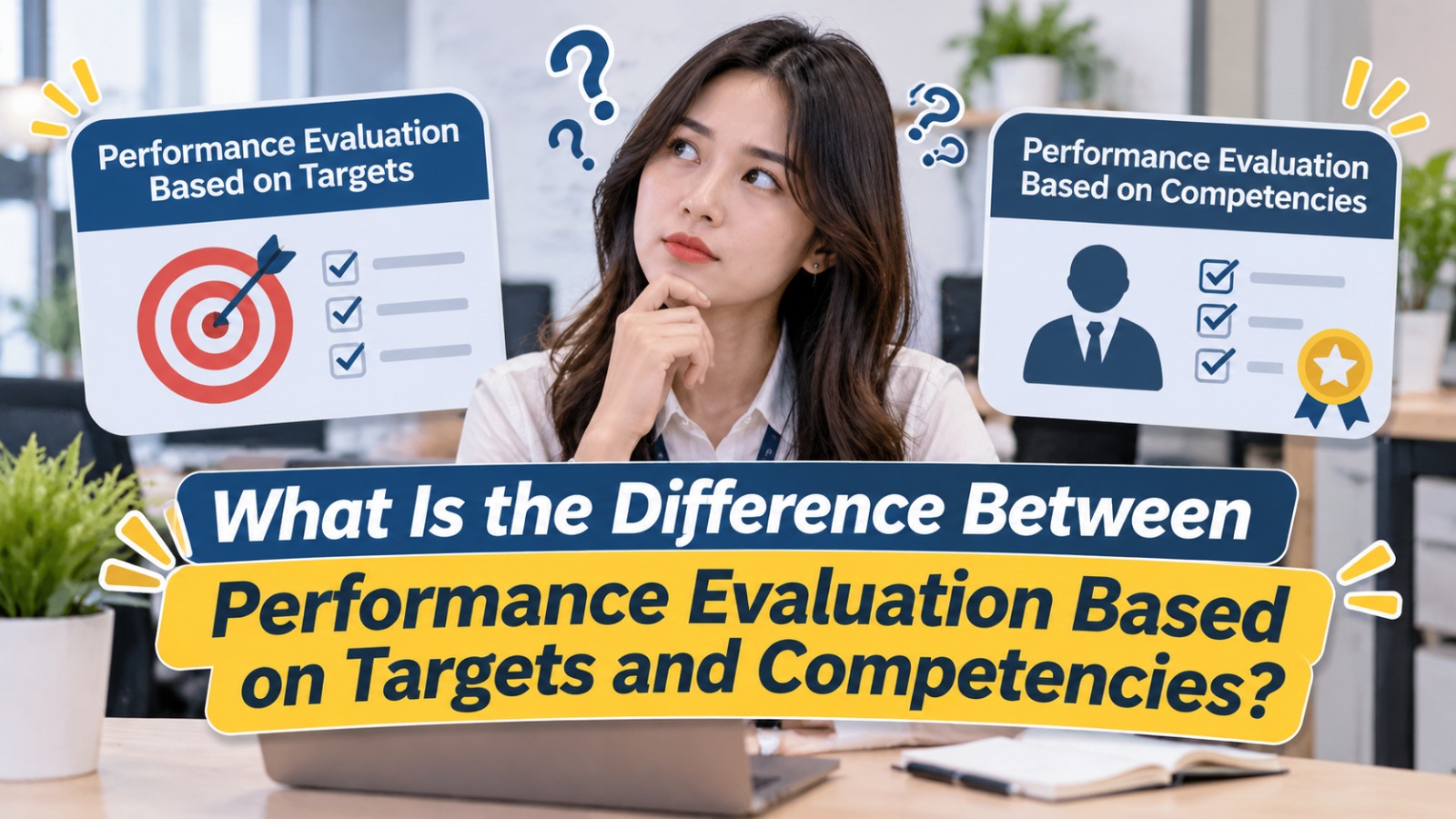
Performance evaluation is an important process that companies use to measure employee contributions and determine how effectively they perform their responsibilities. Through regular assessments, organizations can understand whether employees achieve their expected results and demonstrate the abilities required for their positions. However, not all performance evaluation systems use the same approach. Two common methods are target-based performance evaluation and competency-based performance evaluation.
Although both methods aim to improve employee performance, they focus on different aspects of work. Target-based evaluation emphasizes measurable achievements, such as sales numbers, project completion, and productivity levels. Meanwhile, competency-based evaluation focuses on the knowledge, skills, attitudes, and behaviors employees demonstrate while completing their responsibilities. Understanding these differences helps companies choose an appropriate assessment method and develop a more effective workforce.
UNDERSTANDING TARGET-BASED PERFORMANCE EVALUATION
Target-based performance evaluation is an assessment method that measures employee performance according to specific goals or results that must be achieved within a certain period. Companies usually establish measurable targets before employees begin their assignments. These targets help employees understand what they need to accomplish and allow managers to compare actual results with expected outcomes. Common indicators include sales achievements, completed projects, production quantities, and customer service response times.
For example, a sales employee may be expected to achieve a monthly sales target of 100 products. At the end of the evaluation period, the manager compares the employee's actual sales with the established target. If the employee achieves or exceeds the target, the result indicates successful performance in that particular area. This approach makes assessments easier to measure because they are based on specific and measurable outcomes. However, companies should also consider work quality and external factors that may influence target achievement.
UNDERSTANDING COMPETENCY-BASED PERFORMANCE EVALUATION
Competency-based performance evaluation focuses on the abilities and behaviors employees demonstrate when performing their jobs. Instead of measuring results alone, this approach examines whether employees have the knowledge, technical skills, communication abilities, leadership qualities, and professional attitudes required for their positions. Companies use this method to understand how employees complete their responsibilities and whether they demonstrate the competencies expected by the organization.
For instance, a team leader may be evaluated based on communication, decision-making, problem-solving, and the ability to coordinate team members. Even if the team achieves its targets, the manager still needs to understand whether the leader uses effective and professional management practices. This approach is useful because employee competencies influence long-term performance and career development. It also helps companies identify skill gaps and determine which training programs employees need to improve their professional abilities.
KEY DIFFERENCES BETWEEN TARGETS AND COMPETENCIES
The main difference between these two evaluation methods is the aspect of employee performance they measure. Target-based evaluation focuses on what employees achieve, while competency-based evaluation examines how employees achieve those results. Both approaches provide valuable information, but they offer different perspectives on employee contributions. Understanding these differences helps managers create more balanced assessments.
Another difference relates to the indicators used during the evaluation process. Target-based assessments commonly use numerical results, deadlines, productivity levels, and achievement percentages. Competency-based assessments use behavioral indicators, practical skills, professional knowledge, communication, and leadership abilities. Target-based evaluation is generally easier to quantify, while competency-based evaluation requires clear behavioral standards and careful observation.
The following distinctions explain their main characteristics:
- Assessment Focus: Target-based evaluation measures work results, while competency-based evaluation measures employee abilities and behaviors.
- Performance Indicators: Target-based evaluation uses measurable targets, while competency-based evaluation uses skills, knowledge, and professional attitudes.
- Main Objective: Target-based evaluation emphasizes goal achievement, while competency-based evaluation emphasizes professional capability and development.
- Assessment Methods: Target-based evaluation uses numerical results and achievement reports, while competency-based evaluation may use observations, interviews, and behavioral assessments.
- Development Benefits: Target-based evaluation identifies gaps in work results, while competency-based evaluation identifies skills that require improvement.
ADVANTAGES AND LIMITATIONS OF EACH EVALUATION METHOD
Target-based performance evaluation offers several advantages for organizations. It provides clear expectations, measurable results, and an easier way to monitor employee progress. Managers can quickly identify whether employees are meeting established objectives and determine which areas require improvement. This method is particularly useful for positions with measurable responsibilities, such as sales, production, and project management.
However, focusing only on targets can create certain limitations. Employees may prioritize achieving numerical results without paying enough attention to work quality, teamwork, or professional behavior. In some situations, external factors such as market conditions, limited resources, or unexpected operational problems can also influence target achievement. Therefore, companies should avoid judging employee abilities based entirely on numerical outcomes.
Meanwhile, competency-based evaluation helps organizations understand employee capabilities more comprehensively. It supports professional development, identifies potential leaders, and encourages employees to improve their working behavior. Nevertheless, this method can become subjective if companies do not establish clear competency standards. Managers need to use consistent indicators and relevant evidence to ensure that assessments remain fair, objective, and reliable.
HOW COMPANIES CAN COMBINE BOTH PERFORMANCE EVALUATION METHODS
Companies do not always need to choose between target-based and competency-based evaluation. Combining both methods can provide a more complete understanding of employee performance. Target-based evaluation shows whether employees achieve their responsibilities, while competency-based evaluation explains the abilities and behaviors that influence those results. Together, they help managers assess both work outcomes and professional capabilities.
For example, a company may evaluate a marketing employee based on campaign results, customer engagement, and project completion. At the same time, the employee can be assessed based on creativity, communication, teamwork, and analytical skills. This combination allows managers to recognize employees who achieve strong results while maintaining professional standards. It also helps identify employees who need additional support in specific areas.
To implement both methods effectively, companies should establish realistic targets and relevant competency standards for each position. Managers must communicate evaluation criteria clearly and provide regular feedback throughout the assessment period. They should also consider available resources, job responsibilities, and workplace conditions when interpreting results. With a balanced approach, integrated performance evaluation can support employee development and improve organizational productivity.
CHOOSING THE RIGHT PERFORMANCE EVALUATION METHOD FOR ORGANIZATIONAL GOALS
The appropriate performance evaluation method depends on the company's objectives, job characteristics, and workforce requirements. Organizations with positions that involve measurable outcomes may benefit from target-based assessments. For example, sales departments can evaluate revenue achievements, while production teams can measure output and product quality. These indicators help companies monitor operational performance and determine whether business targets are being achieved.
On the other hand, competency-based evaluation is particularly useful for positions that require communication, leadership, creativity, and complex problem-solving. These abilities cannot always be measured through numerical targets alone. Companies can use competency assessments to identify employees who are ready for leadership responsibilities or require additional professional training. The results can also support long-term workforce planning.
Ultimately, the best approach is one that reflects the organization's actual needs and provides meaningful information about employee contributions. Companies should review their evaluation systems regularly to ensure that assessment standards remain relevant and consistent. By selecting appropriate indicators and combining different assessment perspectives, organizations can develop effective performance management strategies that support both individual growth and business success.
CONCLUSION
Target-based and competency-based performance evaluations are two important methods for measuring employee performance. Target-based evaluation focuses on measurable results and the achievement of specific objectives, while competency-based evaluation examines the knowledge, skills, attitudes, and behaviors employees demonstrate in their work.
Both methods have advantages and limitations. Target-based evaluation provides clear performance measurements, while competency-based evaluation offers deeper insights into employee abilities and professional development needs. Therefore, combining both approaches can help companies create a more balanced and objective assessment system.
By establishing clear targets, defining relevant competencies, and providing constructive feedback, organizations can improve employee performance and support career development. An effective performance evaluation system should measure not only what employees achieve but also how they achieve it, ensuring that individual contributions align with organizational goals and long-term business growth.
Recent Posts

How Does Technology Make Daily Evaluation... 21.11.2026/63 View

Apa Strategi Menghadapi Kesenjangan antara Kompetensi... 21.11.2026/64 View

Mengapa Inventaris Aset Penting bagi Kelancaran... 21.11.2026/60 View

When Should Musicians Join a Record... 21.11.2026/59 View

Daily Evaluation or Daily Planning Which... 21.11.2026/67 View
