

What Is the Difference Between Psychometric Tests and Personality Tests?
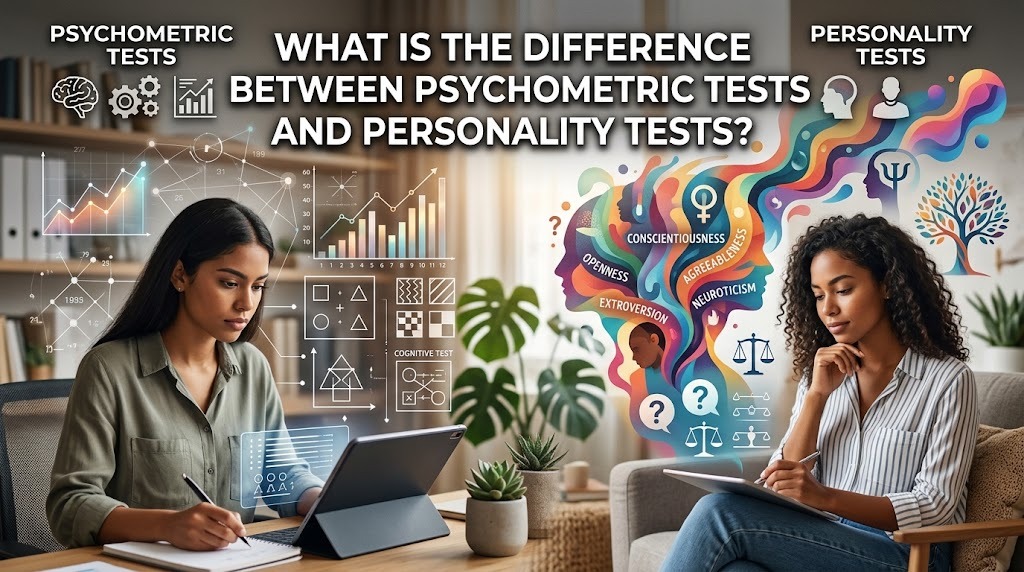
Psychometric tests and personality tests are commonly used in recruitment, career development, and personal assessment. Both can provide information about an individual's characteristics, abilities, or preferences, but they do not always measure the same things. Understanding their differences can help job applicants prepare for assessments and interpret their results more accurately.
The main difference is that psychometric testing is a broad category of assessment, while personality testing focuses specifically on patterns of behavior, preferences, and personal characteristics. Some personality tests are psychometric assessments, but not every psychometric test measures personality. Employers choose different assessment methods depending on the purpose of the evaluation and the requirements of a particular position.
UNDERSTANDING THE MEANING OF PSYCHOMETRIC TESTS
Psychometric tests are standardized assessments designed to measure psychological characteristics, abilities, or traits using structured methods. In recruitment, they may evaluate cognitive abilities, numerical reasoning, verbal reasoning, logical thinking, personality traits, or other job-related characteristics. The specific content depends on the assessment and its intended purpose.
For example, a numerical reasoning test may ask candidates to interpret tables or calculate percentage changes, while a logical reasoning test may require them to identify patterns. These assessments provide information about particular abilities rather than measuring every aspect of a person's potential. A well-designed psychometric test should have evidence supporting its reliability and validity for the intended use. Employers should also consider how well the assessment relates to the actual responsibilities of the position.
UNDERSTANDING THE MEANING OF PERSONALITY TESTS
Personality tests are assessments that explore relatively consistent patterns in how individuals tend to think, feel, and behave. Depending on the framework used, these tests may examine characteristics such as sociability, organization, openness to new experiences, cooperation, or emotional responses. The results can help describe personal tendencies and preferences in different situations.
In the workplace, personality assessments may provide information about how someone prefers to collaborate, organize tasks, or approach unfamiliar challenges. For instance, a questionnaire may explore whether an individual generally prefers structured routines or flexible working arrangements. However, personality results do not determine a person's complete identity or guarantee how they will behave in every situation. Responses can also be influenced by context, self-perception, and the way questions are understood.
COMPARING THEIR PURPOSES AND WHAT THEY MEASURE
The main distinction between psychometric tests and personality tests lies in their scope and measurement objectives. Psychometric testing can cover a wide range of psychological attributes, including cognitive abilities and personality traits. Personality testing focuses on describing behavioral tendencies and individual differences in personality.
Psychometric tests may include assessments with right-or-wrong answers, such as numerical reasoning and logical reasoning questions. Other assessments may use rating scales to measure psychological characteristics. In contrast, personality tests commonly ask candidates to indicate how closely certain statements reflect their usual behavior or preferences. These differences mean that the preparation methods and interpretation of results can vary depending on the type of assessment.
Although their purposes differ, both types of assessment should be evaluated according to their quality and intended application. A personality test can be a psychometric instrument when it uses appropriate methods to measure personality characteristics. Therefore, the terms are related rather than completely separate categories.
HOW EMPLOYERS USE THESE TESTS IN RECRUITMENT
Employers may use psychometric assessments to gather additional information about candidates during the hiring process. Cognitive ability tests can help evaluate skills such as reasoning and problem-solving, while other assessments may examine personality-related characteristics relevant to the position. The information can complement interviews, resumes, work samples, and employment history.
Personality tests in recruitment may help employers understand candidates' preferences and behavioral tendencies in a work environment. For example, a role involving frequent collaboration may require employees to communicate regularly and coordinate tasks with others. However, employers should not assume that one personality type is automatically suitable for every role. Hiring decisions should consider job-related evidence, and personality results should not be used as the only basis for accepting or rejecting an applicant.
HOW TO PREPARE FOR EACH TYPE OF ASSESSMENT
Preparing for a psychometric test begins with identifying which abilities or characteristics the assessment measures. For reasoning tests, candidates can practice sample questions involving numerical data, written information, patterns, or problem-solving. Reviewing mistakes and becoming familiar with the question format can improve preparation and help applicants manage their time more effectively.
For personality tests, preparation is different because the questions generally explore personal tendencies rather than academic knowledge. Candidates should read each statement carefully and answer honestly based on their typical behavior. Trying to create an idealized personality profile may lead to inconsistent answers and may not provide an accurate representation of the individual. For both assessment types, applicants should follow the instructions, understand the purpose of the test, and treat the results as one source of information rather than a complete judgment of their abilities or potential.
CONCLUSION
The difference between psychometric tests and personality tests is mainly related to their scope. Psychometric testing is a broad category that can measure cognitive abilities, personality traits, and other psychological characteristics, whereas personality testing specifically explores behavioral tendencies and individual preferences. Therefore, personality tests can be part of psychometric testing, but psychometric assessments are not limited to personality.
Understanding these differences can help applicants prepare for recruitment assessments and interpret their results responsibly. Employers should use reliable, relevant assessments alongside interviews, qualifications, and practical evidence. When applied appropriately, psychometric and personality tests can contribute to a more informed understanding of candidates without reducing their potential to a single score or profile.
Recent Posts

Bagaimana Sistem SKS pada Program Kuliah... 22.11.2026/61 View

How Does Technology Make Daily Evaluation... 21.11.2026/87 View

Apa Strategi Menghadapi Kesenjangan antara Kompetensi... 21.11.2026/85 View

Mengapa Inventaris Aset Penting bagi Kelancaran... 21.11.2026/83 View

When Should Musicians Join a Record... 21.11.2026/87 View
