

What Is the Difference Between School Sports Week and National Sports Week?
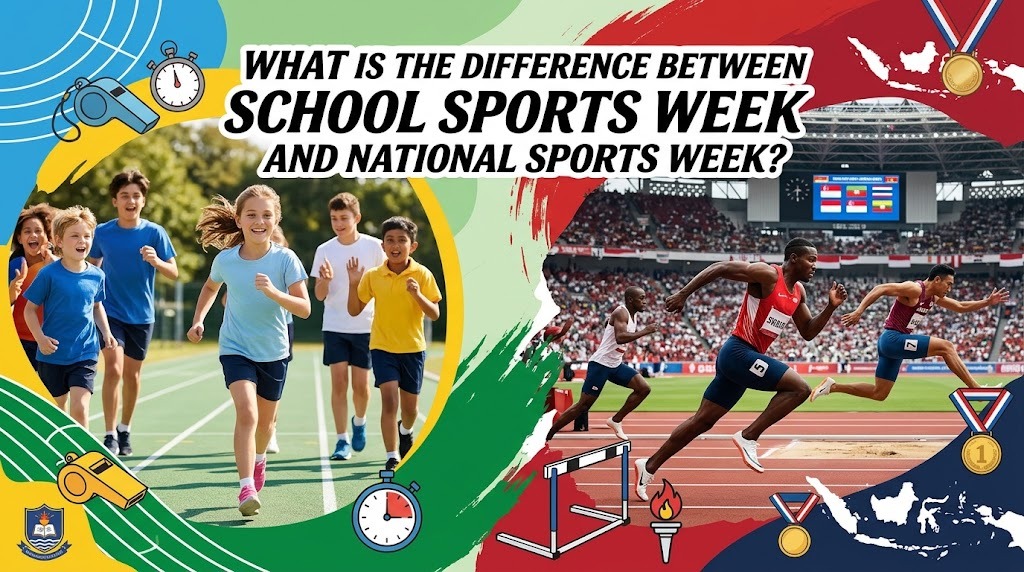
School Sports Week and National Sports Week are sporting events that encourage people to participate in physical activities, develop athletic skills, and appreciate the importance of sports. Although both events promote fitness, teamwork, and sportsmanship, they differ in their scale, participants, objectives, and organization. School Sports Week is generally organized within an educational institution for students and the school community, while National Sports Week involves a broader range of athletes representing regions or communities at the national level. Understanding these differences helps students recognize how sports contribute to personal development and national sporting achievements.
DEFINITION OF SCHOOL SPORTS WEEK
School Sports Week is a sports event organized by a school to encourage students to participate in various physical activities and competitions. The activities may include football, volleyball, basketball, badminton, running, relay races, and traditional games. Depending on the school's facilities and resources, the event may last several days and involve students from different classes or grade levels. Teachers, school staff, and student organizations often work together to prepare the competitions and ensure that activities run smoothly.
The primary purpose of School Sports Week is to make sports accessible and enjoyable for students with different abilities. Students have opportunities to improve their physical fitness, practice teamwork, develop discipline, and build confidence. The event also creates a friendly atmosphere where students can interact outside regular classroom activities. Rather than focusing exclusively on winning, School Sports Week emphasizes participation, learning, fair play, and the development of positive attitudes toward physical activity.
DEFINITION OF NATIONAL SPORTS WEEK
National Sports Week is a large-scale sporting event involving athletes and sports communities from different regions of a country. Its structure depends on the country and the event's official regulations. In Indonesia, a prominent example is Pekan Olahraga Nasional, commonly known as PON, which brings together athletes representing provinces in organized competitions across various sports. PON is distinct from a general national sports celebration because it is a formal multi-sport competition with specific qualification requirements and organizing authorities.
National-level sporting events aim to strengthen athletic performance, encourage regional representation, and support the development of sports throughout the country. Athletes may undergo extensive training and selection before participating in competitions. Coaches, referees, sports organizations, medical teams, and event officials contribute to the preparation and implementation of the event. These competitions can also help identify talented athletes who may progress to international sporting events, depending on their performance, eligibility, and the selection policies of the relevant sports federations.
DIFFERENCES IN PARTICIPANTS AND ELIGIBILITY
One of the main differences between School Sports Week and National Sports Week is the type of participants involved. School Sports Week generally involves students enrolled at a particular school, although some events may invite students from other schools. Participation requirements are usually established by the school and may depend on age groups, class divisions, competition rules, and student interest. Many school events encourage beginners to participate, allowing them to experience sports even if they have limited competitive experience.
National Sports Week usually involves selected athletes who meet the competition's eligibility requirements. In events such as Indonesia's PON, athletes represent their respective provinces and must comply with applicable qualification and registration rules. Many participants have experience in organized competitions and receive structured training from coaches. Therefore, school events tend to provide broader opportunities for student participation, while national competitions generally require a more formal selection process and a higher level of competitive preparation.
DIFFERENCES IN SCALE AND ORGANIZATION
School Sports Week is usually organized on a relatively small scale within a school's grounds, sports facilities, or nearby venues. The organizing committee may consist of teachers, school administrators, student representatives, and volunteers. The available budget, equipment, and number of participants influence the types of competitions that can be offered. Because the event serves a school community, its schedule can often be adjusted to fit academic activities and students' needs.
National Sports Week requires considerably more extensive coordination because it involves athletes, officials, and delegations from different regions. The event may use multiple sports venues and require accommodation, transportation, security, medical support, media coverage, and specialized equipment. Organizing authorities must coordinate competition schedules, technical regulations, participant registration, and the needs of different sporting disciplines. The larger scale makes national events more complex and requires substantial planning, funding, and cooperation among relevant institutions.
DIFFERENCES IN GOALS AND BENEFITS
The goals of School Sports Week focus primarily on education, participation, and student development. Through sports, students can learn to cooperate with teammates, respect opponents, follow rules, and manage both success and disappointment. Physical activities can also support cardiovascular fitness, coordination, strength, and general well-being when performed safely. In addition, school competitions can strengthen relationships among students, teachers, and the wider school community.
National Sports Week places greater emphasis on competitive achievement, regional representation, and the development of organized sports. Athletes compete to earn medals, improve personal or team performances, and contribute to their region's standing. The event can also help sports organizations assess athlete development and identify potential candidates for higher-level competitions. Both events offer valuable benefits, but School Sports Week prioritizes educational experiences and participation, whereas National Sports Week places greater emphasis on structured competition and athletic performance.
DIFFERENCES IN COMPETITION LEVELS AND RULES
School Sports Week may feature simplified competition formats designed to accommodate students' ages, abilities, and available time. For example, a school may arrange short football matches, class-based relay races, or friendly volleyball tournaments. The organizers establish rules to ensure fairness and safety, while teachers or appointed referees supervise the activities. Although some schools use formal sporting regulations, others adapt the rules to make participation more inclusive and manageable.
National Sports Week generally follows the technical regulations established by the relevant sports federations and organizing authorities. Competitions require qualified officials, standardized equipment, clear eligibility criteria, and consistent judging procedures. Depending on the sport, athletes may compete in qualifying rounds, elimination stages, finals, or other approved formats. These requirements help maintain competitive fairness and ensure that results are determined according to recognized standards rather than informal school-level arrangements.
DIFFERENCES IN AWARDS AND LONG-TERM IMPACT
Awards at School Sports Week may include certificates, medals, trophies, or recognition for teamwork, participation, and outstanding performance. Schools can use these awards to motivate students and encourage them to continue practicing sports. However, students can benefit from the event even if they do not receive a prize, because participation helps them develop confidence, discipline, and social skills. The experience may also inspire students to join school teams or pursue further athletic training.
At National Sports Week, athletes commonly compete for medals and recognition on behalf of their regions. Results can influence regional rankings and contribute to the evaluation of sports development programs. Outstanding performances may attract the attention of coaches and sports organizations, although participation does not automatically guarantee selection for international competitions. In the long term, national events can raise public interest in sports, encourage investment in athletic development, and strengthen the competitive environment for future generations.
HOW SCHOOL SPORTS WEEK AND NATIONAL SPORTS WEEK COMPLEMENT EACH OTHER
Although School Sports Week and National Sports Week have different purposes and scales, they can support the same broader goal of developing a healthy and active society. School events introduce students to physical activity, fair competition, and the basic values of sportsmanship. They can also provide an early opportunity for teachers and coaches to recognize students who demonstrate interest or potential in particular sports. With appropriate guidance and continued practice, interested students may progress to school teams, local clubs, or more advanced competitions.
National sporting events provide a wider competitive environment for athletes who have developed their abilities through training and organized competitions. However, not every student who participates in School Sports Week needs to pursue a professional sporting career. Recreational participation is valuable in its own right because it supports physical health, social interaction, and personal well-being. When schools, communities, sports clubs, and national organizations work together, they can create more opportunities for people to enjoy sports and develop their abilities at different levels.
CONCLUSION
The main difference between School Sports Week and National Sports Week lies in their participants, scale, organization, objectives, and competition standards. School Sports Week is generally designed for students and focuses on participation, physical fitness, education, teamwork, and character development. National Sports Week involves a broader sporting community and emphasizes organized competition, regional representation, athletic achievement, and sports development. Despite these differences, both events contribute to a stronger sporting culture by encouraging discipline, fair play, and an appreciation of physical activity. Supporting both school-level participation and national-level competition is important for building a healthy society and creating opportunities for future athletes.
Recent Posts

Bagaimana Sistem SKS pada Program Kuliah... 22.11.2026/52 View

How Does Technology Make Daily Evaluation... 21.11.2026/81 View

Apa Strategi Menghadapi Kesenjangan antara Kompetensi... 21.11.2026/81 View

Mengapa Inventaris Aset Penting bagi Kelancaran... 21.11.2026/77 View

When Should Musicians Join a Record... 21.11.2026/82 View
