

What Is The Difference Between School Zoning And Other Admission Routes?
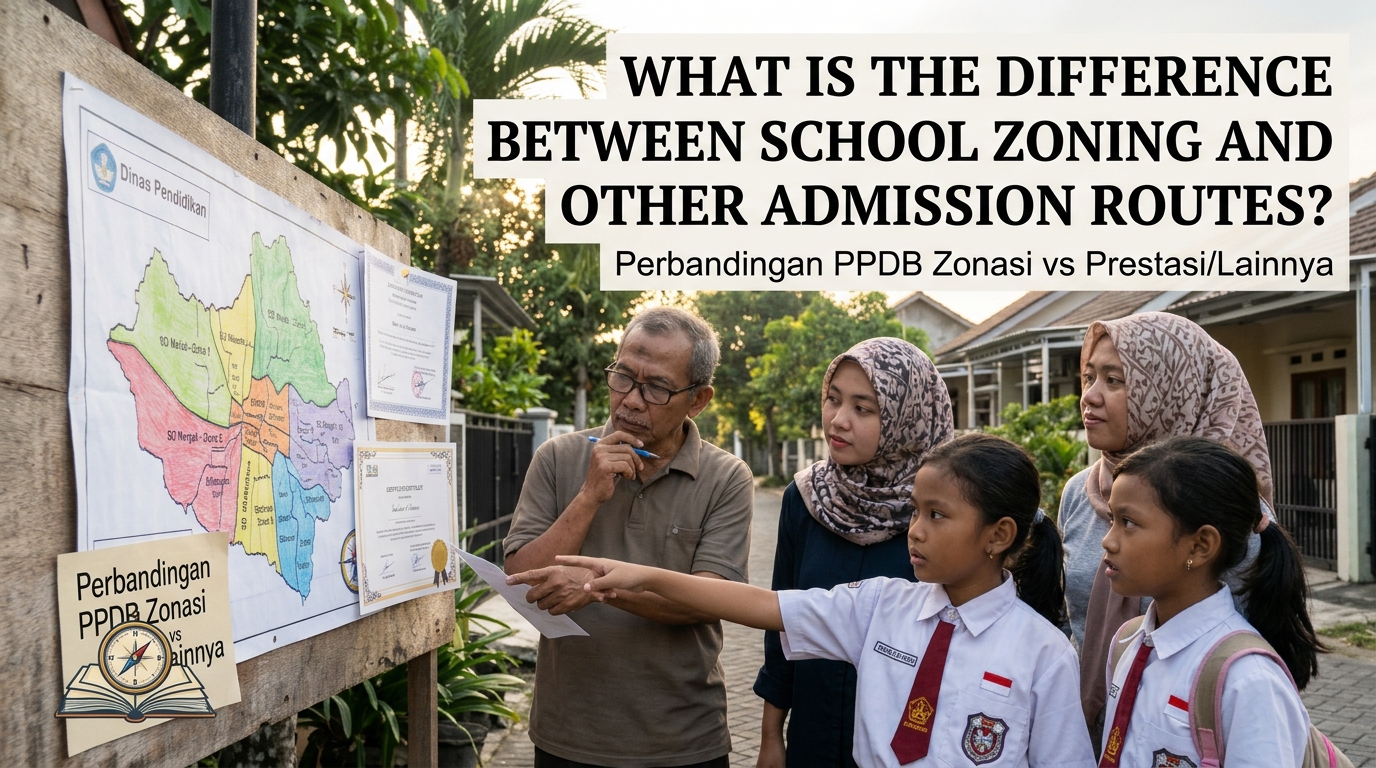
School admission systems are designed to determine how students can enter a particular school. One approach is school zoning, which considers a student's place of residence when assessing eligibility for admission. Other admission routes may consider academic achievements, special talents, family circumstances, or other criteria established by the relevant education authority. Understanding these differences helps parents and students choose an appropriate pathway and prepare the correct documents. In Indonesia, the available routes and their requirements depend on the current Sistem Penerimaan Murid Baru (SPMB) regulations and local policies.
UNDERSTANDING SCHOOL ZONING
School zoning is an admission approach that considers a student's residential location when determining access to a school. Its purpose is to help students attend schools closer to home and support a more balanced distribution of educational opportunities. Depending on the applicable rules, the student's registered address may be verified using official residence documents. The selection process may also consider other criteria if several eligible students compete for limited places. Therefore, living near a school does not always guarantee admission.
One potential benefit of zoning is reducing the distance students travel to school. Families may spend less on transportation, and students may have more time for studying and resting. Zoning can also encourage communities to pay greater attention to local schools. However, its effectiveness depends on school capacity, educational quality, and the way the policy is implemented. The main feature of school zoning is its emphasis on residential location, subject to the official admission rules.
UNDERSTANDING OTHER ADMISSION ROUTES
Other admission routes use different criteria to assess applicants. Depending on the education system and applicable regulations, these may include academic or nonacademic achievements, special circumstances, or other eligibility conditions. Each route has a particular purpose and may require different supporting documents. For example, an achievement-based route may consider certificates or records of recognized accomplishments. Applicants must check the official rules to determine which criteria apply.
These routes can provide opportunities for students whose circumstances or qualifications fit the relevant requirements. However, not every route is available at every school or education level. The number of places allocated to each route may also be limited. Eligibility depends on the specific pathway, and applicants may need to meet additional requirements. Parents should avoid assuming that the same admission routes and conditions apply throughout Indonesia.
KEY DIFFERENCES BETWEEN SCHOOL ZONING AND OTHER ROUTES
The main difference is the criteria used to assess applicants. School zoning focuses on residential location under the applicable domicile rules, while achievement-based admission focuses on qualifying accomplishments. Other pathways may be designed for students who meet particular eligibility conditions or have specific circumstances recognized by the regulations. The documents required can therefore differ between routes. Applicants should read the official admission announcement before deciding which pathway to use.
The routes may also differ in their selection procedures and intended objectives. Zoning aims to support access for eligible students near a school, while achievement-based selection recognizes specified accomplishments. Other routes may address particular educational or social considerations under official policy. Nevertheless, all routes must follow the relevant admission regulations and available school capacity. No pathway automatically guarantees admission, because selection depends on eligibility, competition, and the rules in force.
DOCUMENTS REQUIRED FOR EACH ROUTE
The documents required depend on the admission pathway selected. For a domicile-based route, applicants may need a Family Card or other accepted proof of residence. Achievement-based applicants may be asked to provide certificates, report records, or other evidence specified in the official rules. Other pathways can require additional supporting documents depending on their eligibility conditions. Parents should prepare documents based on the current official checklist rather than relying on assumptions.
Before submitting an application, families should check that all information is accurate and consistent. Names, dates of birth, addresses, and other personal details should match the relevant official records. Digital copies should be readable and meet any file requirements set by the registration platform. Missing or inconsistent documents can create delays during verification. Preparing complete and accurate documents helps reduce avoidable problems during the admission process.
HOW TO CHOOSE THE RIGHT ADMISSION ROUTE
Parents and students should begin by reviewing the official admission rules for the school and education level they are considering. They should check the available pathways, eligibility requirements, registration dates, and selection criteria. The student's residence, qualifications, achievements, and personal circumstances may help determine which route is suitable. Families should also consider school capacity and whether the student meets all required conditions. The most suitable route is one for which the student genuinely qualifies under the official rules.
Applicants should not choose a pathway based only on rumors or advice from previous applicants. Admission policies may change between years, and local education authorities may provide specific instructions. If the requirements are unclear, parents can contact the school or the official admission help desk. They should also prepare alternative school choices in case the preferred option is unavailable. Early preparation and reliable information make it easier to complete registration correctly.
THE ROLE OF GOVERNMENT IN ADMISSION ROUTES
Government authorities establish the framework and procedures that schools must follow during student admission. Their responsibilities may include setting eligibility rules, defining admission pathways, monitoring implementation, and providing public information. Local education authorities may also issue detailed instructions based on regional needs and applicable regulations. Clear rules help schools apply selection criteria consistently and explain decisions to families. Transparent admission procedures are essential for maintaining public trust.
In Indonesia, the applicable SPMB framework guides the student admission process, while detailed requirements depend on current national regulations and local implementation. Parents should consult official education office announcements to confirm which pathways are available in their area. They should also check the required documents and the schedule for each stage of registration. Government evaluation can help identify problems and improve the fairness of future admission processes. Reliable information allows families to make decisions based on actual requirements.
CONCLUSION
The difference between school zoning and other admission routes lies mainly in how applicants are assessed and which eligibility criteria they must meet. School zoning emphasizes residential location, while other routes may consider achievements or specific circumstances recognized by the applicable regulations. Each pathway has its own requirements, supporting documents, and selection procedures. Parents should check the latest official SPMB guidance before choosing a route and submitting an application. By understanding these differences, families can prepare more effectively and make informed decisions about school admission.
Recent Posts

Bagaimana Sistem SKS pada Program Kuliah... 22.11.2026/56 View

How Does Technology Make Daily Evaluation... 21.11.2026/86 View

Apa Strategi Menghadapi Kesenjangan antara Kompetensi... 21.11.2026/84 View

Mengapa Inventaris Aset Penting bagi Kelancaran... 21.11.2026/82 View

When Should Musicians Join a Record... 21.11.2026/86 View
