

What Is The Difference Between Secondary Data And Primary Data?
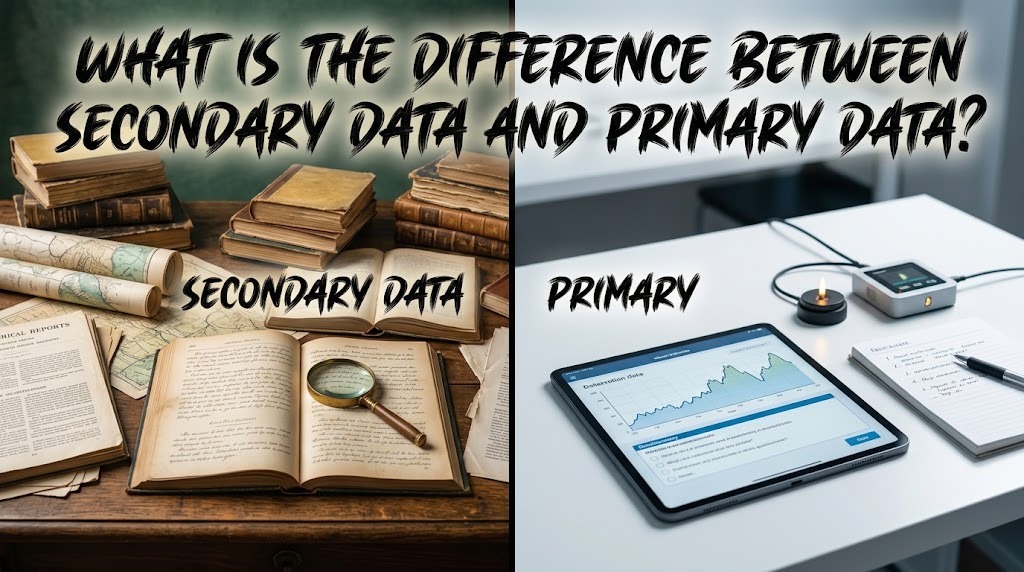
Data is an essential part of research because it helps researchers understand problems, test ideas, and develop reliable conclusions. There are two common types of research data: primary data and secondary data. Although both provide valuable information, they differ in how the information is collected and used. Primary data comes directly from an original investigation, while secondary data comes from information that already exists. Understanding the difference between these two types of data helps researchers choose the most suitable approach for their research objectives, budgets, and available time.
WHAT IS PRIMARY DATA?
Primary data is information collected directly by researchers for a specific research purpose. Researchers gather this data through methods such as surveys, interviews, observations, experiments, and questionnaires. For example, a student who interviews 50 classmates about their online learning experiences collects primary data. Because the information is gathered for the current study, researchers can design questions that match their research objectives. However, collecting primary data may require considerable time, money, planning, and effort, especially when the study involves many participants.
WHAT IS SECONDARY DATA?
Secondary data is information that has already been collected, recorded, or published by other people or organizations. Researchers reuse this information to answer new questions, compare findings, or support an existing investigation. Common sources include academic journals, government statistics, books, previous research reports, and digital databases. For instance, a student studying unemployment can analyze official labor statistics instead of conducting a new survey. Secondary data is often faster and less expensive to obtain, but researchers must check whether the information is reliable, relevant, and suitable for their research objectives.
KEY DIFFERENCES BETWEEN PRIMARY AND SECONDARY DATA
The main difference between primary and secondary data is their source and purpose of collection. Primary data is obtained directly for the research being conducted, whereas secondary data has already been collected for an earlier study or another purpose. Primary data collection gives researchers greater control over the questions, methods, and participants. In contrast, secondary data allows researchers to use existing information without repeating the entire collection process. The two types also differ in cost, time requirements, accessibility, and how closely the information matches the current research question.
COMPARISON OF PRIMARY AND SECONDARY DATA
Primary and secondary data each have characteristics that make them useful for different research situations. The following comparison highlights their main differences.
| Aspect | Primary Data | Secondary Data |
|---|---|---|
| Source | Collected directly by the researcher | Obtained from existing sources |
| Purpose | Gathered for the current study | Originally collected for another purpose |
| Methods | Surveys, interviews, experiments, observations | Reports, journals, databases, published statistics |
| Cost | Often more expensive | Often less expensive |
| Time | Usually requires more time to collect | Often faster to obtain |
| Control | Greater control over collection methods | Limited control over original collection methods |
| Relevance | Can be tailored to research objectives | May not fully match current needs |
| Limitations | Can involve sampling errors and response bias | Can contain outdated, incomplete, or unsuitable information |
Neither type is automatically better than the other. The best choice depends on the research question, available resources, and quality of the data.
ADVANTAGES AND DISADVANTAGES OF PRIMARY DATA
One major advantage of primary data is that researchers can collect information specifically designed to answer their research questions. They can choose suitable participants, develop relevant questions, and adjust their methods when necessary. This makes primary data particularly useful when existing information is insufficient or does not cover a specific issue. However, researchers may face high costs, time-consuming procedures, limited participant availability, and possible response bias. Careful planning and appropriate research methods are essential to ensure that the collected information is accurate and meaningful.
ADVANTAGES AND DISADVANTAGES OF SECONDARY DATA
Secondary data offers several advantages, especially when researchers have limited time or financial resources. It provides access to existing information from large populations, different locations, and extended periods. Researchers can also compare previous findings to identify patterns and develop new research questions. However, secondary data may be outdated, incomplete, or collected using methods that do not match the current study. Therefore, researchers should evaluate source credibility, data accuracy, relevance, and collection methods before drawing conclusions from existing information.
WHEN SHOULD RESEARCHERS USE PRIMARY OR SECONDARY DATA?
Researchers should use primary data when they need specific, original information that is not available from existing sources. For example, a business investigating customer satisfaction with a newly launched product may conduct interviews or distribute questionnaires directly to customers. Secondary data is more suitable when researchers need background information, historical statistics, previous findings, or comparisons across different periods. For example, an economic study may use published government reports to examine changes in employment rates. In many cases, combining primary and secondary data provides a more complete understanding of a research problem because existing information can establish context while new data addresses specific questions.
HOW TO CHOOSE THE RIGHT TYPE OF DATA
Choosing the right type of data begins with identifying the research objectives and the information needed to achieve them. Researchers should consider whether suitable information already exists or whether they need to collect new evidence. They must also evaluate their budget, available time, research skills, access to participants, and data requirements. If existing data is reliable and relevant, secondary data may be the most practical option. If the research requires detailed information tailored to a specific population or problem, primary data may be more appropriate. The final decision should balance efficiency, accuracy, relevance, and research quality.
CONCLUSION
The difference between primary data and secondary data lies mainly in how the information is collected and its original purpose. Primary data provides original information gathered directly for a specific study, while secondary data uses information that already exists. Primary data offers greater control over collection, whereas secondary data can save time and reduce costs. Both types have advantages and limitations, so researchers should evaluate their needs before selecting an approach. By choosing reliable data and applying appropriate research methods, they can produce accurate, relevant, and credible findings.
Recent Posts

Bagaimana Sistem SKS pada Program Kuliah... 22.11.2026/46 View

How Does Technology Make Daily Evaluation... 21.11.2026/74 View

Apa Strategi Menghadapi Kesenjangan antara Kompetensi... 21.11.2026/75 View

Mengapa Inventaris Aset Penting bagi Kelancaran... 21.11.2026/72 View

When Should Musicians Join a Record... 21.11.2026/75 View
