

What Is the Difference Between Social Volunteers and Professional Social Workers?
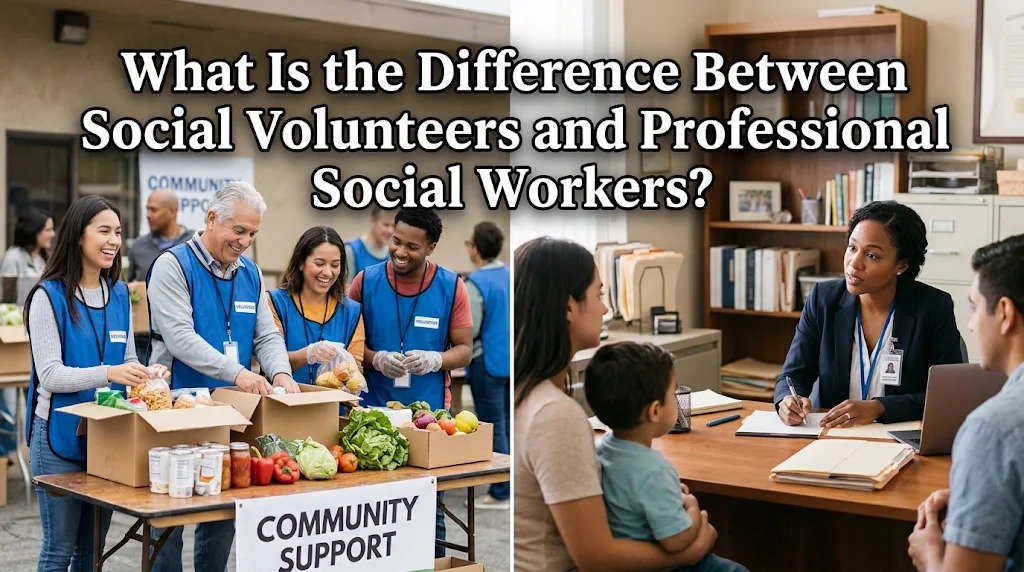
Social volunteers and professional social workers both play important roles in helping individuals and communities facing social difficulties. They may work with similar groups, such as children, older people, people with disabilities, low-income families, and disaster victims. Their activities often focus on improving people's well-being and providing support to those who need assistance.
However, social volunteers and professional social workers have different responsibilities, qualifications, and levels of expertise. Social volunteers generally contribute their time and energy voluntarily, while professional social workers have specialized education, training, and professional responsibilities. Understanding these differences helps people recognize how both roles contribute to social welfare.
WHAT ARE SOCIAL VOLUNTEERS AND PROFESSIONAL SOCIAL WORKERS?
Social volunteers are individuals who willingly participate in activities that benefit other people without expecting regular financial compensation. They may work through nonprofit organizations, community groups, charities, or independent social initiatives. Their activities include distributing food, helping disaster victims, teaching children, organizing fundraising campaigns, and supporting environmental programs.
Professional social workers are trained individuals who provide structured assistance to people experiencing personal, family, or social problems. They use specialized knowledge and professional methods to assess needs, develop support plans, provide appropriate interventions, and connect clients with available services. Their work may involve counseling, case management, family support, community development, and social advocacy.
Both roles aim to improve people's quality of life, but their approaches can be different. Volunteers often provide practical assistance based on community needs, while professional social workers handle more complex situations that require specific knowledge and professional judgment.
DIFFERENCES IN EDUCATION AND QUALIFICATIONS
One major difference between social volunteers and professional social workers is their educational background. Social volunteers generally do not need a specific academic degree to participate in many community activities. Organizations may provide basic orientation or training to help them understand their responsibilities and work safely.
Professional social workers usually need relevant formal education and specialized training in social work or related fields. Their preparation includes learning about human behavior, social problems, social welfare systems, intervention methods, ethics, and professional communication. Depending on the country and the type of work, certain positions may also require professional registration, certification, or other qualifications.
These qualifications are important because professional social workers often deal with sensitive and complicated situations. They need to understand how to assess individual circumstances, protect vulnerable people, and choose suitable interventions. Volunteers can also receive useful training, but this does not automatically make them qualified professional social workers.
DIFFERENCES IN DUTIES AND RESPONSIBILITIES
Social volunteers generally perform activities that provide direct and practical support to communities. For example, they may distribute essential supplies, organize educational activities, collect donations, clean public areas, or assist during disaster relief programs. Their duties are usually determined by the needs of the organization and the abilities of each volunteer.
Professional social workers have responsibilities that often require more detailed assessment and structured intervention. They may evaluate a client's social conditions, identify problems, prepare assistance plans, coordinate services, and monitor progress. They also work with families, institutions, and other professionals to find appropriate solutions for complex social challenges.
Another important difference is the level of accountability. Volunteers are expected to follow organizational instructions, respect community members, and complete their assigned tasks responsibly. Professional social workers must also follow professional ethical standards, maintain confidentiality, respect clients' rights, and work within their professional qualifications.
DIFFERENCES IN WORKING TIME AND COMPENSATION
Social volunteers usually participate in activities based on their availability and personal commitment. Some help during weekends, holidays, or specific social campaigns, while others regularly support organizations. Their involvement is generally voluntary, although organizations may provide transportation, meals, accommodation, or other necessary support.
Professional social workers generally perform their duties as part of a formal job or professional service. They may work for government institutions, hospitals, schools, nonprofit organizations, or social service agencies. They usually receive salaries or professional payments according to their employment arrangements.
Their working schedules also tend to involve ongoing responsibilities. Professional social workers may need to follow up on cases, prepare reports, coordinate with other service providers, and monitor the progress of clients. Unlike occasional volunteer activities, these duties often require consistent professional involvement.
HOW DO SOCIAL VOLUNTEERS AND PROFESSIONAL SOCIAL WORKERS WORK TOGETHER?
Social volunteers and professional social workers can support each other in many community programs. Volunteers can help with practical activities, such as distributing supplies, organizing events, collecting donations, and sharing information. Meanwhile, professional social workers can assess more complex needs, coordinate specialized services, and provide professional guidance.
For example, during a natural disaster, volunteers may help distribute food and clothing to affected families. Professional social workers can identify vulnerable individuals, assess family needs, and connect victims with appropriate social services. Cooperation allows each group to contribute according to its abilities and responsibilities.
This partnership can make social assistance more organized and effective. Clear communication and task distribution are important to prevent confusion and ensure that vulnerable people receive appropriate support. Volunteers should also refer situations requiring professional intervention to qualified personnel instead of handling them beyond their abilities.
CONCLUSION
The main difference between social volunteers and professional social workers lies in their qualifications, responsibilities, working arrangements, and professional expertise. Social volunteers contribute their time and energy to support community activities, while professional social workers use specialized knowledge and structured methods to address social problems.
Although their roles are different, both are important for improving social welfare. Volunteers provide valuable community support, while professional social workers handle cases that require professional assessment and intervention. By working together, they can help individuals and communities receive more effective assistance and build a more supportive society.
Recent Posts

Bagaimana Sistem SKS pada Program Kuliah... 22.11.2026/27 View

How Does Technology Make Daily Evaluation... 21.11.2026/65 View

Apa Strategi Menghadapi Kesenjangan antara Kompetensi... 21.11.2026/65 View

Mengapa Inventaris Aset Penting bagi Kelancaran... 21.11.2026/62 View

When Should Musicians Join a Record... 21.11.2026/63 View
