

What Is the Difference Between State Budget and Regional Budget Preparation?
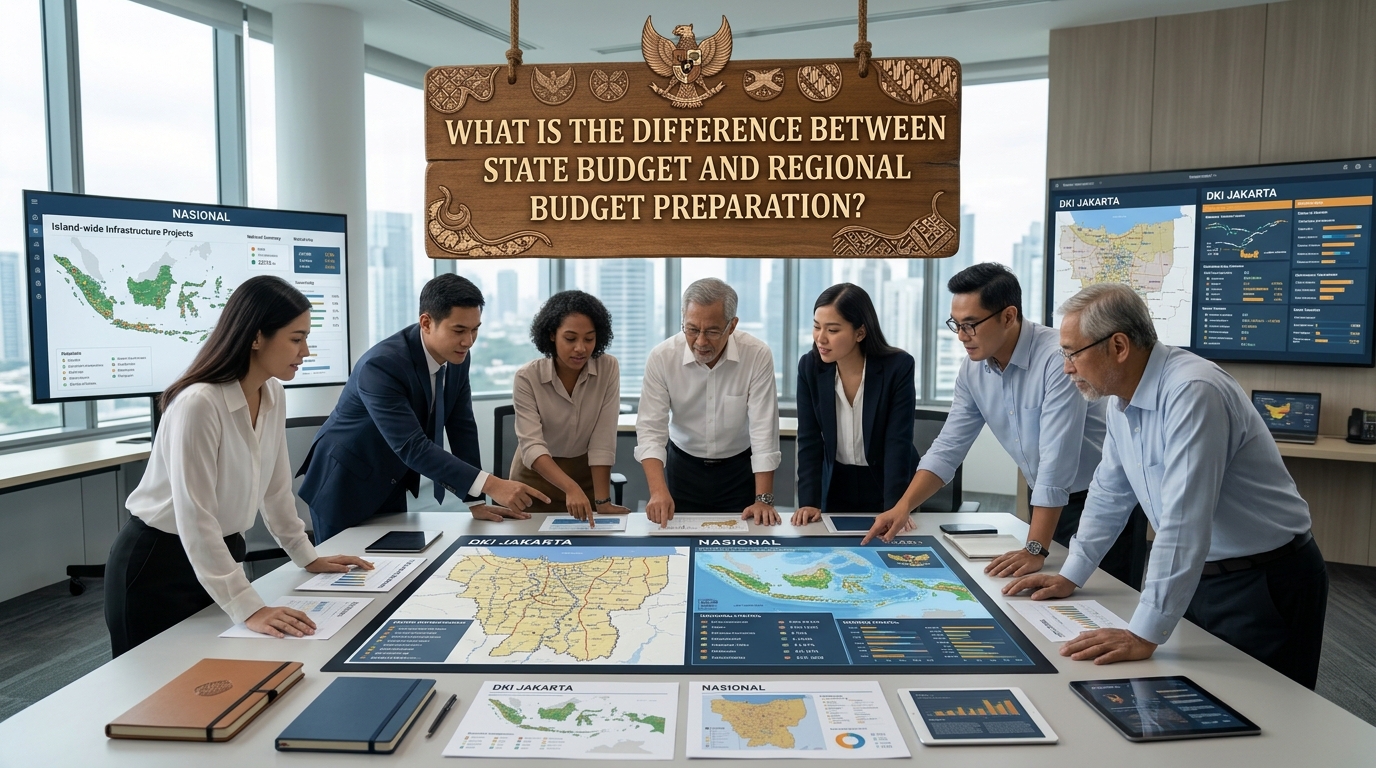
Budget preparation is an important process that helps governments manage public money and provide services to their communities. In Indonesia, government budgeting takes place at both the national and regional levels. The State Budget, known as Anggaran Pendapatan dan Belanja Negara (APBN), covers national government revenue and expenditure, while the Regional Budget, known as Anggaran Pendapatan dan Belanja Daerah (APBD), covers the finances of provincial and district or city governments. Although both budgets aim to support public welfare and development, they differ in authority, funding sources, planning procedures, and spending responsibilities. Understanding these differences helps explain how public funds are managed across Indonesia.
UNDERSTANDING THE STATE BUDGET AND REGIONAL BUDGET
The State Budget (APBN) is the government's annual financial plan for national revenue, expenditure, and financing. It supports national priorities such as defense, national infrastructure, social protection, and programs managed by central government institutions. The Regional Budget (APBD) is the annual financial plan of a provincial, district, or city government. It focuses on regional responsibilities, including local public services, regional infrastructure, and community development. Both budgets are intended to use public resources responsibly, but each serves a different level of government.
DIFFERENCES IN AUTHORITY AND RESPONSIBILITY
The preparation of the APBN is led by the central government, with the Ministry of Finance playing a key role in coordinating fiscal planning. The government submits the proposed state budget to the House of Representatives (DPR) for discussion and approval in accordance with the law. In contrast, the APBD is prepared by the relevant regional government, led by the governor, regent, or mayor, together with regional financial planning officials. The regional budget proposal is discussed with the appropriate Regional People's Representative Council (DPRD). This division of authority allows national and regional governments to manage their respective responsibilities while following Indonesia's financial regulations.
DIFFERENCES IN REVENUE SOURCES
The APBN and APBD also differ in their main revenue sources. National revenue includes tax revenue, non-tax state revenue, and grants, which support central government expenditure and national programs. Regional governments receive income from regional taxes, regional levies, transfers from the central government, and other legally recognized sources. Regional revenue also includes transfers such as the General Allocation Fund and Special Allocation Fund, which help finance regional responsibilities. These different sources mean that regional governments often depend partly on central government transfers to provide public services and support development.
DIFFERENCES IN BUDGET PREPARATION PROCEDURES
State budget preparation begins with national economic assumptions, revenue projections, fiscal policies, and government development priorities. Central government institutions prepare spending plans, which are consolidated into a proposed APBN before being discussed with the DPR. Regional budget preparation follows local planning processes that consider regional development plans, public service needs, and the government's financial capacity. Regional governments prepare budget policies and spending priorities before developing detailed expenditure plans for discussion with the DPRD. Although the procedures differ, both budgets require planning, coordination, approval, implementation, and accountability.
DIFFERENCES IN SPENDING PRIORITIES
The APBN prioritizes programs with national importance and responsibilities assigned to the central government. Examples include national defense, central government administration, national infrastructure projects, and nationwide social protection programs. The APBD focuses on services and development within a particular region, such as local roads, public facilities, regional education and healthcare responsibilities, sanitation, and community programs. Spending responsibilities can overlap when national and regional governments work together on the same development objective. Effective coordination helps prevent unnecessary duplication and ensures that public resources address both national goals and local needs.
THE ROLE OF CENTRAL AND REGIONAL GOVERNMENT COORDINATION
Coordination between central and regional governments is essential because many development challenges require cooperation across administrative boundaries. The central government may provide funding, national policy guidance, or technical support, while regional governments implement programs according to their responsibilities. For example, a national development initiative may require regional infrastructure, local public services, and cooperation between government agencies. Budget coordination also helps align funding with development targets and applicable regulations. Strong coordination can improve public service delivery and reduce gaps between national plans and regional implementation.
ACCOUNTABILITY AND FINANCIAL OVERSIGHT
Both the APBN and APBD must be managed transparently and in accordance with applicable laws. The DPR oversees the national budget, while the DPRD performs a corresponding oversight role for regional budgets within its authority. Government financial reports and audits help assess whether public funds have been managed properly and whether spending follows established rules. The Audit Board of Indonesia (BPK) examines state and regional financial management and accountability. These oversight mechanisms help identify financial problems, reduce the risk of misuse, and strengthen public trust.
CONCLUSION
The main difference between state budget and regional budget preparation lies in their scope, authority, revenue sources, and spending responsibilities. The APBN manages national government finances and supports countrywide priorities, while the APBD finances regional responsibilities and local development. Both budgets involve planning, legislative discussion and approval, implementation, and financial oversight. Their success depends on realistic revenue estimates, responsible spending, transparency, and effective coordination between government levels. By managing both budgets properly, Indonesia can improve public services, support regional development, and promote national welfare.
Recent Posts

Bagaimana Sistem SKS pada Program Kuliah... 22.11.2026/47 View

How Does Technology Make Daily Evaluation... 21.11.2026/74 View

Apa Strategi Menghadapi Kesenjangan antara Kompetensi... 21.11.2026/76 View

Mengapa Inventaris Aset Penting bagi Kelancaran... 21.11.2026/72 View

When Should Musicians Join a Record... 21.11.2026/76 View
