

What Is the Difference Between Tangible and Intangible Cultural Heritage?
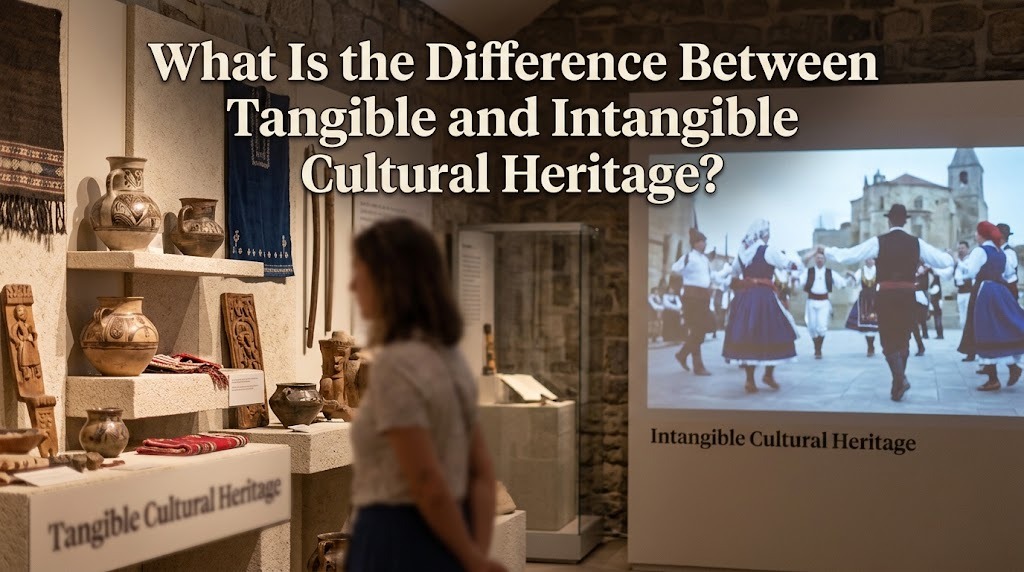
Cultural heritage represents the history, traditions, and values passed down from one generation to another. It helps people understand their origins and recognize the uniqueness of different communities. Cultural heritage is generally divided into two main categories, tangible and intangible cultural heritage. Although both are important for preserving cultural identity, they differ in their forms, characteristics, and methods of preservation. Understanding these differences helps people appreciate and protect cultural heritage for future generations.
WHAT IS TANGIBLE CULTURAL HERITAGE?
Tangible cultural heritage refers to physical objects, buildings, monuments, and places that have historical, artistic, or cultural value. These heritage items can be seen, touched, and studied directly. Examples include ancient temples, traditional houses, historical monuments, paintings, sculptures, and archaeological artifacts. In Indonesia, Borobudur Temple and Prambanan Temple are well-known examples of tangible cultural heritage. These historical sites provide evidence of past civilizations, religious practices, architectural achievements, and artistic development.
Preserving tangible cultural heritage requires physical protection and careful maintenance. Historical buildings need regular inspections and appropriate restoration to prevent damage caused by weather, pollution, or human activities. Museums and cultural institutions also protect artifacts by controlling storage conditions and documenting their historical significance. Natural disasters, vandalism, illegal trade, and uncontrolled development can threaten these valuable resources. Therefore, proper conservation is essential to ensure that physical heritage remains available for research, education, and public appreciation.
WHAT IS INTANGIBLE CULTURAL HERITAGE?
Intangible cultural heritage refers to traditions, knowledge, skills, and cultural expressions that communities recognize as part of their heritage. Unlike tangible heritage, it does not primarily consist of physical objects or buildings. It includes traditional music, dances, oral stories, ceremonies, languages, performing arts, and traditional craftsmanship. Indonesian examples include wayang performances, gamelan music, traditional dances, and the knowledge involved in making batik. These cultural practices reflect the beliefs, creativity, and experiences of the communities that maintain them.
Intangible cultural heritage survives through practice, learning, and transmission between generations. Older community members, artists, craftspeople, and cultural practitioners often teach younger people the skills and knowledge needed to continue these traditions. However, some practices may gradually disappear when younger generations lose interest or when experienced practitioners are no longer able to pass on their knowledge. Preserving intangible heritage therefore requires more than recording information in books or videos. Communities must have opportunities to practice, teach, and adapt their traditions while respecting their cultural meaning.
KEY DIFFERENCES BETWEEN TANGIBLE AND INTANGIBLE CULTURAL HERITAGE
The main difference between tangible and intangible cultural heritage is their form. Tangible heritage consists of physical objects and places, while intangible heritage involves living traditions, knowledge, skills, and cultural expressions. For example, a traditional house is tangible heritage because it is a physical structure, whereas the techniques and knowledge used to build it can be intangible heritage. Similarly, a traditional musical instrument is a physical object, while the musical skills and performance traditions associated with it are intangible heritage. These examples show that both categories can be closely connected.
Their preservation methods also differ. Tangible heritage generally requires conservation, restoration, secure storage, and protection from physical damage. Intangible heritage depends on cultural practice, education, community participation, and the transfer of knowledge between generations. Another difference is that physical heritage can often be examined as an object or location, while intangible heritage continues through the people who practice and maintain it. Despite these differences, both forms are essential for understanding cultural history and maintaining community identity.
EXAMPLES OF TANGIBLE AND INTANGIBLE CULTURAL HERITAGE IN INDONESIA
Indonesia has a rich variety of tangible cultural heritage that reflects its diverse history and cultural influences. Borobudur Temple in Central Java is an important Buddhist monument known for its architecture and stone reliefs. Prambanan Temple is another major historical site, recognized for its Hindu temple complex and architectural design. Traditional houses, historical buildings, ancient manuscripts, and archaeological collections also represent tangible heritage. These physical resources help people learn about the beliefs, technologies, and artistic achievements of earlier generations.
Indonesia also has many examples of intangible cultural heritage that remain meaningful in community life. Batik represents traditional knowledge and craftsmanship, while wayang performances combine storytelling, music, and artistic expression. Gamelan music reflects musical traditions maintained by communities across different regions. Traditional dances, regional languages, oral histories, and ceremonial practices also contribute to Indonesia's cultural diversity. Protecting these traditions requires continued participation from cultural practitioners, families, schools, and local communities.
WHY ARE BOTH FORMS OF CULTURAL HERITAGE IMPORTANT?
Tangible and intangible cultural heritage complement each other in explaining a community's history and identity. Historical buildings and artifacts provide physical evidence of the past, while traditions and oral histories help explain the meanings and practices associated with them. For example, a traditional house reveals architectural design, but the knowledge of how it was built and the customs associated with it provide additional cultural understanding. Protecting only the physical structure without preserving its traditional knowledge may leave part of its cultural significance undocumented. Similarly, recording a tradition without supporting the people who practice it may not be enough to keep it alive.
Both forms of heritage also contribute to education, cultural diversity, and community development. They help younger generations understand their roots and encourage respect for different cultural backgrounds. Cultural heritage can also support responsible tourism, traditional crafts, cultural festivals, and local employment when managed appropriately. However, preservation must respect the wishes and knowledge of the communities connected to the heritage. By protecting both tangible and intangible heritage, societies can maintain a stronger connection with their past while passing valuable cultural resources to future generations.
HOW CAN WE PRESERVE TANGIBLE AND INTANGIBLE CULTURAL HERITAGE?
Preserving tangible cultural heritage requires protecting historical sites, maintaining artifacts, and preventing destruction or illegal trade. Governments and cultural organizations can establish conservation policies, provide funding, and monitor the condition of important buildings and objects. Communities can contribute by respecting historical locations, reporting damage, and participating in local preservation programs. Digital tools such as photography, three-dimensional scanning, and digital archives can also help document physical heritage. However, digital documentation should support rather than replace the protection of original objects and sites.
Intangible cultural heritage can be preserved by encouraging people to practice and teach traditional skills, languages, music, dances, and ceremonies. Schools can introduce local cultural knowledge through educational activities, while families can pass down traditions through daily life and community celebrations. Cultural practitioners should receive recognition and support so they can continue sharing their knowledge. Digital recordings and social media can help introduce traditions to wider audiences, provided that cultural context and community consent are respected. Combining these approaches helps protect both physical heritage and the living traditions that give it meaning.
CONCLUSION
Tangible and intangible cultural heritage are two important forms of cultural heritage that differ mainly in their characteristics and preservation methods. Tangible heritage includes physical objects and places, such as temples, historical buildings, and artifacts, while intangible heritage includes traditions, languages, music, dances, knowledge, and craftsmanship. Tangible heritage is generally protected through conservation and maintenance, whereas intangible heritage depends on continued practice and transmission between generations.
Although their forms are different, both are essential for preserving history, strengthening cultural identity, and maintaining cultural diversity. Effective preservation requires cooperation among governments, cultural organizations, educational institutions, and local communities. By protecting historical objects and keeping traditional practices alive, people can ensure that cultural heritage remains meaningful for present and future generations.
Recent Posts

Bagaimana Sistem SKS pada Program Kuliah... 22.11.2026/47 View

How Does Technology Make Daily Evaluation... 21.11.2026/75 View

Apa Strategi Menghadapi Kesenjangan antara Kompetensi... 21.11.2026/77 View

Mengapa Inventaris Aset Penting bagi Kelancaran... 21.11.2026/73 View

When Should Musicians Join a Record... 21.11.2026/77 View
