

What Is the Difference Between Traditional Radio and Digital Radio Broadcasting?
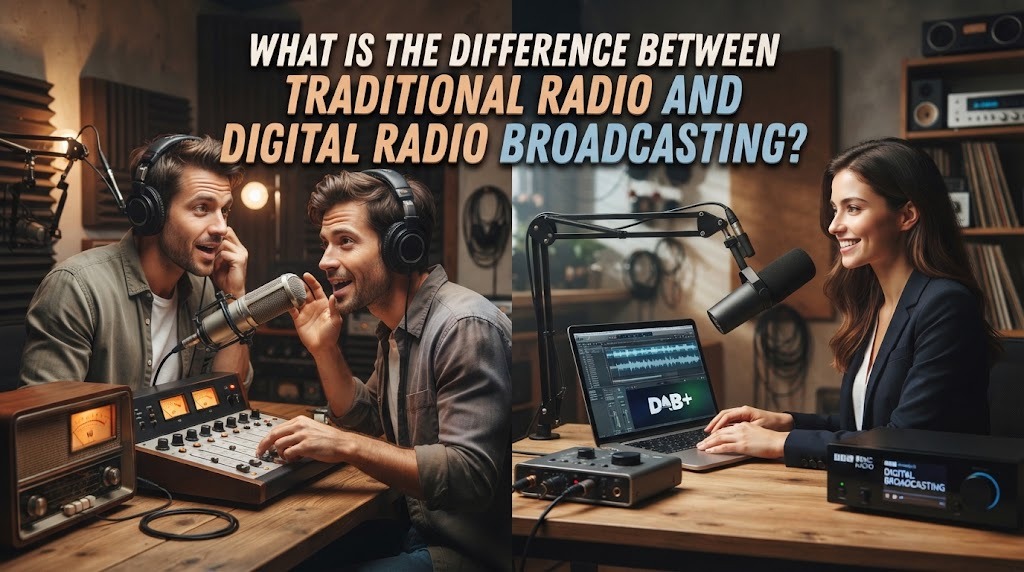
Traditional radio and digital radio broadcasting are two ways of delivering audio content to listeners. Traditional radio generally uses analog AM or FM signals, while digital radio converts audio into digital data before transmission. Both can provide music, news, entertainment, and other useful information. However, they differ in technology, sound quality, equipment, and additional features. Understanding these differences is important as radio continues to develop alongside digital technology.
WHAT IS TRADITIONAL RADIO BROADCASTING?
Traditional radio broadcasting uses analog signals to send audio from a radio station to listeners. AM and FM are the most common forms of traditional radio. Listeners can receive these broadcasts using compatible radio receivers without needing an internet connection. The quality of reception can be affected by distance, buildings, terrain, and signal interference. Despite these limitations, traditional radio remains popular because it is simple and accessible.
Traditional radio is also important for local information and community programming. Radio stations can provide news, traffic updates, music, interviews, and public announcements for audiences in their coverage areas. Listeners can easily tune in without creating an account or paying for an internet service. This makes traditional radio useful in situations where internet access is limited. Its simple technology is one reason why it continues to have an important role in broadcasting.
WHAT IS DIGITAL RADIO BROADCASTING?
Digital radio broadcasting uses digital technology to encode audio as data before it is transmitted. Compatible receivers then convert this information back into sound for listeners. Depending on the system, digital radio can provide clearer audio and additional information compared with traditional analog broadcasting. Some digital radio services can display station names, program information, or song details. The exact features depend on the broadcasting standard and equipment being used.
Digital radio should also be distinguished from internet radio. Digital terrestrial radio uses dedicated broadcasting technology, while internet radio distributes audio through an internet connection. Both use digital technology, but their transmission methods are different. Internet radio can be accessed through smartphones, computers, and other connected devices. This gives digital audio services greater flexibility in reaching audiences.
DIFFERENCES IN AUDIO QUALITY
Audio quality is one of the main differences between traditional and digital radio. Traditional analog broadcasts can develop static, hiss, or distortion when the signal becomes weak or experiences interference. Digital radio can provide clearer and more stable audio when the digital signal is received properly. This can make music, interviews, and spoken content more comfortable to listen to. However, digital radio does not guarantee perfect sound in every situation.
When a digital signal becomes too weak, the audio may break up or disappear completely. Traditional analog radio may still produce understandable sound even when its reception is poor, although it can contain noticeable noise. Therefore, the better listening experience depends on signal strength, technology, equipment, and location. Digital radio can offer technical advantages, but its performance still depends on the quality of the broadcasting system.
DIFFERENCES IN EQUIPMENT AND ACCESS
Traditional radio can be received through standard AM or FM receivers. These receivers are commonly found in portable radios, vehicles, and other devices. Digital terrestrial radio requires a receiver that supports the relevant digital broadcasting standard. A normal analog radio cannot automatically decode a digital radio signal. This means listeners may need different equipment when moving from traditional to digital broadcasting.
Internet based radio has different requirements because listeners need an internet connected device. Smartphones, tablets, computers, and smart speakers can be used to access many online radio services. This provides convenient access to stations from different locations, but it depends on internet availability and data connectivity. Traditional radio can therefore remain more convenient in places with limited internet access.
DIFFERENCES IN ADDITIONAL FEATURES
Traditional radio mainly focuses on delivering audio content to listeners. Some services may provide limited supplementary information, but the experience is primarily based on sound. Digital radio can support additional data depending on the broadcasting system. Listeners may receive information such as station identification, program details, or song information on compatible devices. These features can make digital broadcasting more informative.
Internet based digital services can offer even more functions. Listeners may be able to access podcasts, recorded programs, playlists, or other content outside the normal broadcast schedule. Some platforms also provide online interaction through websites and social media. These features give audiences greater control over how and when they consume audio content. As a result, digital technology allows radio to become more flexible than traditional broadcasting alone.
WHICH ONE IS BETTER?
There is no single answer to which type of radio is better because both have different advantages. Traditional radio is convenient for listeners who want simple access without an internet connection. Digital radio can be attractive to people who want clearer audio and additional information. Internet radio is useful for audiences who want to access stations from different locations through connected devices. The best option depends on the listener's location, equipment, internet access, and personal preferences.
For broadcasters, using both traditional and digital platforms can provide broader audience reach. A station can continue serving local listeners through conventional broadcasting while using digital platforms to reach audiences online. This approach also allows broadcasters to adapt to changing listening habits. Rather than completely replacing traditional radio, digital technology can complement existing broadcasting systems. This combination can help radio remain relevant in the modern media environment.
CONCLUSION
The difference between traditional radio and digital radio broadcasting mainly involves transmission technology, audio quality, equipment, and additional features. Traditional radio generally uses analog AM or FM signals and does not require internet access. Digital radio uses digitally encoded information and can provide clearer audio and supplementary data when supported by the system. Internet radio is another form of digital audio that uses internet connections to distribute content.
Both traditional and digital radio have important advantages. Traditional radio remains practical because of its accessibility and simple listening process, while digital broadcasting provides new possibilities for audio quality, information, and audience engagement. As technology continues to develop, broadcasters can combine both approaches to reach different types of listeners. This makes radio more adaptable to the changing needs of modern audiences.
Recent Posts

Bagaimana Sistem SKS pada Program Kuliah... 22.11.2026/35 View

How Does Technology Make Daily Evaluation... 21.11.2026/69 View

Apa Strategi Menghadapi Kesenjangan antara Kompetensi... 21.11.2026/69 View

Mengapa Inventaris Aset Penting bagi Kelancaran... 21.11.2026/67 View

When Should Musicians Join a Record... 21.11.2026/68 View
