

What Is the Future Career Outlook for Professional Designers?
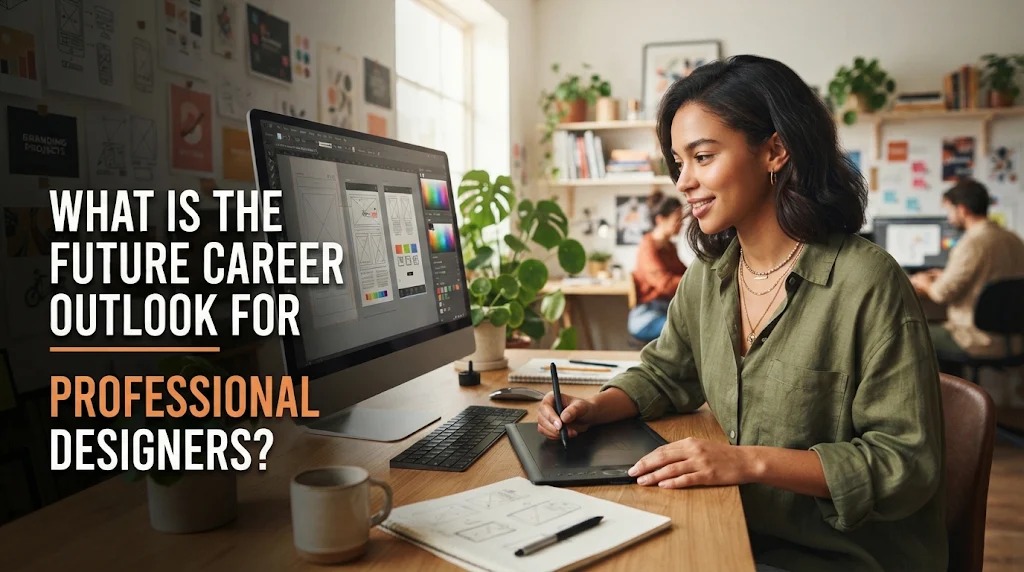
The design industry continues to evolve as technology, digital communication, and business needs create new opportunities for creative professionals. Professional designers play an important role in helping companies build strong brand identities, communicate information, develop digital products, and attract customers. As businesses increasingly depend on online platforms, the demand for different types of design skills continues to change.
The future career outlook for professional designers is influenced by several factors, including technological developments, artificial intelligence, changing consumer preferences, and the growth of digital businesses. Although some traditional design tasks may become automated, human creativity, critical thinking, and problem-solving remain valuable. Designers who continuously improve their abilities and adapt to industry changes can find opportunities in various creative fields.
GROWING OPPORTUNITIES IN DIGITAL AND CREATIVE INDUSTRIES
One of the most promising aspects of the design profession is the expansion of digital industries. Businesses increasingly need visual content to promote products, communicate with customers, and establish recognizable brand identities. This creates opportunities for designers in advertising, digital marketing, e-commerce, entertainment, education, and technology. Companies also need professionals who can develop attractive websites, mobile applications, social media graphics, and digital campaigns.
Several design specializations may offer particularly interesting career opportunities. Graphic designers can focus on branding, visual identity, illustration, and digital advertising. UI UX designers can work on website interfaces, mobile applications, and digital product experiences. Motion designers and multimedia designers can also explore opportunities in animation, video production, and interactive media.
According to the U.S. Bureau of Labor Statistics, employment for web and digital interface designers is projected to grow by 6 percent between 2025 and 2035. This reflects the continuing importance of digital platforms and online experiences. Although these figures represent the United States rather than the entire global job market, they illustrate the potential of specialized digital design careers.
THE IMPACT OF ARTIFICIAL INTELLIGENCE ON DESIGN CAREERS
Artificial intelligence is changing how professional designers complete their work. AI-powered applications can help generate visual concepts, edit images, suggest layouts, and automate repetitive tasks. These technologies allow designers to explore ideas more quickly and spend additional time improving creative decisions. As a result, understanding how to use AI tools effectively can become an important advantage in the design industry.
However, artificial intelligence also creates challenges for certain design occupations. Some basic design tasks can now be completed using automated platforms, which may increase competition and reduce demand for particular types of work. The World Economic Forum's Future of Jobs Report 2025 identifies graphic designers among the roles facing potential decline due to advances in generative AI and information-processing technologies.
Despite these changes, professional designers still provide important abilities that technology cannot fully replace. Understanding client expectations, developing original concepts, making strategic decisions, and solving complex communication problems require human judgment. Designers who combine creativity with technological knowledge can use AI as a supporting tool rather than viewing it only as a competitor. The future of design will increasingly involve collaboration between human creativity and digital technology.
SKILLS THAT WILL BE IMPORTANT FOR FUTURE DESIGNERS
Professional designers will need to develop a combination of creative, technical, and interpersonal skills to remain competitive. Creativity is important because businesses need original visual solutions that help their products and services stand out. However, creativity alone is not enough to meet the expectations of modern clients and employers. Designers must also understand technology, industry developments, and the needs of their target audiences.
Digital skills will become increasingly valuable as design activities continue to move toward online platforms. Knowledge of design software, interface development, digital illustration, animation, and AI-assisted workflows can help professionals handle different types of projects. UI UX designers, for example, need to understand user research, prototyping, accessibility, and interaction design. Graphic designers should also continue improving their abilities in branding, visual communication, and digital content creation.
In addition to technical abilities, communication, teamwork, adaptability, and critical thinking are important for long-term career development. Designers frequently collaborate with clients, marketing teams, developers, and other creative professionals. They must be able to explain their ideas, accept constructive feedback, and adjust their work according to project requirements. Continuous learning will help them respond to changing technologies and maintain their professional value.
FREELANCE, REMOTE WORK, AND INTERNATIONAL CAREER OPPORTUNITIES
The future of professional designers is not limited to traditional office employment. Freelancing and remote work provide alternative career paths for people who want greater flexibility in managing their schedules and projects. Designers can offer services to businesses, startups, individuals, and international clients without always working from the same location. This creates opportunities for professionals to reach broader markets and develop diverse work experiences.
Freelance designers can specialize in services such as logo creation, branding, illustration, website design, social media content, and digital advertising. They can promote their services through professional portfolios, freelance platforms, and social media. Building a strong reputation, maintaining good communication, and delivering quality work are essential for attracting long-term clients. Designers who manage their projects and finances effectively may also develop independent creative businesses.
Remote employment can also allow designers to collaborate with international companies and creative teams. However, this working arrangement requires discipline, time management, and the ability to communicate effectively across different locations and time zones. A professional portfolio, relevant experience, and strong digital skills can improve access to these opportunities. By exploring different working arrangements, designers can build careers that match their abilities and professional goals.
CONCLUSION
The future career outlook for professional designers offers both opportunities and challenges. The growth of digital industries, increasing demand for online content, and expansion of technology create new possibilities for creative professionals. At the same time, artificial intelligence and automation are changing traditional design activities and increasing the importance of specialized skills.
To remain competitive, designers need to improve their technical knowledge, develop creative thinking, understand emerging technologies, and build strong professional portfolios. They should also remain adaptable and willing to explore new career opportunities, including freelance and remote work.
Ultimately, professional designers who continuously learn and combine human creativity with technological knowledge can prepare themselves for changes in the industry. Although the design profession will continue to evolve, creative problem-solving and effective visual communication will remain important in helping businesses and communities communicate their ideas.
Recent Posts

How Does Technology Make Daily Evaluation... 21.11.2026/58 View

Apa Strategi Menghadapi Kesenjangan antara Kompetensi... 21.11.2026/60 View

Mengapa Inventaris Aset Penting bagi Kelancaran... 21.11.2026/56 View

When Should Musicians Join a Record... 21.11.2026/55 View

Daily Evaluation or Daily Planning Which... 21.11.2026/63 View
