

What Is the Future of Attendance Journals with Artificial Intelligence Technology?
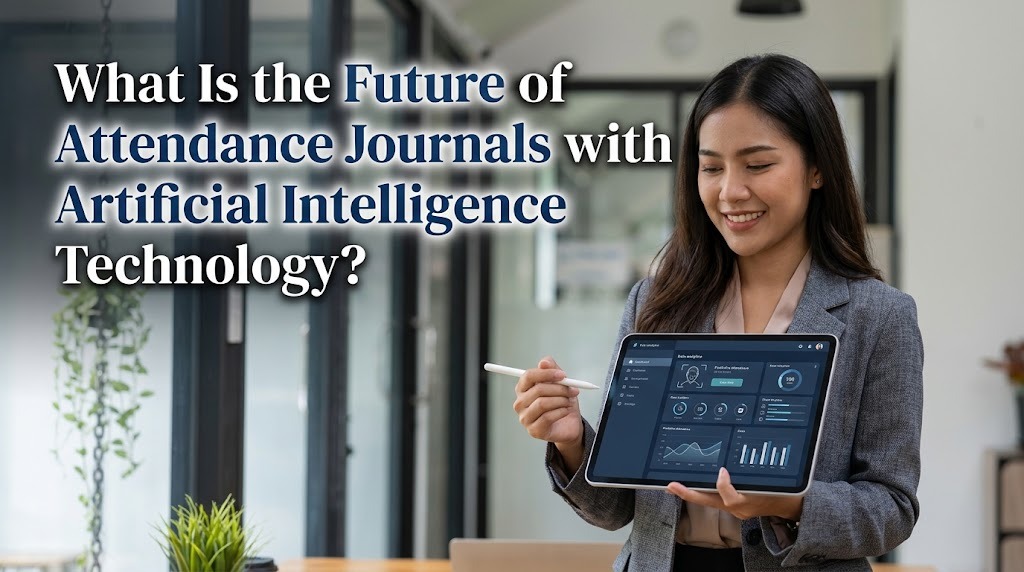
Artificial intelligence is changing how businesses manage employee attendance and organize workplace information. Traditional attendance journals rely on manual entries or basic digital systems to record working hours, absences, and lateness. Although these methods remain useful, they may require considerable administrative effort and make it difficult to identify attendance patterns quickly. With the development of artificial intelligence technology, attendance management can become more automated, data-driven, and efficient.
In the future, AI-powered attendance journals may help organizations analyze attendance trends, detect unusual records, forecast staffing needs, and generate reports automatically. When integrated with attendance applications and human resources systems, AI can help managers make better-informed operational decisions. However, these benefits depend on reliable data, appropriate system design, and responsible implementation. Data privacy, accuracy, fairness, and human oversight will remain essential as businesses adopt increasingly intelligent attendance management solutions.
AUTOMATING ATTENDANCE RECORDING AND ADMINISTRATION
One important development in AI-powered attendance journals is the potential to automate routine administrative tasks. Modern attendance systems can already record timestamps electronically, calculate working hours, and generate summaries. AI may extend these capabilities by helping organize attendance information, identifying incomplete entries, and assisting administrators with routine reporting. This can reduce repetitive work and allow human resources teams to focus on more complex responsibilities.
For example, an intelligent system may flag a missing check-in or identify an entry that appears inconsistent with an employee's schedule. The administrator can then review the issue and request clarification when necessary. However, AI should not automatically assume that every unusual entry represents misconduct because technical failures, approved schedule changes, and legitimate absences can produce similar patterns. Automation supported by human verification can improve efficiency while maintaining reliable attendance records.
ANALYZING ATTENDANCE PATTERNS WITH ARTIFICIAL INTELLIGENCE
AI can analyze large amounts of attendance information to identify patterns that may be difficult to recognize through manual review. For example, a system may highlight recurring lateness, frequent absences, or staffing shortages during particular shifts. These insights can help managers investigate operational problems and identify areas where scheduling procedures may need improvement. By processing records more quickly, AI may also support more timely attendance reporting.
Nevertheless, attendance patterns must be interpreted carefully. Repeated lateness may result from transportation difficulties, changing work schedules, or other circumstances rather than a lack of discipline. AI systems can also produce misleading results when the underlying data is incomplete or inaccurate. AI-based attendance analysis should support investigation rather than replace professional judgment, ensuring that decisions consider relevant context and allow employees to explain unusual circumstances.
IMPROVING WORKFORCE PLANNING AND PRODUCTIVITY
AI-powered attendance journals may help businesses improve workforce planning by combining attendance records with approved schedules and operational requirements. By analyzing historical information, certain systems may estimate periods when staffing shortages are more likely to occur. Managers can use these insights to review shift arrangements, prepare backup staffing, and coordinate workloads more effectively. This may be especially useful for organizations with multiple departments or changing employee schedules.
For example, a business that frequently experiences staffing shortages during busy periods could use attendance reports to review scheduling practices and staffing requirements. AI-assisted forecasting may help identify patterns, but it cannot guarantee that future absences or staffing needs will be predicted correctly. Unexpected events and changes in employee circumstances can affect the results. Combining AI insights with employee communication and practical planning can support productivity without treating predictions as certain outcomes.
STRENGTHENING INTEGRATION WITH DIGITAL BUSINESS SYSTEMS
The future of attendance journals will likely involve closer integration with other digital business applications. Attendance platforms may connect with payroll software, employee scheduling tools, human resources systems, and workforce planning applications. AI could help organize information across these systems, identify inconsistencies, and produce summaries for authorized users. This integration may reduce duplicated data entry and improve coordination between administrative departments.
For example, verified attendance information could help payroll teams review working hours and overtime records more efficiently. Managers may also compare attendance information with approved schedules to identify discrepancies requiring investigation. However, businesses must ensure that connected systems exchange information accurately and follow appropriate access controls. Integrated attendance management systems can improve administrative efficiency when organizations maintain consistent data standards, clear responsibilities, and reliable verification procedures.
PROTECTING EMPLOYEE PRIVACY AND ENSURING FAIRNESS
As AI becomes more common in attendance management, protecting employee privacy will be increasingly important. AI-enabled systems may process personal information such as working hours, absence records, and, in some cases, location or biometric data. Businesses should collect only information that is necessary for legitimate purposes and explain how it will be used. Access to attendance records should be restricted to authorized individuals, with suitable security measures to prevent unauthorized disclosure.
Fairness is equally important because AI systems may produce inaccurate conclusions when trained on incomplete, biased, or unrepresentative data. For instance, an automated system could incorrectly flag legitimate attendance variations as suspicious. Organizations should test systems for errors, provide ways to challenge inaccurate records, and ensure that significant employment decisions receive appropriate human review. Privacy protection, transparent policies, and human accountability must guide the responsible use of AI in attendance management.
PREPARING BUSINESSES FOR THE FUTURE OF AI ATTENDANCE
Businesses can prepare for AI-powered attendance journals by improving their existing recordkeeping practices and identifying areas where automation would provide genuine benefits. Accurate historical data, consistent attendance policies, and clearly defined procedures are essential foundations for any intelligent system. Organizations should also evaluate available technology based on reliability, security, compatibility, and cost rather than adopting AI simply because it is a new trend.
Employee training and clear communication will also be necessary during implementation. Workers should understand how attendance is recorded, what information the system analyzes, and how they can report mistakes. Businesses may begin with limited features, evaluate their effectiveness, and expand gradually when the results justify further investment. Responsible implementation and continuous evaluation will help organizations adopt useful technology while minimizing operational risks and maintaining employee trust.
CONCLUSION
The future of attendance journals will likely involve greater automation, AI-powered analysis, improved workforce forecasting, and closer integration with business systems. These developments may help organizations reduce administrative work, recognize attendance patterns, and make better-informed staffing decisions. However, AI cannot eliminate every error or replace the need for human judgment, fair policies, and accurate data. Businesses that prioritize responsible AI adoption, employee privacy, data quality, and transparent procedures will be better prepared to use intelligent attendance journals effectively.
Recent Posts

Bagaimana Sistem SKS pada Program Kuliah... 22.11.2026/57 View

How Does Technology Make Daily Evaluation... 21.11.2026/86 View

Apa Strategi Menghadapi Kesenjangan antara Kompetensi... 21.11.2026/84 View

Mengapa Inventaris Aset Penting bagi Kelancaran... 21.11.2026/82 View

When Should Musicians Join a Record... 21.11.2026/86 View
