

What Is the Future of Indonesian Regional Languages in an Increasingly Digital World?
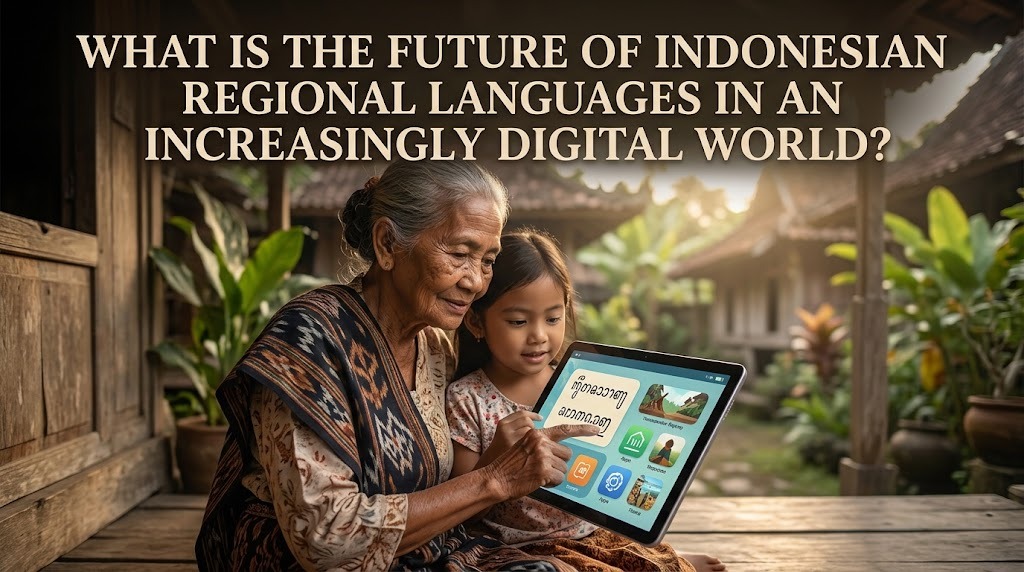
Indonesia is home to hundreds of regional languages that reflect the cultural identity, history, and traditions of its diverse communities. These languages have been passed down through generations and remain important for communication, storytelling, and cultural preservation. However, the rapid development of digital technology is changing how people communicate, learn, and share information. Indonesian and global languages are widely used on social media, digital platforms, and online educational resources, creating both opportunities and challenges for regional languages. The future of Indonesian regional languages depends on how effectively communities combine digital innovation with everyday language use and cultural preservation.
DIGITAL TECHNOLOGY CREATES NEW OPPORTUNITIES FOR REGIONAL LANGUAGES
Digital technology allows regional languages to reach audiences beyond their traditional communities. Websites, social media platforms, online videos, and mobile applications can introduce local vocabulary, pronunciation, stories, and cultural expressions to younger generations. People who live far from their hometowns can also use digital communication to maintain connections with family members and continue practicing their regional languages. These opportunities are particularly valuable for communities whose members have migrated to other cities or countries. Digital platforms can make regional languages more accessible by connecting speakers across geographical boundaries.
For example, content creators can produce short videos teaching common expressions in Javanese, Sundanese, Balinese, or other regional languages. Online communities can share traditional stories, songs, and conversations that might otherwise receive limited public attention. Digital archives can also preserve recordings of native speakers and document vocabulary that is becoming less familiar to younger generations. However, these resources need to be created carefully to ensure linguistic accuracy and respect for cultural traditions. When digital tools are used responsibly, they can strengthen the visibility and accessibility of regional languages.
SOCIAL MEDIA CAN ENCOURAGE YOUNGER GENERATIONS TO USE LOCAL LANGUAGES
Social media plays an important role in shaping how young Indonesians communicate. Many young people use digital platforms to share opinions, express emotions, and participate in popular trends. When regional languages appear in entertaining videos, captions, music, and online conversations, they can become more attractive to younger audiences. Humor, storytelling, and everyday expressions can demonstrate that regional languages are relevant to modern lifestyles. Young people are more likely to appreciate regional languages when they see them being used creatively in spaces they already enjoy.
Nevertheless, social media can also contribute to declining language use when most online communication happens in Indonesian or other widely used languages. Young speakers may understand their regional language but rarely use it in writing or conversation. To address this challenge, creators can produce engaging content that combines regional languages with subtitles, translations, and explanations. Schools and community organizations can also encourage students to create podcasts, digital stories, and short educational videos. These activities give young people practical reasons to use their languages while sharing local culture with a wider audience.
ARTIFICIAL INTELLIGENCE CAN SUPPORT LANGUAGE LEARNING AND DOCUMENTATION
Artificial intelligence offers new possibilities for documenting and learning regional languages. Language technologies can potentially support digital dictionaries, speech recognition, translation tools, pronunciation guides, and interactive learning applications. These resources may help learners understand unfamiliar words and practice conversations at their own pace. They can also assist researchers in organizing linguistic materials and identifying patterns in recorded speech. AI can contribute to regional language preservation, but its effectiveness depends on the availability and quality of language data.
Many regional languages have limited digital resources compared with Indonesian or widely used international languages. As a result, AI systems may produce inaccurate translations, misunderstand local expressions, or struggle to recognize different accents and dialects. Communities, language experts, and technology developers need to collaborate when collecting and reviewing language materials. They should also obtain appropriate consent from speakers and establish clear rules for protecting cultural knowledge and personal information. AI should therefore be treated as a supporting tool rather than a replacement for fluent speakers, teachers, and community knowledge.
EDUCATION CAN CONNECT DIGITAL LEARNING WITH REGIONAL LANGUAGE PRESERVATION
Schools and universities can help ensure that regional languages remain relevant in an increasingly digital society. Teachers can use digital dictionaries, recorded stories, educational videos, and interactive exercises to introduce students to local vocabulary and cultural expressions. Students can also conduct projects documenting traditional sayings, interviewing older speakers, or creating digital presentations about their regional languages. These activities encourage active learning and help students understand the relationship between language and cultural identity. Combining classroom instruction with digital resources can make regional language education more engaging and accessible.
However, digital materials alone cannot guarantee that students will become fluent speakers. Learners also need opportunities to practice speaking and listening with family members, teachers, and other fluent speakers. Educational institutions can organize language clubs, storytelling sessions, traditional performances, and community-based learning activities. Universities may contribute by conducting research, documenting endangered languages, and developing learning materials in cooperation with local communities. Through these combined efforts, education can help younger generations use regional languages confidently in both traditional and modern settings.
COMMUNITY PARTICIPATION WILL DETERMINE THE FUTURE OF REGIONAL LANGUAGES
Technology can provide useful resources, but communities remain central to the survival of their languages. Regional languages are most likely to remain active when people continue using them in everyday conversations, family activities, cultural events, and community gatherings. Parents can encourage children to speak their regional language at home, while older speakers can share stories, songs, and traditional expressions. Local organizations can create opportunities for people of different ages to learn from one another. A regional language has a stronger future when it remains a living means of communication rather than existing only in digital archives.
Community participation also helps ensure that preservation efforts reflect local priorities. Some communities may want to focus on teaching children, while others may prioritize documenting rare vocabulary or recording traditional stories. Young people can contribute by creating digital content, developing language-learning materials, and sharing their knowledge with friends. Governments, educational institutions, and technology companies can support these initiatives through funding, training, and accessible digital infrastructure. Successful preservation requires cooperation that respects the knowledge and decisions of the people who speak each language.
BALANCED LANGUAGE USE CAN PROTECT LINGUISTIC DIVERSITY IN THE FUTURE
The future of regional languages does not require Indonesians to abandon Indonesian or avoid learning international languages. Indonesian remains essential for communication among people from different regions, while international languages can provide access to global education and employment opportunities. Regional languages serve another important purpose by preserving local identities, traditional knowledge, and connections between generations. People can benefit from using different languages according to their needs and social environments. A multilingual approach allows national communication and global participation to develop alongside regional language preservation.
Achieving this balance requires consistent action in both digital and offline environments. Families can maintain regional language conversations at home, schools can provide meaningful learning opportunities, and content creators can produce more materials in local languages. Technology developers can improve language tools by working with native speakers and supporting languages that have limited digital representation. Communities can also evaluate whether preservation programs are helping younger generations understand and actively use their languages. With sustained commitment, digital progress can become an opportunity to strengthen Indonesia's linguistic diversity rather than a force that weakens it.
CONCLUSION
The future of Indonesian regional languages in an increasingly digital world will depend on the relationship between technology, education, family communication, and community participation. Social media, digital archives, and artificial intelligence can expand access to language resources, but they cannot replace regular communication between speakers. Schools and families must create opportunities for younger generations to practice regional languages in meaningful situations. At the same time, digital initiatives should respect local traditions, protect speakers' rights, and ensure that language materials remain accurate. By combining modern technology with everyday language use, Indonesia can preserve its regional languages and pass its rich cultural heritage on to future generations.
Recent Posts

Bagaimana Sistem SKS pada Program Kuliah... 22.11.2026/49 View

How Does Technology Make Daily Evaluation... 21.11.2026/77 View

Apa Strategi Menghadapi Kesenjangan antara Kompetensi... 21.11.2026/78 View

Mengapa Inventaris Aset Penting bagi Kelancaran... 21.11.2026/74 View

When Should Musicians Join a Record... 21.11.2026/79 View
