

What Is the Future of Social Volunteering in the Modern Era?
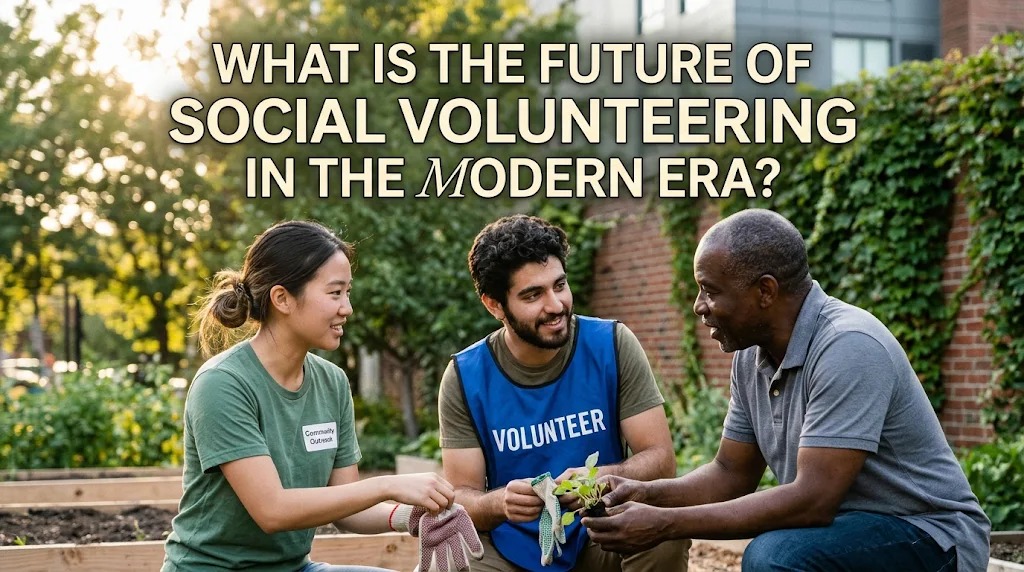
Social volunteering continues to play an important role in helping communities address social problems and improve people's quality of life. In the modern era, volunteer activities are changing as technology, communication, and social needs continue to develop. Traditional volunteering, which usually involves direct participation in community activities, is now supported by digital platforms, online campaigns, and virtual collaboration. These changes create more opportunities for people to contribute, even when they have limited time or live far from the communities they want to support.
The future of social volunteering is expected to become more flexible, inclusive, and technology-driven. Young people, community organizations, educational institutions, and businesses can work together through different digital and offline programs. At the same time, volunteers will need to develop new skills to respond to challenges such as environmental problems, social inequality, public health issues, and digital literacy. Understanding these developments is important for building volunteer activities that remain relevant and provide meaningful benefits to society.
THE ROLE OF TECHNOLOGY IN THE FUTURE OF SOCIAL VOLUNTEERING
Technology will play an increasingly important role in the development of social volunteering. Digital platforms allow organizations to share volunteer opportunities, recruit participants, coordinate activities, and distribute information more efficiently. Through websites and mobile applications, people can discover social programs that match their interests, skills, and availability. This makes volunteering more accessible to individuals who may not have previously known how to participate.
Social media also provides new ways to promote volunteer activities and encourage public participation. Organizations can use digital campaigns to raise awareness, collect donations, and share information about community needs. In addition, communication tools make it easier for volunteers from different locations to coordinate projects and exchange ideas. However, technology should support direct community involvement rather than completely replace personal interaction when face-to-face assistance is necessary.
THE GROWTH OF ONLINE AND VIRTUAL VOLUNTEERING
Online volunteering is expected to become more common because it allows people to contribute without always being physically present. Volunteers can support organizations through activities such as writing educational materials, translating documents, designing graphics, managing social media accounts, and providing online mentoring. These activities are especially useful for individuals with digital skills who want to contribute their abilities to social causes. They also provide opportunities for people who face transportation, distance, or scheduling limitations.
Virtual volunteering can also connect organizations with skilled individuals from different countries and professional backgrounds. For example, a volunteer with teaching experience can provide online learning assistance, while someone with graphic design skills can create promotional materials for a nonprofit organization. Despite these advantages, online volunteering requires reliable communication, clear responsibilities, and appropriate supervision. Organizations must also consider internet access and digital skills so that technology does not exclude communities with limited resources.
YOUNG GENERATIONS AND THE DEVELOPMENT OF SOCIAL VOLUNTEERING
Young people are expected to become important contributors to the future of social volunteering. Many young individuals are familiar with digital technology, social media, and online communication, allowing them to introduce creative approaches to community programs. They can organize digital campaigns, develop educational content, promote environmental awareness, and encourage others to participate in social activities. Their creativity and ability to adapt to new technologies can help volunteer organizations reach wider audiences.
Educational institutions can also support this development by introducing community service programs, student organizations, internships, and social projects. Through these opportunities, students can apply their knowledge while understanding real problems in society. Volunteering can also help young people develop leadership, teamwork, communication, and problem-solving skills. With proper guidance, their participation can become a valuable contribution to both personal development and community improvement.
NEW SOCIAL CHALLENGES AND VOLUNTEERING OPPORTUNITIES
The future of social volunteering will be influenced by changing social and environmental challenges. Climate change, natural disasters, poverty, unequal access to education, and public health problems will continue to create needs for community support. Volunteers can contribute through environmental campaigns, disaster preparedness programs, educational assistance, and public health awareness activities. These efforts can help communities become more prepared and resilient when facing different difficulties.
Another growing area is digital inclusion, which focuses on helping people access and use technology effectively. Volunteers can assist children, elderly people, and communities with limited digital experience by teaching basic computer skills, internet safety, and the use of digital services. This support is important because technology is increasingly used in education, employment, communication, and public services. By addressing these challenges, social volunteering can help reduce inequalities and create more opportunities for different groups in society.
BUILDING MORE INCLUSIVE AND SUSTAINABLE VOLUNTEER PROGRAMS
Future volunteer programs will need to focus not only on short-term assistance but also on sustainable community development. Instead of providing temporary support alone, organizations can create programs that help communities develop skills, access resources, and become more independent. Examples include vocational training, educational mentoring, environmental conservation, and small business development programs. These activities can produce longer-lasting benefits when they are designed according to actual community needs.
Inclusivity will also become an important part of effective volunteering. Organizations should provide opportunities for people with different ages, abilities, educational backgrounds, and economic conditions to participate. They should also respect local cultures, protect the privacy of people receiving assistance, and ensure that volunteer activities do not create additional problems for communities. By combining sustainability, equality, and responsible participation, social volunteering can become more effective and beneficial in the modern era.
CONCLUSION
The future of social volunteering will be shaped by technological development, online participation, young generations, and changing community needs. Digital platforms and virtual volunteering will create more flexible opportunities, while direct community activities will remain important for providing personal support. At the same time, volunteer organizations will need to focus on inclusivity, sustainability, and practical solutions to social challenges. With cooperation between individuals, educational institutions, organizations, and communities, social volunteering can continue to create meaningful and lasting positive changes.
Recent Posts

Bagaimana Sistem SKS pada Program Kuliah... 22.11.2026/25 View

How Does Technology Make Daily Evaluation... 21.11.2026/64 View

Apa Strategi Menghadapi Kesenjangan antara Kompetensi... 21.11.2026/65 View

Mengapa Inventaris Aset Penting bagi Kelancaran... 21.11.2026/62 View

When Should Musicians Join a Record... 21.11.2026/61 View
