

What Is the General Elections Commission and How Does It Work in Indonesia?
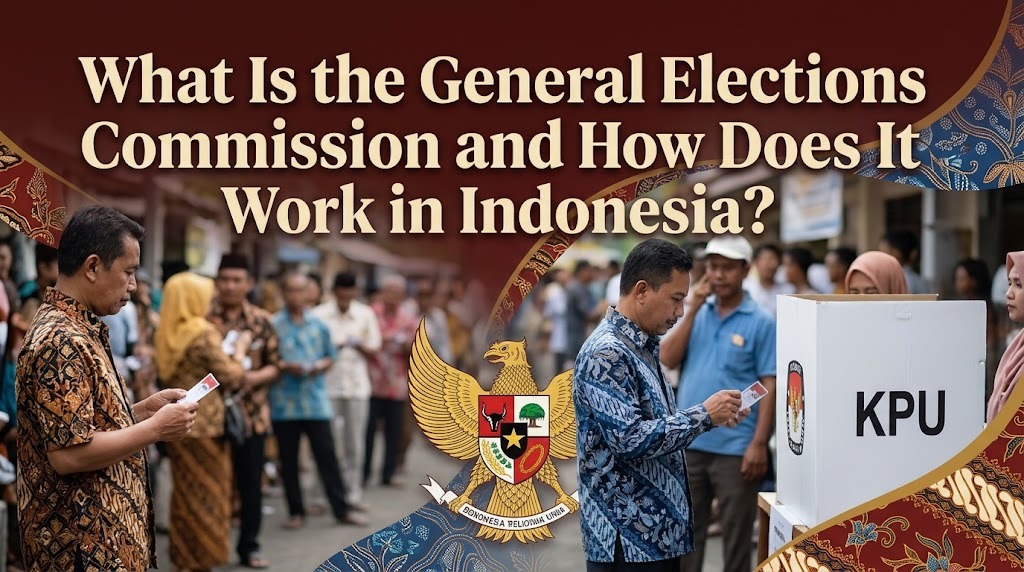
The General Elections Commission (KPU) is an independent institution responsible for organizing general elections in Indonesia. It plays an essential role in ensuring that elections are conducted in an orderly, fair, transparent, and democratic manner. Through this institution, Indonesian citizens can exercise their constitutional right to vote and choose their national and regional leaders.
The KPU manages various election processes, starting from preparation and voter registration to vote counting and the announcement of official results. Its responsibilities also include coordinating election activities across different regions and providing accurate information to the public. Understanding how the KPU works is important because its performance directly influences the quality of democracy and public trust in Indonesia's electoral system.
UNDERSTANDING THE GENERAL ELECTIONS COMMISSION IN INDONESIA
The General Elections Commission, commonly known as Komisi Pemilihan Umum or KPU, is an independent state institution established to organize elections in Indonesia. Its existence is based on the Indonesian Constitution and election legislation, particularly Law Number 7 of 2017 concerning General Elections. The institution operates independently and is expected to perform its responsibilities without interference from political parties, government authorities, or other interested groups.
The KPU organizes elections for the President and Vice President, members of the House of Representatives (DPR), Regional Representative Council (DPD), and Regional People's Representative Councils (DPRD). It also organizes regional head elections according to applicable regulations. Through these responsibilities, the KPU provides an organized system that allows citizens to participate in choosing their representatives and leaders.
THE MAIN STRUCTURE OF THE ELECTION COMMISSION
The KPU has a structured organization that operates at several administrative levels throughout Indonesia. At the national level, the central KPU is responsible for establishing general policies, coordinating national election activities, and overseeing the implementation of electoral regulations. Its decisions provide direction for election organizers working at provincial and regency or city levels.
At the regional level, there are Provincial KPU offices and Regency or City KPU offices that manage election activities within their respective areas. These institutions coordinate with temporary election bodies, including the District Election Committee (PPK), Voting Committee (PPS), and Polling Station Working Committee (KPPS). This organizational structure helps ensure that election activities can reach communities across Indonesia, including remote and geographically challenging areas.
HOW THE KPU PREPARES FOR GENERAL ELECTIONS
Preparing for an election requires careful planning because the process involves millions of voters, thousands of candidates, and numerous polling stations. The KPU begins by preparing election programs, budgets, schedules, and technical regulations. These preparations are important to ensure that every stage follows a clear procedure and is completed within the established timeframe.
Another important responsibility is updating voter data and establishing the Permanent Voter List (DPT). The KPU coordinates with relevant government institutions to obtain population information and verify voter eligibility. It also prepares election logistics, including ballot papers, ballot boxes, voting booths, and other necessary equipment. Proper preparation helps prevent administrative problems and supports the smooth implementation of election activities.
THE ELECTION PROCESS AND VOTING PROCEDURES
The election process consists of several stages that must be completed according to applicable laws and regulations. These stages generally include election planning, political party registration and verification, candidate nomination, campaign periods, voting, vote counting, and the determination of election results. Each stage has specific requirements designed to maintain order and provide equal opportunities for election participants.
On voting day, eligible citizens visit their assigned polling stations to exercise their voting rights. Election officers verify voter identities and provide the appropriate ballot papers. After voting ends, officers count the ballots in accordance with established procedures, while witnesses and election supervisors can observe the process. The results are then recorded and submitted through a gradual vote recapitulation process from polling stations to higher administrative levels.
HOW THE KPU MAINTAINS TRANSPARENCY AND PUBLIC TRUST
Transparency is one of the most important principles in organizing democratic elections. The KPU provides election-related information through official announcements, public information services, and digital platforms. This allows citizens, political parties, journalists, and other stakeholders to monitor important developments throughout the electoral process.
The KPU also works alongside the Election Supervisory Agency (Bawaslu), which has the responsibility of supervising election implementation and handling election violations according to its legal authority. Public participation is equally important because citizens can report suspected irregularities and monitor activities in their communities. By providing accessible information and maintaining accountability, the KPU can strengthen public confidence in the election process.
THE IMPORTANCE OF THE KPU FOR INDONESIAN DEMOCRACY
The KPU has an important position in maintaining the continuity of democracy in Indonesia. Through professionally organized elections, citizens have opportunities to determine their political representatives and national or regional leaders. The institution also helps ensure that election participants receive fair treatment and that voting procedures follow established regulations.
However, organizing elections in a large and diverse country presents several challenges, including geographical difficulties, logistical distribution, inaccurate voter data, misinformation, and potential administrative violations. The KPU must continuously improve its professional standards, use appropriate technology, and strengthen coordination with other institutions. Public participation and institutional accountability are also essential to creating elections that are credible and trusted by society.
CONCLUSION
The General Elections Commission (KPU) is a key institution responsible for organizing democratic elections in Indonesia. Its work covers election planning, voter registration, logistics preparation, voting procedures, vote counting, and the announcement of official results. Supported by its national and regional organizational structure, the KPU works to ensure that elections are conducted in accordance with applicable laws.
The success of an election does not depend solely on the KPU but also requires cooperation between government institutions, election participants, supervisors, and the public. By maintaining independence, transparency, professionalism, and accountability, the KPU can help strengthen Indonesian democracy and protect citizens' voting rights.
Recent Posts

Bagaimana Sistem SKS pada Program Kuliah... 22.11.2026/47 View

How Does Technology Make Daily Evaluation... 21.11.2026/74 View

Apa Strategi Menghadapi Kesenjangan antara Kompetensi... 21.11.2026/76 View

Mengapa Inventaris Aset Penting bagi Kelancaran... 21.11.2026/72 View

When Should Musicians Join a Record... 21.11.2026/76 View
