

What Is the Government Doing to Protect Regional Languages in Indonesia?
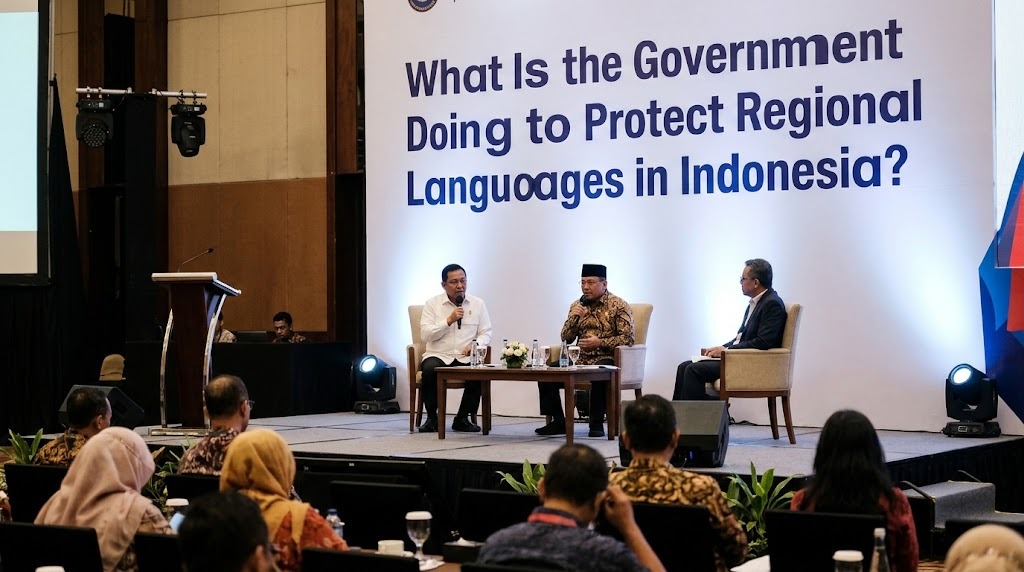
Indonesia has hundreds of regional languages that reflect the country's cultural diversity and historical heritage. These languages are used in daily communication, traditional ceremonies, folk stories, and other cultural activities. However, some regional languages face challenges because fewer young people speak them regularly and many communities increasingly use Indonesian in everyday life. The government has an important role in protecting regional languages through education, documentation, cultural programs, and cooperation with local communities. These efforts aim to maintain linguistic diversity while ensuring that regional languages can continue to be learned and used by future generations.
ESTABLISHING POLICIES FOR REGIONAL LANGUAGE PRESERVATION
The Indonesian government has established policies that support the preservation and development of regional languages. The national legal framework recognizes regional languages as part of the country's cultural heritage and provides a basis for protecting them. The Constitution of Indonesia, particularly Article 32, recognizes the state’s role in advancing national culture and respecting regional languages as part of Indonesia's cultural wealth. These principles encourage government institutions to support linguistic diversity alongside the use of Indonesian as the national language. Government policies provide an important foundation for preserving regional languages as part of Indonesia's cultural identity.
Implementation also involves coordination between national institutions and regional governments. Local authorities can develop programs suited to the languages, traditions, and needs of their communities. These programs may include regional language education, cultural festivals, documentation projects, and support for local literature. Effective policies require clear responsibilities, sufficient resources, and regular evaluation. When policies are implemented consistently, they can help create better conditions for regional languages to remain active in community life.
ORGANIZING REGIONAL LANGUAGE REVITALIZATION PROGRAMS
One important government effort is regional language revitalization. These programs aim to encourage communities, especially children and young people, to learn and use languages that are becoming less frequently spoken. The Ministry of Education and related cultural institutions have supported revitalization activities in collaboration with regional governments and local communities. Activities may include language learning, storytelling, traditional games, writing, and cultural performances. Revitalization programs help reconnect younger generations with regional languages through practical and engaging activities.
The approach can differ according to the condition of each language and the needs of its speakers. In some communities, children may already understand the language but need more opportunities to speak it. In others, language learning may require basic vocabulary lessons and support from fluent speakers. Teachers, parents, community leaders, and cultural practitioners can work together to develop appropriate activities. Regular practice at home and in community settings is especially important because revitalization cannot succeed through occasional events alone.
INCLUDING REGIONAL LANGUAGES IN EDUCATION
Education is another important way the government supports regional language preservation. Regional languages can be taught in schools through local content subjects and other learning activities suited to regional circumstances. Students may learn vocabulary, grammar, traditional stories, songs, poetry, and appropriate forms of everyday communication. These lessons help introduce children to their linguistic heritage while developing their communication skills. School-based language education can help younger generations maintain a connection with their local languages and cultures.
Local education authorities and schools can adapt teaching materials to the language varieties used in their communities. Teachers may work with native speakers to ensure that lessons reflect authentic pronunciation, vocabulary, and cultural context. Schools can also organize storytelling competitions, traditional performances, and projects that encourage students to interview older community members. However, regional language education should be supported by opportunities to use the language outside the classroom. Cooperation between schools and families can help students turn classroom knowledge into regular communication.
DOCUMENTING REGIONAL LANGUAGES AND CULTURAL KNOWLEDGE
Language documentation helps record vocabulary, pronunciation, grammar, oral stories, and other linguistic information. Government institutions can collaborate with universities, researchers, teachers, and native speakers to collect and organize these materials. Documentation is particularly important for languages with declining numbers of speakers because some knowledge may disappear when fluent speakers pass away. Recording regional languages creates valuable resources for education, research, and future revitalization efforts.
Documentation may take the form of dictionaries, written descriptions, audio recordings, videos, and digital archives. Researchers can record conversations and traditional stories while documenting the context in which particular expressions are used. Community permission and respect for cultural ownership are essential, especially when recordings contain private or culturally sensitive information. Materials should also be stored in ways that allow communities and authorized researchers to access them. When documentation is combined with active language use, it can help preserve both linguistic knowledge and the cultural traditions associated with it.
SUPPORTING REGIONAL CULTURE THROUGH PUBLIC PROGRAMS
Government cultural programs can create opportunities for communities to use regional languages in public settings. Local festivals, traditional arts performances, literary events, and cultural exhibitions can include storytelling, poetry, speeches, and songs in regional languages. These activities introduce audiences to local expressions and demonstrate that regional languages remain relevant in contemporary society. They can also encourage young people to participate in cultural activities and learn from experienced speakers. Public cultural programs help increase awareness of regional languages and strengthen community pride.
Regional governments can cooperate with cultural organizations, schools, libraries, and local artists to organize these activities. They may also support the publication of regional-language books, children's stories, and educational materials. Digital platforms can extend the reach of cultural programs by sharing recordings and learning resources with audiences beyond the local area. However, festivals and performances should complement everyday language use rather than replace it. The strongest preservation efforts connect public celebrations with language learning at home, in schools, and within local communities.
COOPERATING WITH COMMUNITIES AND USING DIGITAL TECHNOLOGY
Government programs are more effective when communities participate in planning and implementation. Native speakers, parents, teachers, traditional leaders, and young people understand the practical challenges that affect language use in their areas. Their involvement helps ensure that preservation programs reflect local needs rather than relying on a single approach for every language. Community participation is essential because regional languages survive through the people who use and pass them on.
Digital technology can strengthen this cooperation by making regional language resources easier to access. Government agencies and educational institutions can support digital dictionaries, online learning materials, recorded stories, and educational videos. Social media campaigns can also encourage people to share local vocabulary and cultural knowledge, provided the content is accurate and respectful. These resources should be accessible to communities with different levels of internet connectivity and digital skills. By combining public support, community participation, and appropriate technology, Indonesia can improve the long-term preservation of its regional languages.
CONCLUSION
The Indonesian government supports regional language preservation through policies, revitalization programs, education, documentation, cultural activities, and cooperation with local communities. These efforts help record linguistic knowledge, encourage younger generations to learn regional languages, and strengthen cultural identity. Nevertheless, government initiatives alone cannot guarantee that a language will remain alive. Regional languages need to be used regularly by families, schools, and communities for preservation efforts to have a lasting impact. Continued cooperation between government institutions and native speakers can help ensure that Indonesia's linguistic diversity remains an important part of its cultural heritage.
Recent Posts

Bagaimana Sistem SKS pada Program Kuliah... 22.11.2026/49 View

How Does Technology Make Daily Evaluation... 21.11.2026/77 View

Apa Strategi Menghadapi Kesenjangan antara Kompetensi... 21.11.2026/78 View

Mengapa Inventaris Aset Penting bagi Kelancaran... 21.11.2026/74 View

When Should Musicians Join a Record... 21.11.2026/79 View
