

What Is the Indonesian Police Academy and How Does Its Education System Work?
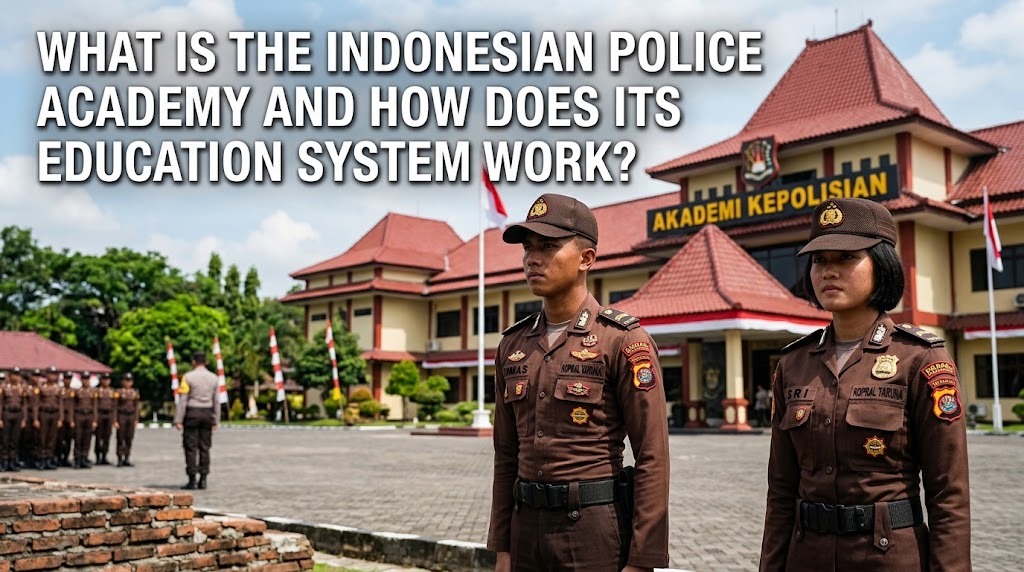
The Indonesian Police Academy, widely known as Akademi Kepolisian or AKPOL, is a higher education institution that prepares future officers of the Indonesian National Police, known as Kepolisian Negara Republik Indonesia or Polri. The academy plays an important role in developing professional police leaders who can maintain public order, protect citizens, enforce the law, and serve the community.
Understanding the Indonesian Police Academy requires more than knowing its admission requirements. Its education system combines academic learning, physical training, character development, leadership exercises, and professional police instruction. Through this integrated approach, cadets are prepared to face the responsibilities and challenges of modern law enforcement.
UNDERSTANDING THE INDONESIAN POLICE ACADEMY
The Indonesian Police Academy is located in Semarang, Central Java, and operates within the educational system of Polri. Its primary purpose is to prepare selected candidates to become police officers with the knowledge, discipline, integrity, and leadership skills required for public service. The academy provides structured education that combines classroom instruction with practical activities and character development.
Unlike ordinary universities that mainly focus on academic qualifications, the academy emphasizes professional responsibility and service to society. Cadets are expected to understand Indonesian law, police procedures, human rights, ethics, and the importance of protecting the public. They also learn how to make responsible decisions under pressure while respecting legal boundaries.
The academy's role is especially important because police officers often deal with complex situations involving public safety, criminal investigations, and community relations. For this reason, its educational approach aims to develop graduates who can balance law enforcement responsibilities with fairness, accountability, and respect for citizens.
THE MAIN OBJECTIVES OF POLICE ACADEMY EDUCATION
The primary objective of police academy education is to prepare future officers who can carry out their duties professionally and responsibly. Cadets develop an understanding of law enforcement, public security, criminal justice, and the role of the police in a democratic society. They are also introduced to the principles of integrity, transparency, discipline, and accountability that guide professional policing.
Another important objective is to develop leadership skills. Police officers may eventually supervise personnel, coordinate operations, manage public safety situations, and make decisions that affect communities. Through leadership exercises and structured responsibilities, cadets learn to communicate clearly, cooperate with others, solve problems, and remain composed in demanding circumstances.
The academy also aims to build a strong sense of public service. Police work requires more than physical strength or knowledge of regulations; it demands empathy, patience, sound judgment, and respect for human rights. By integrating these values into education and training, the academy prepares cadets to serve the public while upholding the law.
THE STRUCTURE AND DURATION OF THE EDUCATION SYSTEM
The education system at the Indonesian Police Academy is designed as a structured program that combines academic study, professional police training, and character development. The academy's official website describes its education program as four years, equivalent to eight semesters, under the framework of the applicable institutional regulations. However, the duration reported for recent graduating cohorts has differed, so prospective applicants should confirm the current program structure through official AKPOL announcements.
Throughout their education, cadets follow an organized schedule that includes classroom lessons, physical activities, practical exercises, and supervised development. Their progress is evaluated through academic performance, discipline, physical readiness, and professional conduct. This integrated system helps ensure that cadets develop the knowledge and practical abilities needed for police service.
The education process is not limited to passing examinations. Cadets must also demonstrate responsibility, adaptability, teamwork, and the ability to follow professional standards. These expectations help prepare them for the demanding responsibilities they may encounter after graduation.
ACADEMIC LEARNING AND POLICE KNOWLEDGE
Academic learning is an essential part of the Indonesian Police Academy's curriculum. Cadets study subjects relevant to policing, including legal principles, criminal justice, police management, and professional ethics. These subjects provide the theoretical foundation required to understand law enforcement responsibilities and the legal limits of police authority.
Cadets also need to develop analytical thinking and communication skills. Police officers regularly interpret information, prepare reports, communicate with the public, and make decisions based on available evidence. Academic instruction helps cadets learn how to assess situations carefully and apply relevant knowledge to practical problems.
In addition, police education must respond to changes in society and technology. Digital evidence, cybercrime, data analysis, and emerging security threats have increased the importance of modern knowledge in law enforcement. Polri has also announced plans for educational reforms involving human rights, artificial intelligence, and big data, with a new curriculum expected to be implemented in 2027.
PHYSICAL TRAINING AND PRACTICAL POLICE SKILLS
Physical training is another important component of police academy education. Police officers may need to work for long periods, respond to emergencies, and operate in physically demanding environments. For this reason, cadets participate in activities designed to improve endurance, strength, coordination, and overall fitness.
Practical training helps cadets understand how police knowledge is applied in real situations. Depending on the curriculum and training stage, activities may cover communication, operational procedures, public order, basic investigative skills, and emergency response. Supervised exercises allow cadets to practise decision-making while learning to follow established procedures and safety requirements.
Physical ability alone is not enough to become a capable police officer. Cadets must also demonstrate self-control, teamwork, situational awareness, and respect for the law. Combining practical exercises with professional guidance helps them develop the discipline and judgment needed to perform their duties responsibly.
CHARACTER DEVELOPMENT AND DISCIPLINE
Character development is central to the Indonesian Police Academy's education system. Cadets are expected to practise punctuality, honesty, responsibility, respect, and obedience to legitimate rules. These habits are developed through daily routines, supervision, shared responsibilities, and evaluations of personal conduct.
Discipline also teaches cadets to manage their time and remain focused under pressure. Living and learning within a structured environment requires cooperation, consistency, and the ability to accept constructive feedback. Through these experiences, cadets learn that professional performance depends on both individual responsibility and teamwork.
Integrity is particularly important because police officers exercise authority that can directly affect people's lives. Cadets must understand the importance of avoiding abuse of power, treating citizens fairly, and protecting confidential information appropriately. Character development therefore supports the creation of officers who are not only competent but also trustworthy and accountable.
LEADERSHIP TRAINING AND COMMUNITY SERVICE
Leadership training prepares cadets to take responsibility for themselves and others. During their education, they learn to communicate instructions, coordinate group activities, resolve disagreements, and make decisions within their authority. These experiences help develop confidence while emphasizing that effective leadership requires accountability rather than simply giving orders.
Community service is equally important because policing involves close interaction with the public. Officers need to understand local concerns, respond professionally to complaints, and communicate with people from different backgrounds. Learning about community relations helps cadets recognize that public trust is an essential part of effective law enforcement.
The academy's leadership approach also emphasizes ethical decision-making. Cadets must learn to balance operational objectives with legal requirements, human rights, and public safety. These principles help prepare future officers to lead with fairness, professionalism, and respect for the communities they serve.
ASSESSMENT, GRADUATION, AND CAREER PROSPECTS
Cadets are assessed throughout their education to determine whether they meet the academy's academic, physical, disciplinary, and professional standards. Assessment methods may include written examinations, practical exercises, physical evaluations, and observations of conduct. Meeting the required standards is important because police officers must be prepared to apply their knowledge and responsibilities in real working environments.
Graduation marks the completion of the academy's prescribed education and the transition toward professional police service. According to the academy's published information, its regular officer-formation program has traditionally prepared graduates for appointment at the rank of Inspektur Polisi Dua, commonly abbreviated as Ipda, subject to the applicable requirements and official appointment process.
Graduates can begin their careers in assignments determined by Polri's organizational needs and applicable personnel policies. Over time, career development may involve operational duties, investigations, public order, administration, management, or other areas of police work. Further training, professional performance, experience, and opportunities for promotion can influence their future responsibilities.
CONCLUSION
The Indonesian Police Academy is a specialized higher education institution that prepares future Indonesian National Police officers through an integrated education system. Its approach combines academic learning, practical police training, physical development, discipline, character building, and leadership preparation. Each component contributes to developing officers who can understand the law, make responsible decisions, and respond effectively to public safety challenges.
For prospective cadets, understanding this system is an important first step toward preparing for academy life. Success requires more than academic ability or physical fitness; it also demands integrity, emotional maturity, teamwork, and a strong commitment to public service. By developing these qualities, cadets can build a foundation for a professional career dedicated to protecting and serving the people of Indonesia.
Recent Posts

Bagaimana Sistem SKS pada Program Kuliah... 22.11.2026/57 View

How Does Technology Make Daily Evaluation... 21.11.2026/86 View

Apa Strategi Menghadapi Kesenjangan antara Kompetensi... 21.11.2026/84 View

Mengapa Inventaris Aset Penting bagi Kelancaran... 21.11.2026/82 View

When Should Musicians Join a Record... 21.11.2026/86 View
