

What Is the Main Purpose of Flag Ceremonies in Schools?
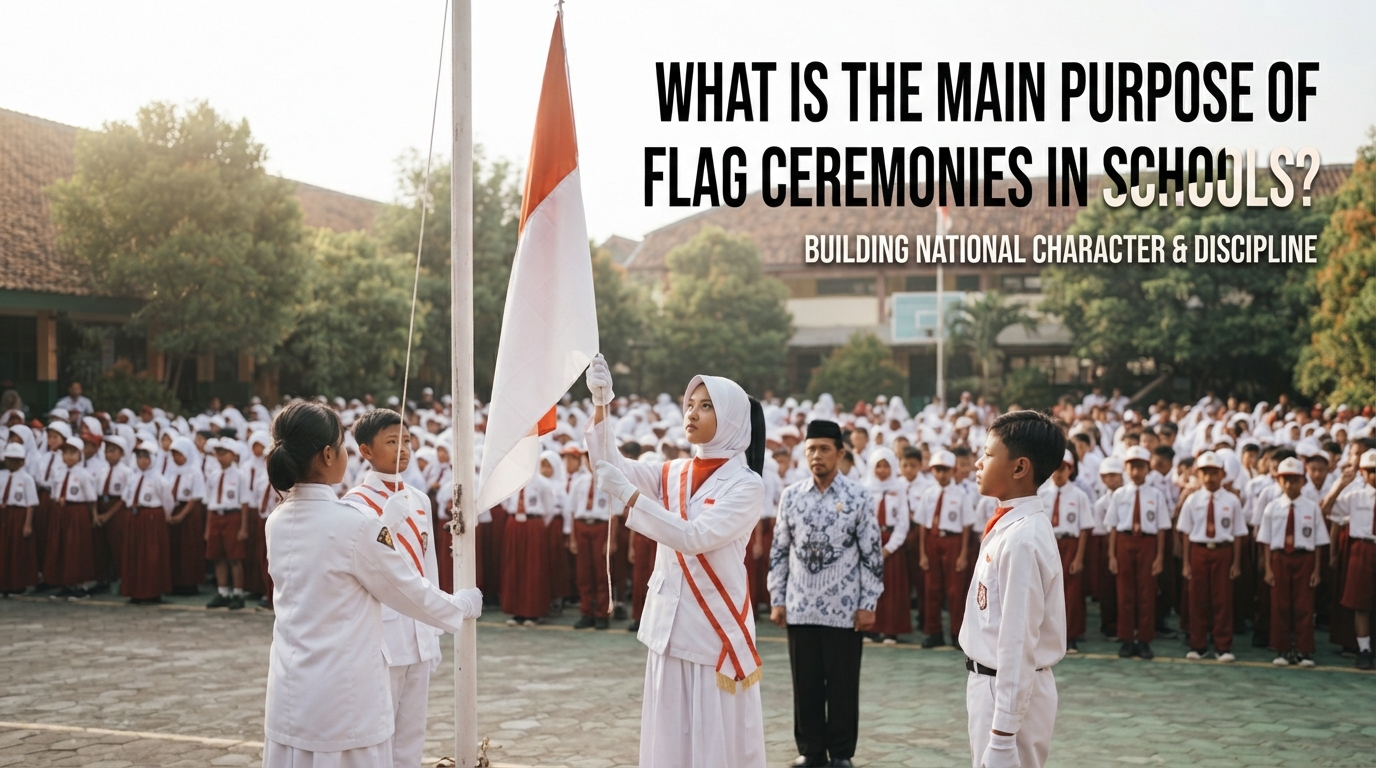
Flag ceremonies in schools are important educational activities that help students develop national awareness, discipline, responsibility, and respect for their country. These ceremonies are commonly held every Monday morning in many Indonesian schools and on certain national commemorative days. During the activity, students gather in the schoolyard to participate in a series of formal events, including raising the national flag, singing the national anthem, and listening to messages from the ceremony supervisor.
The main purpose of school flag ceremonies is not simply to carry out a regular school tradition. They also provide opportunities for students to understand the meaning of nationalism, unity, patriotism, and civic responsibility. Through consistent participation, students are expected to develop positive attitudes that can be applied in their daily lives. Therefore, flag ceremonies are an important part of character education and national identity development in schools.
BUILDING NATIONALISM AND LOVE FOR THE COUNTRY
One of the main purposes of flag ceremonies in schools is to strengthen students' nationalism and love for their country. By participating in the flag-raising process and singing the national anthem, students are reminded of Indonesia's independence and the sacrifices made by national heroes. These activities help students understand the importance of appreciating their country's history and national identity. They also encourage young generations to develop a sense of belonging and responsibility toward their nation.
Nationalism is not only expressed through ceremonies or patriotic songs but also through positive actions in everyday life. Students can demonstrate their love for the country by respecting differences, maintaining unity, obeying regulations, and contributing to society. Flag ceremonies provide an opportunity for schools to introduce these values consistently. As a result, students can develop a stronger understanding of their role as responsible citizens.
DEVELOPING DISCIPLINE AND RESPONSIBILITY
Flag ceremonies also play an important role in developing discipline and responsibility among students. Participants are expected to arrive on time, wear appropriate uniforms, follow instructions, and stand in an orderly manner throughout the ceremony. These simple activities teach students to respect schedules and follow established rules. By practicing these habits regularly, students can develop a more disciplined attitude toward their education and daily responsibilities.
In addition, students who serve as ceremony officers learn to carry out specific duties carefully. They must prepare themselves, understand their responsibilities, and cooperate with other officers to ensure the ceremony runs smoothly. This experience teaches them the importance of commitment and accountability. These qualities are useful not only at school but also in their future academic and professional lives.
RESPECTING NATIONAL SYMBOLS AND THE STRUGGLE OF HEROES
Another important purpose of flag ceremonies is to teach students to respect national symbols, especially the Indonesian Red and White Flag, known as Sang Merah Putih. The flag represents the sovereignty, identity, and unity of the Indonesian nation. During the ceremony, students are encouraged to show respect while the flag is being raised and the national anthem is performed. This experience helps them understand that national symbols have historical and cultural significance.
Flag ceremonies also remind students of the struggles and sacrifices made by previous generations to achieve independence. Through messages from teachers or ceremony supervisors, students can learn about important historical events and the values demonstrated by national heroes. These lessons encourage students to appreciate freedom and understand that preserving national unity requires continuous effort. Respect for national symbols can therefore become a foundation for strengthening national identity.
STRENGTHENING UNITY AND TOGETHERNESS AMONG STUDENTS
School flag ceremonies bring students, teachers, and other school members together in one organized activity. Participants come from different backgrounds, cultures, and personal experiences, but they stand together as members of the same school community. This situation teaches the importance of unity, tolerance, and mutual respect. Students can understand that differences should not become reasons for conflict or discrimination.
The ceremony also creates a shared experience that strengthens relationships among school members. When students participate together, they learn to cooperate, follow common rules, and respect one another's roles. These values are important for creating a safe and positive learning environment. Through this activity, schools can encourage students to maintain friendship and support each other despite their differences.
PROVIDING CHARACTER EDUCATION AND POSITIVE VALUES
Flag ceremonies are also a practical way to introduce character education outside regular classroom lessons. Students learn values such as honesty, respect, responsibility, courage, and cooperation through the activities they perform. For example, ceremony officers must carry out their duties honestly and responsibly, while other participants must maintain order and respect the event. These experiences help students understand that good character is demonstrated through actions rather than words alone.
Messages delivered by the ceremony supervisor can also provide moral lessons and motivation. Teachers may discuss topics related to education, student behavior, national awareness, environmental responsibility, or current school activities. Such messages help students reflect on their attitudes and understand how to become better individuals. When these lessons are supported by daily examples, students can gradually develop stronger character.
IMPROVING LEADERSHIP AND TEAMWORK SKILLS
Flag ceremonies provide opportunities for students to develop leadership and teamwork skills through direct participation. Students selected as flag ceremony officers must understand their duties and perform them according to the established sequence. They need to communicate clearly, maintain concentration, and coordinate with other team members. These responsibilities help students become more confident and independent.
Teamwork is equally important because a successful ceremony depends on cooperation among all participants. Each officer has a different responsibility, but every task contributes to the same objective. Students learn that cooperation, preparation, and mutual support are necessary to achieve good results. These skills can also help them participate more effectively in classroom projects, student organizations, and other school activities.
THE ROLE OF TEACHERS AND SCHOOLS IN FLAG CEREMONIES
Teachers and schools have an important responsibility in ensuring that flag ceremonies provide meaningful educational benefits. Teachers usually guide students in preparing the ceremony, explain the importance of national values, and supervise the activities. They should also help students understand the meaning behind each part of the ceremony rather than treating it as a routine obligation. This approach makes the activity more educational and relevant to students' lives.
Schools can also encourage student participation by assigning different responsibilities and providing opportunities for students to become ceremony officers. The ceremony supervisor should deliver messages that are informative, motivating, and appropriate for students' needs. In addition, schools need to maintain an orderly and respectful atmosphere throughout the event. With proper guidance, flag ceremonies can become an effective way to strengthen nationalism and develop positive student behavior.
CONCLUSION
The main purpose of flag ceremonies in schools is to develop students' nationalism, discipline, responsibility, unity, and respect for national symbols. Through activities such as raising the national flag, singing the national anthem, and listening to educational messages, students can learn important values that support their personal development. The ceremony also provides opportunities to improve leadership, teamwork, and awareness of national history.
Ultimately, flag ceremonies are more than formal school activities. They are educational opportunities that help shape students into responsible, disciplined, and patriotic citizens. By participating actively and understanding the meaning behind each activity, students can develop positive character and contribute to maintaining national unity in the future.
Recent Posts

How Does Technology Make Daily Evaluation... 21.11.2026/58 View

Apa Strategi Menghadapi Kesenjangan antara Kompetensi... 21.11.2026/60 View

Mengapa Inventaris Aset Penting bagi Kelancaran... 21.11.2026/56 View

When Should Musicians Join a Record... 21.11.2026/55 View

Daily Evaluation or Daily Planning Which... 21.11.2026/63 View
