

What Is the Meaning of Raising the Indonesian Flag During a Ceremony?
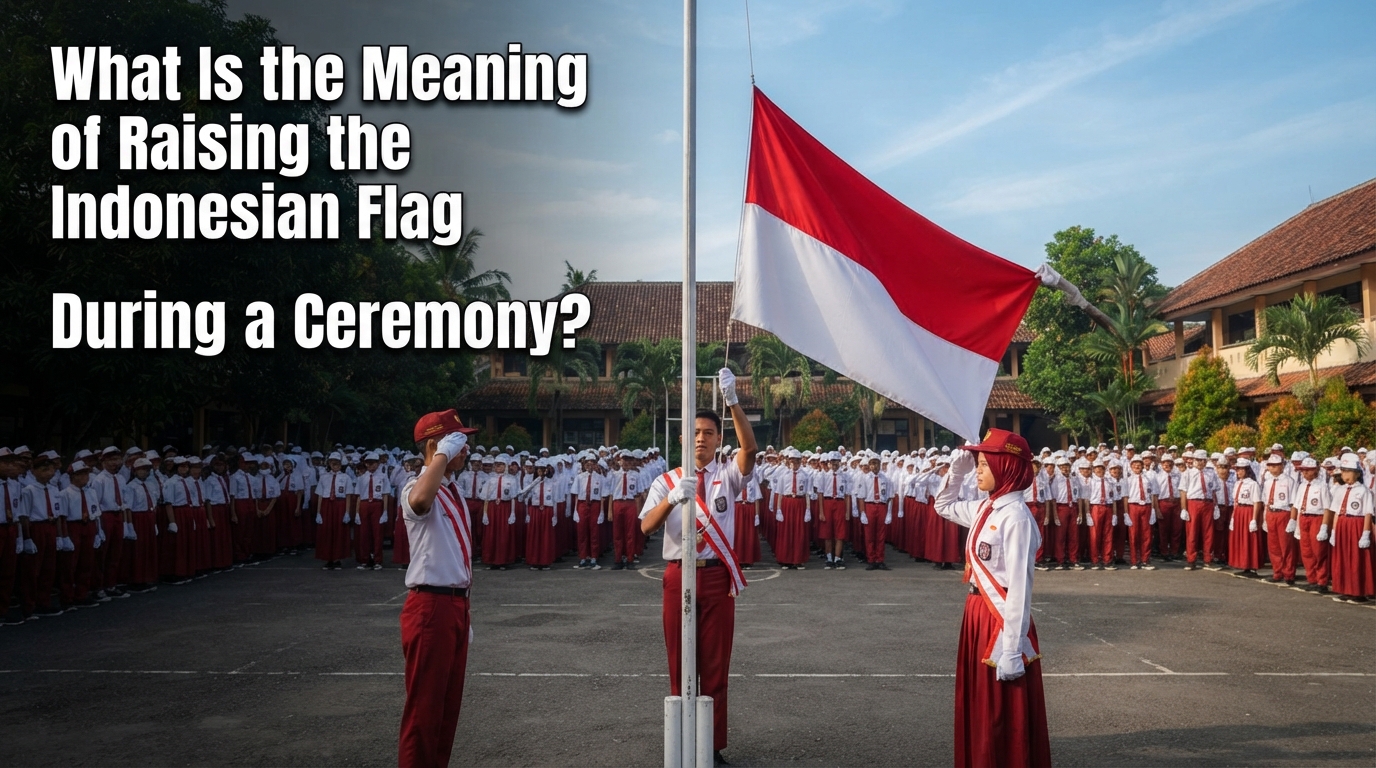
Raising the Indonesian flag during a ceremony is a meaningful national tradition that represents independence, national identity, unity, and respect for the country. In Indonesia, the national flag, known as Sang Merah Putih, consists of two horizontal colors: red on the upper half and white on the lower half. The flag is commonly raised during school ceremonies, national celebrations, and official government events.
This activity is not simply a formal part of a ceremony. It reminds Indonesian citizens of the struggles and sacrifices made by previous generations to achieve independence. It also encourages students and the wider community to appreciate their national identity and develop a sense of responsibility toward the country. Therefore, raising the Indonesian flag has an important meaning in strengthening nationalism, patriotism, and respect for Indonesian history.
THE MEANING OF THE RED AND WHITE COLORS
The Indonesian flag has two main colors, red and white, each carrying symbolic meaning. Red represents courage, while white represents purity. These values are commonly understood as reflections of the character and principles that Indonesian people should uphold. Together, the two colors represent important ideals that can guide citizens in their daily lives.
The combination of red and white also reflects the historical identity of the Indonesian nation. These colors have been associated with the Indonesian archipelago for centuries and became an important national symbol during the independence movement. By understanding their meaning, students can appreciate that the flag represents more than its physical appearance. It carries values that encourage courage, honesty, dignity, and unity.
SYMBOLIZING INDONESIAN INDEPENDENCE
Raising the Indonesian flag is closely connected to the country's independence, which was proclaimed on August 17, 1945. During the proclamation of independence, the Red and White Flag was raised as a symbol of the birth of an independent Indonesian nation. This historic moment marked an important turning point after a long period of colonial rule. Since then, the flag has represented Indonesia's sovereignty and freedom.
Every time the flag is raised during a ceremony, people are reminded of the sacrifices made by national heroes and previous generations. Their courage, determination, and cooperation played an important role in achieving independence. This historical connection encourages younger generations to appreciate freedom and understand the importance of protecting the country's independence. It also reminds citizens that independence must be accompanied by responsibility and meaningful contributions to society.
STRENGTHENING NATIONALISM AND PATRIOTISM
Raising the Indonesian flag helps strengthen nationalism and patriotism among citizens, especially students. During the ceremony, participants stand respectfully while the flag is raised, creating an opportunity to reflect on their identity as Indonesians. This experience can develop a stronger sense of belonging to the nation. It also encourages people to appreciate their country's history, culture, and achievements.
Nationalism should not only be expressed through ceremonies but also through everyday actions. Students can demonstrate their love for Indonesia by studying seriously, respecting cultural differences, obeying regulations, and helping others. Citizens can also contribute by protecting the environment, maintaining social harmony, and supporting national development. In this way, the meaning of raising the flag becomes connected to real actions that benefit the country.
REPRESENTING NATIONAL UNITY AND TOGETHERNESS
Indonesia is a diverse country consisting of many ethnic groups, languages, religions, and cultural traditions. The Red and White Flag serves as a symbol of unity that brings these differences together under one national identity. During flag ceremonies, people from different backgrounds participate in the same activity and show respect for the same national symbol. This moment reminds everyone that they belong to one country.
The spirit of unity represented by the flag is closely related to Indonesia's national motto, Bhinneka Tunggal Ika, which means Unity in Diversity. The motto teaches that differences should not prevent people from living together peacefully. Instead, diversity should become a strength that supports cooperation and mutual respect. Therefore, raising the Indonesian flag also reminds citizens of their shared responsibility to maintain national harmony.
SHOWING RESPECT FOR NATIONAL SYMBOLS
The Indonesian flag is one of the most important national symbols and deserves to be treated with respect. During a ceremony, the flag is raised through an organized process that follows established procedures. Participants are expected to stand properly, maintain silence, and pay attention to the activity. These actions demonstrate appreciation for the nation's identity and history.
Respect for the national flag also involves understanding the rules governing its use. Indonesia has regulations concerning the national flag, including Law No. 24 of 2009 on the National Flag, Language, Emblem, and Anthem. These regulations establish guidelines for respecting and using national symbols appropriately. By learning these rules, students can develop awareness of their responsibilities as Indonesian citizens.
TEACHING DISCIPLINE AND RESPONSIBILITY TO STUDENTS
In schools, raising the Indonesian flag provides an opportunity to teach students important values such as discipline, responsibility, and respect. Students are expected to arrive on time, wear the correct uniform, and follow the ceremony procedures. Those assigned as flag-raising officers must prepare carefully and perform their duties responsibly. These activities help students understand the importance of commitment and cooperation.
The ceremony also encourages students to develop positive habits that can be applied outside the school environment. For example, punctuality during ceremonies can encourage better time management in daily activities. Respecting instructions can help students become more responsible when completing assignments and participating in group activities. Through consistent practice, the values represented by the flag can become part of students' character.
THE ROLE OF FLAG CEREMONIES IN PRESERVING NATIONAL HISTORY
Flag ceremonies help preserve national history by reminding younger generations of the events and struggles that shaped Indonesia. Through historical explanations delivered by teachers or ceremony supervisors, students can learn about the independence movement and the people who contributed to the nation. These lessons help connect historical knowledge with present-day national identity. As a result, students can better understand why the Indonesian flag holds such an important position in society.
Preserving national history is important because each generation has a responsibility to understand its country's past. Students who appreciate historical struggles may become more motivated to protect national unity and contribute positively to the future. Schools can strengthen this understanding through history lessons, national commemorations, and discussions about important historical figures. In this way, flag ceremonies become a meaningful part of national education.
CONCLUSION
Raising the Indonesian flag during a ceremony represents much more than a formal national activity. It symbolizes independence, courage, purity, national identity, unity, and respect for the sacrifices of previous generations. The Red and White Flag reminds Indonesian citizens of their shared history and their responsibility to preserve the nation's values.
For students, participating in flag ceremonies also provides opportunities to develop discipline, nationalism, and responsibility. These values should be practiced in everyday life through positive actions and respect for others. Ultimately, respecting the Indonesian flag means appreciating the country's history, protecting its unity, and contributing to a better future for Indonesia.
Recent Posts

How Does Technology Make Daily Evaluation... 21.11.2026/58 View

Apa Strategi Menghadapi Kesenjangan antara Kompetensi... 21.11.2026/60 View

Mengapa Inventaris Aset Penting bagi Kelancaran... 21.11.2026/56 View

When Should Musicians Join a Record... 21.11.2026/55 View

Daily Evaluation or Daily Planning Which... 21.11.2026/63 View
